
4.82/5 · 38 reviews
¿Tienes una cuenta?
Inicia sesión para finalizar tus compras con mayor rapidez.

£8.00

£6.00

£23.90
Envío gratuito en pedidos superiores a £150


Por Beleaev Family | International Caviar & Gourmet, Sede central Londres | beleaev.com
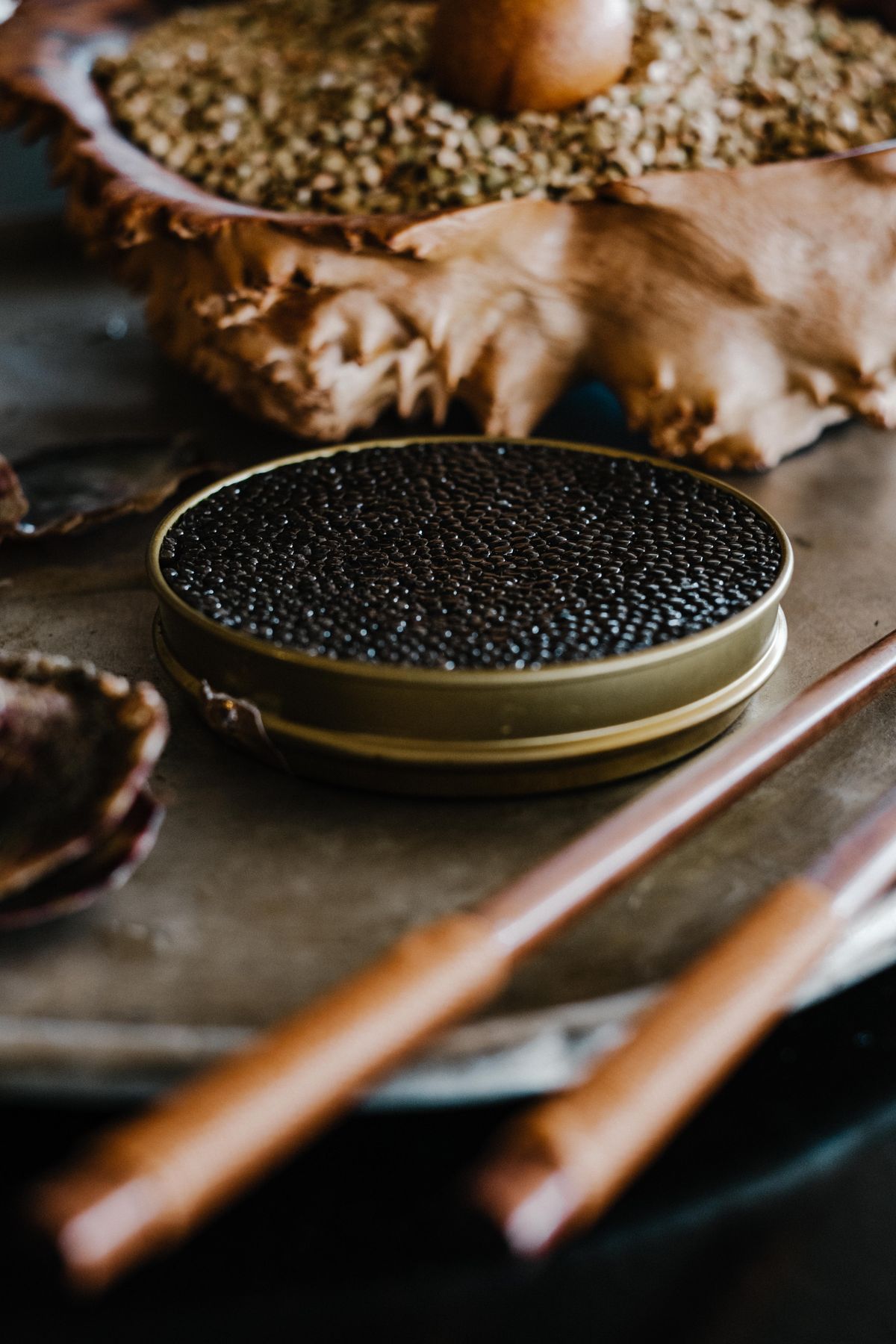
Una tabla de caviar es uno de esos elementos de las cenas que parece intimidante, pero no lo es. Montarla entera lleva 20 minutos, no requiere más cocción que un par de huevos cocidos y produce una pieza central que atrae a todos los invitados al mismo extremo de la mesa.
Existe una manera tradicional de hacerlo. El caviar en el centro, rodeado de un arco de acompañamientos: claras de huevo cocido picadas, yemas picadas, chalota finamente cortada en dados, crema agria, limón, blinis, tostadas en triángulo. Cada invitado construye su propio bocado a partir de los componentes, decidiendo exactamente cuánto caviar y cuánto de todo lo demás.
La razón por la que este formato ha sobrevivido 150 años es que funciona. A la gente le encanta montar su propia comida. Le encanta el arco visual de los componentes en el plato. Y le encanta que se confíe en ella para servirse su propia ración de caviar, en lugar de tener a un camarero nervioso repartiéndolo.
Puntos clave
- Calcule 30 g de caviar por persona si es el entrante principal, 20 g si se sirve junto a otros platos
- Sirva siempre el caviar en su lata, colocada sobre hielo picado
- Use cucharas de nácar, hueso o plástico, nunca de metal
- Los acompañamientos tradicionales son 7: yema de huevo, clara de huevo, chalota, crema agria, limón, blinis, tostada
- Monte el caviar al final, para que sea el elemento más fresco del plato
Para 6 personas como entrante
Para el caviar:
Para los acompañamientos:
Para la tabla (elementos visuales):
La elección del caviar es suya. Para una sola variedad, el Oscietra es la opción más segura para complacer a todos: con notas a nuez, firme y bueno con todos los acompañamientos. Para una tabla de degustación, sirva tres variedades una al lado de la otra: 60 g de Beluga, 60 g de Oscietra y 60 g de Kaluga o Sevruga. Así los invitados pueden comparar y descubrir su preferencia.
Tueste 4 rebanadas de buen pan blanco de masa madre o brioche hasta que estén bien doradas. Quite las cortezas. Corte cada rebanada en diagonal en 4 triángulos pequeños, lo que le dará 16 tostadas (tendrá algunas de más por si alguna se rompe).
Las tostadas deben ser lo bastante pequeñas como para comerse de 2 bocados. Unos 4 cm en el lado más largo es la medida adecuada.
Cueza los huevos exactamente 10 minutos desde el momento en que el agua vuelve a hervir. Enfríelos en agua con hielo durante 5 minutos y luego pélelos.
Separe las yemas de las claras. Pase cada una por un colador grueso hacia cuencos separados, o píquelas muy finas con un cuchillo afilado. La textura debe ser esponjosa y casi como migas, no como una pasta.
Pele y corte finamente las chalotas en dados. Procure cubos de 2 a 3 mm. Deje la chalota en dados en remojo en agua fría durante 5 minutos y luego escúrrala sobre papel de cocina. Esto elimina parte de su aspereza y mantiene la chalota crujiente.
Si la chalota no es de su agrado, la cebolleta finamente cortada sirve como sustituto, aunque su sabor es más intenso.
Coloque las latas de caviar (aún selladas) en un cuenco pequeño con hielo picado. No las abra hasta que lleguen los invitados.
Sobre una tabla o bandeja de madera grande, disponga los pequeños ramequines de acompañamientos en un arco alrededor del lugar donde irá el caviar: claras de huevo picadas, yemas de huevo picadas, chalota en dados, crema agria, gajos de limón, cebollino, eneldo.
Apile los blinis en dos torres bajas en el borde de la tabla. Amontone las tostadas en una pequeña cesta forrada con una servilleta de lino.
Justo antes de servir, abra la lata de caviar y colóquela sobre el hielo. Entregue a cada invitado una cuchara de nácar. No empiece a servirles usted, el formato está pensado para que cada uno se sirva.

El método tradicional del Este:
1. Ponga un blini o una tostada en su plato
2. Añada una pequeña porción de crema agria
3. Corone con una cucharada generosa de caviar
4. Decore con una pizca diminuta de yema de huevo, clara de huevo y chalota
5. Exprima una gota diminuta de limón sobre el pan, nunca sobre el caviar
6. Cómalo en 2 bocados
Los invitados varían sus combinaciones a lo largo de varios bocados. Algunos prefieren el caviar solo con crema agria. Otros adoran la combinación tradicional completa. Algunos se saltan los huevos por completo. La tabla se adapta a todos.
Compre la cantidad correcta de caviar. El mayor error que cometen los anfitriones es comprar de menos. 180 g para 6 personas es la ración adecuada para un entrante. Si compra 100 g e intenta estirarlos, los invitados lo notan y la tabla parece tacaña. Si compra 250 g, le sobrará (que se conserva 48 horas bajo film transparente).
Mantenga todo frío. El caviar a temperatura ambiente pierde su explosión en el paladar en 20 minutos. Coloque la lata sobre hielo picado. Mantenga la crema agria fría hasta el momento de servir. Incluso los huevos deben estar de la nevera, no templados.
Use las cucharas correctas. Las cucharas de metal (plata, acero) reaccionan con el caviar y pueden dejar un regusto ligeramente metálico. El nácar es la elección de manual. El hueso, el plástico o la madera también sirven. Si no tiene ninguna, las cucharas de plástico baratas que vienen con la mayoría de las latas de caviar valen perfectamente.
No reparta las raciones de antemano. El sentido de una tabla es el autoservicio. Repartir las raciones en bocados individuales despoja al formato de su teatralidad y priva a los invitados del control sobre su propio consumo.
Abra la lata en la mesa. La ceremonia visual de romper el sello delante de los invitados forma parte de la experiencia. No abra la lata en la cocina. No traspase el caviar a otro cuenco a menos que sea absolutamente imprescindible.
Tabla de una sola variedad: elija 180 g de un solo caviar (el Oscietra es la opción más segura para grupos variados). Más fácil de conseguir y más asequible.
Tabla de degustación: 60 g de cada una de tres variedades: Beluga, Oscietra y Kaluga. Colóquelas en cuencos pequeños separados sobre hielo con etiquetas, para que los invitados puedan comparar. Es la versión que recomendamos para las primeras cenas de caviar con amigos que quieran aprender.
Tabla de inspiración del Este: añada pequeños vasos de chupito de vodka helado, un cuenco de pepinillos encurtidos y rebanadas pequeñas de pan negro junto a los acompañamientos tradicionales. Es el formato que encontraría en una auténtica mesa de zakuski.
Tabla minimalista moderna: prescinda de los huevos y la chalota. Sirva solo caviar, crema agria, blinis y cebollino. Más limpia visualmente, menos trabajo, igual de auténtica.
Maridaje de vino: champán, idealmente Blanc de Blancs. Vodka helado si quiere la experiencia del Este. Evite por completo los tintos potentes y los blancos con crianza en barrica.
Para más información sobre qué servir con el caviar en una cena, consulte nuestra guía de etiqueta del caviar y nuestro recorrido sobre cómo organizar una degustación de caviar en casa.
Para 6 personas como entrante: de 180 a 200 g. Para 6 como tentempié principal junto a otros elementos: 120 g. Para 12 personas en un cóctel: 300 g. La regla es aproximadamente 30 g por persona si el caviar es la pieza central, 20 g si es una de varias ofertas. Redondee siempre hacia arriba, no hacia abajo. Los invitados se dan cuenta cuando el caviar se acaba.
Sí, con límites. Prepare todos los acompañamientos (huevos, chalotas, crema agria, blinis, tostadas) hasta 4 horas antes y refrigérelos. Abra la lata de caviar y colóquela sobre hielo solo cuando lleguen los invitados, no antes. Una vez abierto y atemperado, el caviar empieza a perder su mejor textura en 20 a 30 minutos.
La tabla funciona igual. Sustituya los huevos picados por rodajas finas de pepino y un pequeño cuenco de alcaparrones. Esto aporta la misma paleta de colores (blanco y verde pálido) y una función textural similar. Algunos anfitriones del Este también añaden remolacha finamente cortada en dados para dar color, sobre todo en las celebraciones de Nochevieja.
No es estrictamente necesario, pero es la elección de manual. El nácar, el hueso, el plástico y la madera son todos químicamente inertes y no interactúan con el caviar. La plata y el acero inoxidable pueden dejar una leve nota metálica. Si va a invertir en caviar, los 23 € que cuesta un juego de cucharitas pequeñas de nácar en Borough Market o un proveedor especializado merecen la pena.
Hay un momento en que una tabla de caviar pasa de ser algo que usted montó a ser algo que la mesa comparte. Los invitados empiezan a pasarse los blinis, a intercambiar bocados, a coincidir o discrepar sobre qué variedad prefieren. Ese es el momento para el que existe este formato.
Descubra la colección de caviar de Beleaev, la pieza central perfecta para cualquier cena, en Royal Oscietra. Explore la colección completa en beleaev.com.
Beleaev es una casa internacional de caviar y alta gastronomía con sede en Londres, con centros de distribución en el Reino Unido, Europa, los Emiratos Árabes Unidos y los Estados Unidos. Entregamos caviar Beluga, Oscietra, Sevruga y Kaluga de cría responsable a clientes de cada región en un plazo de 24 a 48 horas.

 447706084493


