










Cochinillo: la tradición española del lechón explicada
Por la cocina de Beleaev | Caviar & Gourmet, Londres | beleaev.com

El cochinillo es un lechón entero alimentado con leche, sacrificado en torno a las tres semanas y asado hasta que la piel se vuelve cristalina. Es la gran pieza central de la mesa castellana, y en Segovia la carne se trincha tradicionalmente con el borde de un plato para demostrar lo tierna que está. Eso es lo esencial. El resto conviene conocerlo antes de meter uno en el horno.
El plato reside en el corazón del centro de España, donde los asadores llevan siglos elaborando cochinillo. Un lechón es pequeño, suave de sabor y se construye en torno a dos texturas que tiran en sentidos opuestos: una carne que se deshace como la mantequilla y una piel que se quiebra. Aquí le contamos de dónde procede, por qué funciona y cómo llega a una mesa londinense.
Puntos clave
- El cochinillo es un lechón alimentado con leche, tomado en torno a las tres semanas
- La carne se mantiene tierna; la piel se vuelve crujiente, fina y cristalina
- Un lechón entero de unos 4 kg es una pieza central para 6 u 8 personas
- Castilla, y Segovia en particular, es la cuna espiritual del plato
- ¿Le pica la curiosidad? Explore la colección gourmet de Beleaev
¿Qué es exactamente el cochinillo?
El cochinillo asado es un lechón entero, asado. La palabra designa a un animal joven que aún se alimenta de la leche de su madre, y ese único hecho lo define todo en él.
Un lechón tomado en torno a las tres semanas no ha comido más que leche. No hay grano, ni pastoreo, ni músculo desarrollado por correr. Por eso la carne es pálida, de grano fino y suave, más cercana a las aves que a un asado de cerdo adulto por su manera de comerse. La grasa se asienta justo bajo la piel en una capa fina y uniforme, en lugar de recorrer el músculo.
Por eso el plato se trata de forma tan distinta a un asado de cerdo dominical. No se trata de descomponer fibras duras durante horas. Se trata de cocinar con delicadeza una carne tierna mientras se anima la piel a hacerse crujiente. Dos tareas, un animal pequeño.
Los españoles llaman al plato cochinillo asado en Castilla y tostón en algunas regiones vecinas. El animal en sí es un lechón. La misma idea, nombres regionales.
Por qué Castilla lo hizo famoso
El centro de España es alto, seco y frío en invierno, e históricamente pobre en el tipo de pasto que engorda al ganado grande. Un animal joven que pudiera criarse con rapidez a base de leche tenía sentido, y los hornos de pan de leña de la región hacían el resto.
Segovia es el nombre al que todos recurren. Los asadores de la ciudad cimentaron su reputación sobre el cochinillo cocinado en cazuelas de barro en ardientes hornos de leña, y el ritual del trinchado, cortar el lechón con el borde de un plato, se convirtió en teatro tanto como en prueba. A su alrededor creció toda una cultura de mesa: el asado como el acontecimiento, no como la guarnición.
Es cocina campesina honesta que ascendió en la carta. No hay salsa elaborada, ni largo adobo, ni un armario de especias. Sal, quizá un poco de agua o vino, un horno caliente y tiempo. El lujo está en la materia prima y en la paciencia, que es justo el tipo de cosa que nos gusta.
La piel crujiente: por qué la piel se vuelve cristalina
Aquí está la parte que separa un buen cochinillo de uno extraordinario.
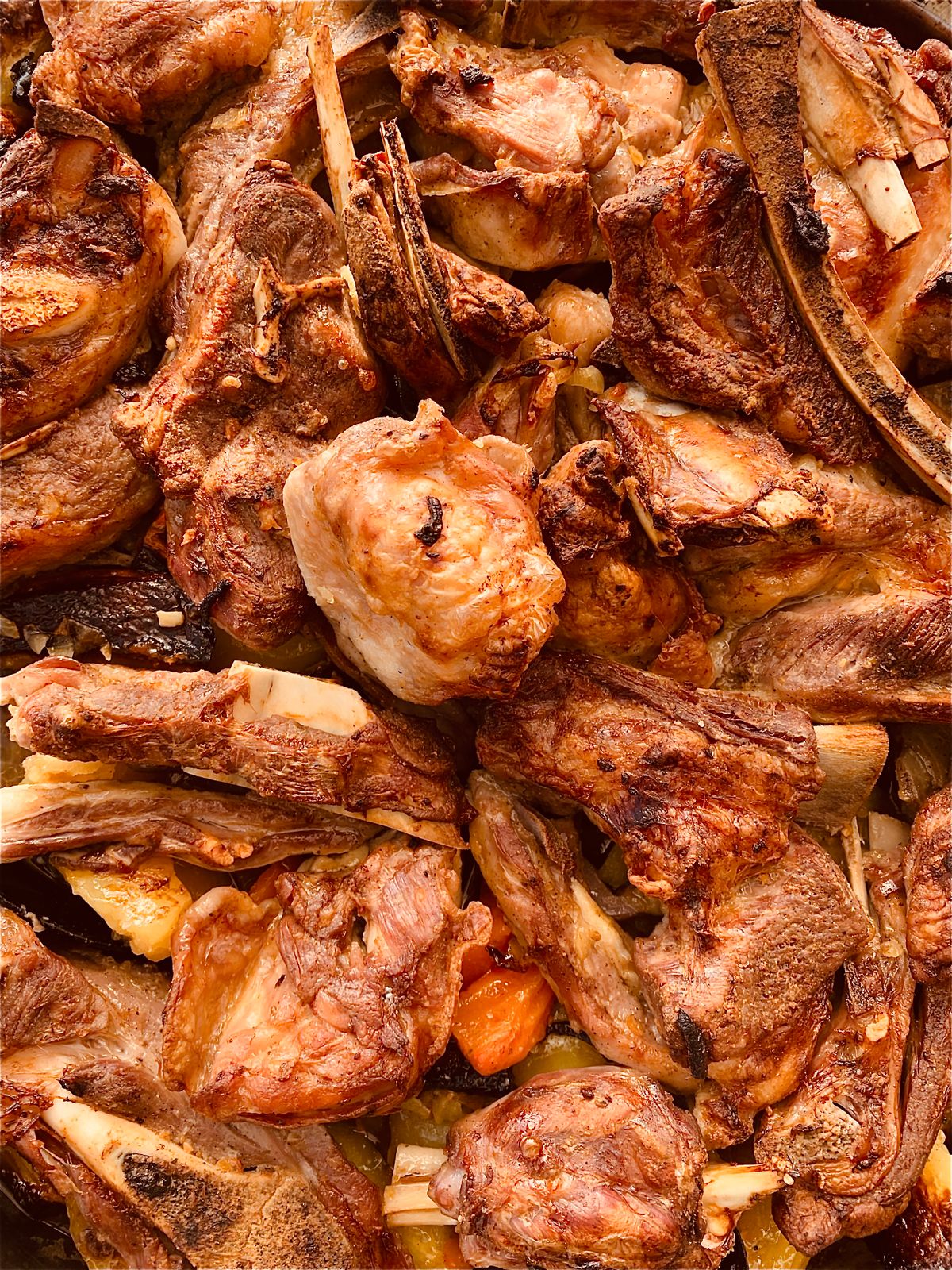
Como el lechón es joven, la piel es fina y la capa de grasa que hay debajo es poco profunda y uniforme. Áselo correctamente y esa piel se deshidrata, luego se ampolla y por fin se asienta en una lámina tan quebradiza que se rompe bajo una cuchara. Bien hecha, está más cerca de una fina esquirla de caramelo que de la corteza correosa de un cerdo más viejo.
Dos cosas le llevan hasta ahí. La piel seca al entrar en el horno: por eso, márquela y séquela con cuidado. Y el calor aplicado en el orden adecuado: un comienzo más suave con la piel protegida, y luego la piel hacia arriba y el horno a tope al final para que quede crujiente. Si precipita el dorado, la piel queda correosa. Si se salta el inicio en seco, nunca se ampolla de manera uniforme.
| Fase | Qué está haciendo | El sentido |
|---|---|---|
| Descongelar | Despacio, en el frigorífico | Protege la carne delicada |
| Preparación | Marcar la piel, salar, un chorrito de vino | La piel seca se ampolla; la sal sazona |
| Asar (inicio) | Piel hacia abajo, calor moderado | Cocina la carne tierna por dentro |
| Asar (final) | Piel hacia arriba, calor alto | Fija la piel crujiente y cristalina |
Si prefiere leer el método de cocina completo, nuestra guía complementaria detalla paso a paso cómo descongelar y asar un lechón entero. Para la mayoría, la técnica es más sencilla de lo que sugiere su reputación.
¿Qué tamaño tiene un lechón y para quién es?
Más pequeño de lo que pensaría, y eso es deliberado.
Un cochinillo tradicional es un animal verdaderamente joven. El nuestro ronda los 4 a 4,5 kg, que es el tamaño más pequeño que ofrecemos, elegido por una razón. Un lechón de ese tamaño cabe en un horno doméstico estándar y en una bandeja de asar normal. Se cocina de manera uniforme, la piel queda crujiente por todas partes y no tiene que lidiar con una res digna de la cocina de un restaurante.
Con ese peso sirve generosamente para 6 u 8 personas. Así que es una cena en torno a la cual se construye la velada: una pieza central de Navidad, un gran domingo familiar, una celebración en la que el asado llegando a la mesa es el momento. Un lechón, una bandeja, una sala llena de gente.
Es suntuoso en el mejor sentido, pero no pesado. Como la carne es suave y alimentada con leche, un poco rinde de forma muy satisfactoria, sobre todo junto a la piel crujiente.
Cómo lo sirven los españoles
Con sencillez, y con buen motivo. El lechón es la estrella, así que el plato que lo rodea se mantiene discreto.
Las guarniciones clásicas son patatas asadas cocinadas en la grasa del cerdo, dulces pimientos del piquillo y una ensalada verde de sabor marcado para cortar la untuosidad. Nada compite con la carne. La acidez de la ensalada y de los pimientos cumple la misma función que un chorro de limón en un asado más graso: reinicia el paladar entre bocado y bocado.
Para beber, el centro de España le orienta hacia su propio patio trasero. Una botella de Ribera del Duero, todo fruta oscura y estructura, hace frente a la grasa. Un cava frío cumple la tarea opuesta, con sus burbujas limpiando el paladar. Ambos son acertados; depende de la mesa.
Y trinche con generosidad. Cada plato pide un trozo de carne y un trozo de piel crujiente, porque el contraste es la clave de todo. Guarde las esquirlas de piel que se desprenden al trinchar; rara vez sobreviven al viaje de la tabla al plato.
El cochinillo por el mundo
El lechón es un plato de celebración en más culturas que solo España, lo que le dice algo sobre lo universal de su atractivo.
Los portugueses tienen el leitão, asado en torno a Bairrada con pimienta negra y ajo. Filipinas tiene el lechon, a menudo asado entero al espetón para las fiestas y tratado como el centro del banquete. Italia tiene la porchetta, aunque suele ser un rollo deshuesado y relleno de hierbas, en lugar de un lechón joven entero. Distintos condimentos, el mismo instinto: un lechón joven y tierno, asado entero, para una multitud reunida para celebrar.
La versión española es la más asociada a la alta cocina, en gran medida gracias a aquellos asadores segovianos y a esa piel crujiente y cristalina. Es la que hemos elegido ofrecer.
FAQ
¿A qué sabe el cochinillo?
Suave, delicado y tierno. Como el lechón se alimenta de leche y es joven, la carne es pálida y fina, más cercana a las aves que a un asado de cerdo adulto, con muy poco del sabor intenso que cabría esperar del cerdo. La piel crujiente añade un contraste sabroso y cristalino.
¿Qué edad tiene un lechón cuando se toma?
En torno a las tres semanas, mientras aún se alimenta únicamente de la leche de su madre. Eso es lo que mantiene la carne tan tierna y pálida, y la piel lo bastante fina como para volverse una fina piel crujiente en lugar de una corteza gruesa y correosa.
¿Para cuántas personas alcanza un lechón?
Un lechón entero de unos 4 a 4,5 kg sirve generosamente para 6 u 8 personas, lo que lo convierte en una pieza central para una celebración más que en una cena de diario. Es además el tamaño más pequeño que ofrecemos, dimensionado para caber en un horno doméstico estándar.
¿Es difícil cocinar el cochinillo en casa?
Menos de lo que sugiere su reputación. El método es sencillo: descongelar despacio, marcar y salar la piel, asar primero con la piel hacia abajo, luego subirla y aumentar el calor para que la piel quede crujiente. Un lechón dimensionado para un horno doméstico hace la mayor parte del trabajo por usted.
¿Cuál es la diferencia entre el cochinillo y la porchetta?
El cochinillo es un lechón entero alimentado con leche y asado con poco más que sal. La porchetta es italiana: por lo general, un corte deshuesado de cerdo más maduro, enrollado con hierbas y ajo y asado como una pieza. Uno tiene que ver con la delicadeza y la piel crujiente; la otra, con las hierbas y el condimento.
Saboree una tradición española
Siglos de asadores castellanos se resumen en una sola cosa: tierna carne alimentada con leche bajo una lámina de piel crujiente que se quiebra al servirla.
Explore la colección gourmet de Beleaev y nuestro cochinillo español entero, de unos 4 kg para un horno doméstico y una mesa de 6 a 8 comensales. Cuando esté listo para cocinar uno, nuestra guía sobre comprar y asar un lechón en el Reino Unido cubre el método de principio a fin. Descubra más en toda la gama gourmet completa, entregada con una cuidada cadena de frío.

 447706084493

