
Beleaev Blinis - 12 Stk.
£5.00
4.82/5 · 38 reviews
Hast du ein Konto?
Logge dich ein, damit es beim Checkout schneller geht.
£5.00

£8.00

£6.00

£23.90

Von der Familie Beleaev | International Caviar & Gourmet, Hauptsitz London | beleaev.com
Rührei mit Trüffel klingt nach einem Gericht, das man im Wolseley für 33 € bestellt und sich damit abfindet, es zu Hause nie ganz hinzubekommen. Die Technik wirkt einfach, doch die Textur, die man in Restaurants erlebt, scheint stets unmöglich. Weich, cremig, fast wie eine Crème, mit dem Trüffelaroma, das die Nase zwei Sekunden vor der Gabel erreicht.
Die gute Nachricht ist, dass sich die Technik wirklich vermitteln lässt. Drei Dinge zählen: sehr niedrige Hitze, ständiges Rühren und kalte Butter am Ende, um die Garung zu stoppen. Geben Sie frischen Trüffel am Tisch hinzu (nicht in der Pfanne), und das Gericht ist fertig.
Die andere gute Nachricht ist, dass Rührei mit Trüffel eines der wenigen Luxusgerichte ist, bei denen kleine Mengen Trüffel die größte Wirkung entfalten. 5-6 g frischer Trüffel pro Portion genügen. Die Eier sind eine großzügige Leinwand, und die Wärme setzt das Aroma effizient frei.
Das Wichtigste in Kürze
- Garen Sie auf der niedrigstmöglichen Hitze, ohne Abkürzungen
- Rühren Sie ständig mit einem Silikonspatel, niemals mit einem Schneebesen
- Geben Sie am Ende kalte Butter hinzu, um die Garung zu stoppen und Geschmeidigkeit zu verleihen
- Der Trüffel kommt OBEN AUF nach dem Anrichten, niemals in die Pfanne
- 5-6 g frischer Trüffel pro Portion, hauchdünn gehobelt

Für 2 Portionen
Die Qualität der Eier ist am wichtigsten. Verwenden Sie Eier aus Freilandhaltung mit leuchtend orangefarbenem Eigelb, idealerweise Burford Browns oder Cotswold Legbars. Blasses Eigelb ergibt blasse Eier, und keine Menge Trüffel kann das verbergen.
Was den Trüffel betrifft, ist der weiße Trüffel (Oktober bis Dezember) die klassische Luxuswahl. Der schwarze Trüffel (Dezember bis März) ist erschwinglicher und harmoniert wunderbar mit Eiern. Der Sommertrüffel (Tuber aestivum) ist im Geschmack zu schwach für dieses Gericht.
Schlagen Sie die Eier in einen kalten beschichteten Topf oder eine breite Pfanne. Geben Sie eine kleine Prise Salz hinzu. Rühren Sie locker mit einem Silikonspatel, brechen Sie die Eigelbe sanft auf und halten Sie Schlieren von Eigelb und Eiweiß sichtbar.
Dies ist kein französisches Omelett. Die Schlieren werden im fertigen Gericht zu feinen Texturbändern.
Geben Sie 15 g kalte Butter in die Pfanne. Stellen Sie sie auf die niedrigstmögliche Hitze. Beginnen Sie sofort zu rühren und hören Sie nicht auf.
Die Eier sollten insgesamt 5-6 Minuten brauchen. Wenn sie schneller garen, ist Ihre Hitze zu hoch. Heben Sie die Pfanne kurz vom Herd, rühren Sie, stellen Sie sie zurück. Dieser Zyklus aus An und Ab vom Herd ist der Weg zur seidigen Textur, ohne dass die Eier stocken.
Achten Sie auf den Moment, in dem die Eier zu binden beginnen. Sie sollten glänzend und leicht flüssig aussehen, wie eine lockere Crème, nicht trocken oder fest.
Ziehen Sie die Pfanne in dem Moment vom Herd, in dem die Eier FAST fertig, aber noch feucht aussehen. Sie garen durch die Restwärme weiter.
Geben Sie die restlichen 15 g kalte Butterwürfel und den Esslöffel Crème fraîche hinzu. Rühren Sie 30 Sekunden lang. Die kalten Milchprodukte senken die Temperatur und stoppen die Garung.
Reiben Sie beim Rühren etwa 6 g des Trüffels fein über die Eier (die Hälfte der Gesamtmenge). Dieser Schritt ist einzigartig für Rührei mit Trüffel: Eine kleine Menge Trüffel kommt in die Eier, um den Geschmack zu vertiefen, weiterer wird später obenauf gegeben.
Abschmecken mit Salz. Mahlen Sie eine winzige Menge schwarzen Pfeffer dazu.
Häufen Sie die Eier leicht auf die getoasteten Briochescheiben. Drücken Sie sie nicht flach.
Bringen Sie einen scharfen Trüffelhobel zusammen mit dem Trüffel an den Tisch. Hobeln Sie die restlichen 6 g Trüffel direkt über jeden Teller, und zielen Sie dabei auf hauchdünne Scheiben, die sich über die Eier legen.
Streuen Sie Schnittlauch darüber, falls verwendet. Sofort servieren. Das Trüffelaroma entwickelt sich in den nächsten 30-60 Sekunden.
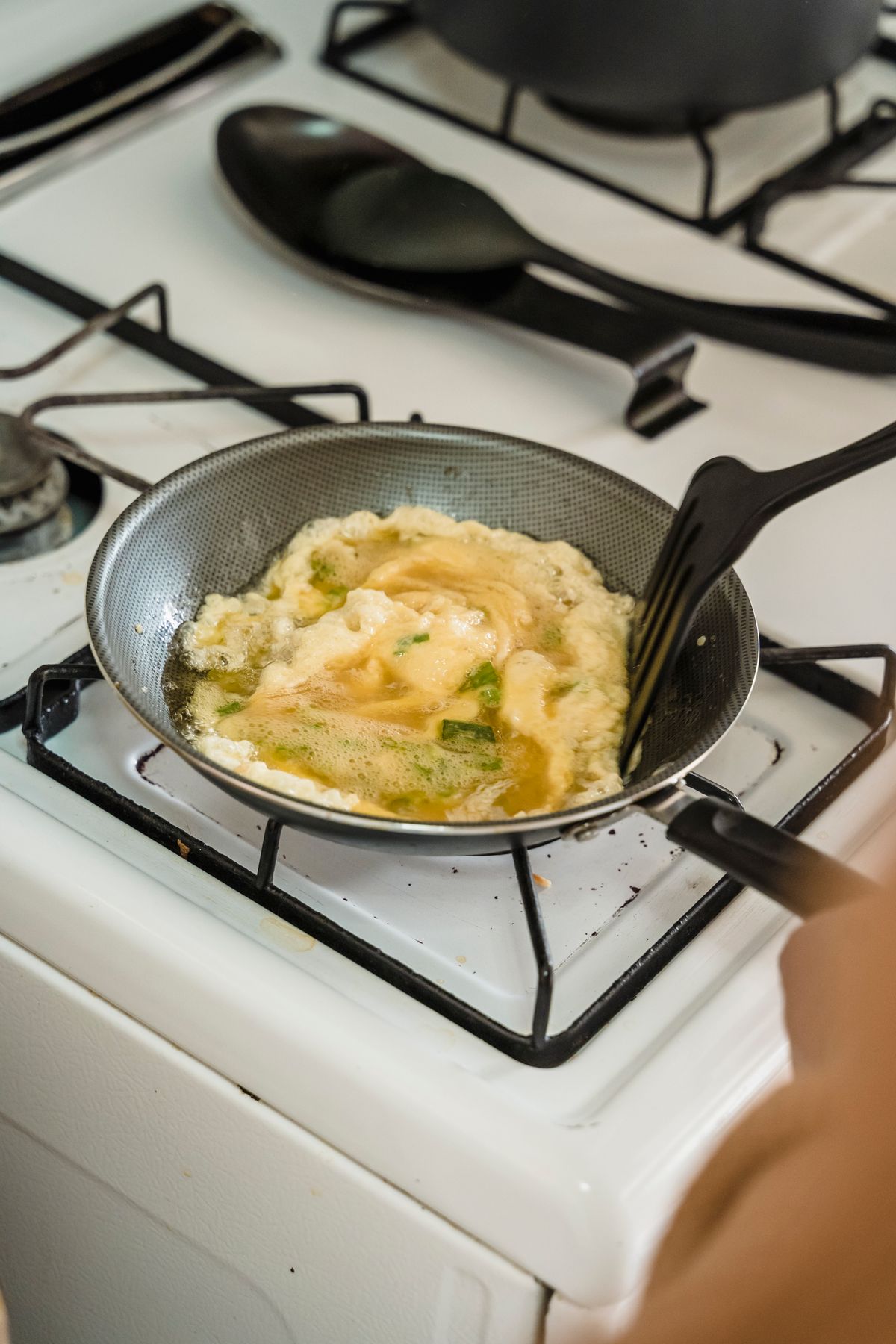
Niedrige Hitze ist nicht verhandelbar. Mittlere oder hohe Hitze ergibt trockene, gummiartige Klümpchen. Niedrige Hitze ergibt Geschmeidigkeit auf Hotelniveau. Es dauert so oder so 6 Minuten, doch die Textur ist vollkommen anders.
Rühren Sie ständig, aber sanft. Der Spatel bewegt sich in langsamen, bewussten Bewegungen durch die Eier. Aggressives Rühren zerstört die Textur und tötet die Schlieren. Sanft und stetig ist die Technik.
Kalte Butter am Ende ist das Allheilmittel. Kalte Butterwürfel außerhalb des Herds hinzuzufügen ist die Technik, die Restaurant-Rührei von amateurhaftem trennt. Sie senkt die Temperatur und fügt eine letzte Schicht Geschmacksfülle hinzu.
Trüffel in zwei Phasen: die Hälfte innen, die Hälfte obenauf. Der geriebene Trüffel in den Eiern vertieft den Geschmack durch das ganze Gericht. Der gehobelte Trüffel obenauf trifft die Nase des Gastes mit konzentriertem Aroma. Beides ist nötig.
Geben Sie während des Garens keinen Trüffel in die Pfanne. Die flüchtigen Aromastoffe im frischen Trüffel verflüchtigen sich oberhalb von 50 °C. Trüffel zu aktiv garenden Eiern hinzuzufügen verschwendet ihn. Geben Sie ihn nur in der Schlussphase außerhalb des Herds und am Tisch hinzu.
Mit weißem Trüffel: Verwenden Sie 10 g frischen weißen Trüffel, aufgeteilt. Lassen Sie die Crème fraîche weg (das zarte Aroma des weißen Trüffels wird von Milchprodukten über die Butter hinaus überdeckt). Verwenden Sie 5 g gehackt in den Eiern und 5 g gehobelt obenauf.
Mit Kaviar: Geben Sie 10 g Royal Oscietra obenauf, neben die Trüffelhobel. Drei Luxuszutaten in einem Bissen. Überraschend ausgewogen, weil jede eine eigene geschmackliche Rolle spielt.
Mit brauner Butter: Bräunen Sie die Garbutter bis zu nussigem Gold, bevor Sie die Eier hinzugeben. Das verleiht eine Tiefe, die wunderbar mit Trüffel harmoniert. Dies ist die Version, die im Le Bristol in Paris serviert wird.
Mit Schnittlauch oder Schalotten: Ein wenig fein geschnittener Schnittlauch oder 1 TL fein gewürfelte Schalotte, unter die Eier gemischt. Optional und leicht modernisierend.
Weinempfehlung: Champagner, insbesondere ein Blanc de Blancs. Auch ein Chablis Premier Cru passt. Vermeiden Sie Kaffee, dessen Bitterkeit kollidiert mit dem Trüffel.
Weitere Trüffelgerichte finden Sie in unseren Rezepten für Tagliatelle al tartufo und Risotto mit weißem Trüffel.
Beide funktionieren, ergeben aber unterschiedliche Gerichte. Der weiße Trüffel (Oktober bis Dezember) ist mit seinem knoblauchartigen, blumigen Aroma die luxuriösere Wahl. Der schwarze Trüffel (Dezember bis März) kostet die Hälfte und hat einen tiefen, erdigen Geschmack, der besonders gut zu reichhaltigen Eiern passt. Für alltäglichen Luxus schwarzer Trüffel. Für besondere Anlässe weißer Trüffel.
Die flüchtigen Aromastoffe im frischen Trüffel beginnen sich in dem Moment zu verflüchtigen, in dem Sie ihn hobeln. Das Aroma erreicht seine höchste Intensität in den ersten 60 Sekunden nach dem Hobeln. Planen Sie, am Tisch zu hobeln, sofort zu essen und vor dem Probieren keine langen Fotos zu machen.
Sie können, aber das Ergebnis ist weit unterlegen. Die meisten Trüffelöle enthalten synthetische Verbindungen, die das Trüffelaroma schlecht imitieren. Das Gericht wird künstlich riechen. Wenn Sie keinen frischen Trüffel bekommen, ist das Gericht auch ohne Trüffel hervorragend, als schlichtes einfaches Rührei mit Crème fraîche.
Für Rührei eignen sich Eier bis zu 2 Wochen alt gut. Die Frischeregel gilt eher für pochierte Eier (bei denen das Eiweiß zusammenhalten muss). Eier aus Freilandhaltung mit leuchtend orangefarbenem Eigelb machen einen spürbaren Unterschied für Farbe und Reichhaltigkeit des fertigen Gerichts.
Wenn Sie zum ersten Mal Rührei mit Trüffel zu Hause mit der richtigen Hoteltechnik zubereiten, verstehen Sie, warum die Leute im Wolseley 33 € dafür zahlen. Die Textur, das Aroma, der Moment, in dem der Trüffel Ihre Nase erreicht. Entdecken Sie die Kaviar-Kollektion von Beleaev, den perfekten Kontrapunkt zum Trüffel bei einem Luxusfrühstück, auf beleaev.com.
Beleaev ist ein internationales Haus für Kaviar und Feinkost mit Hauptsitz in London und Logistikzentren im Vereinigten Königreich, in Europa, den Vereinigten Arabischen Emiraten und den Vereinigten Staaten. Wir liefern verantwortungsvoll gezüchteten Beluga-, Oscietra-, Sevruga- und Kaluga-Kaviar an Kunden in jeder Region innerhalb von 24 bis 48 Stunden.


 447706084493


