


By Alex Beleaev | Beleaev Caviar & Gourmet | beleaev.com
If someone tells you all caviar tastes the same, they haven't tried enough. The different types of caviar span seven distinct species, each with a personality as vivid as any wine grape or single-origin coffee bean. Beluga is silk and restraint. Sevruga hits you square in the face with the sea. Oscietra does something nutty and complex that keeps you reaching for more.
Global trade in legal sturgeon caviar totals roughly 380 tonnes per year, down from over 3,000 in the early 1990s (CITES Trade Database, 2024). That scarcity shapes everything: price, quality and which types you'll actually find on the shelf.
This guide covers every type worth knowing: flavour, texture, price, and exactly which one belongs on your table.
Key Takeaways
- True caviar comes only from sturgeon; everything else is technically roe
- Prices range from roughly £3/g (Baeri) to £20+/g (Beluga), with quality varying enormously within each type
- Oscietra offers the best balance of complexity and value for most buyers
- Beginners should start with Baeri or Kaluga, not Beluga
- All legal caviar is now farm-raised and CITES-certified
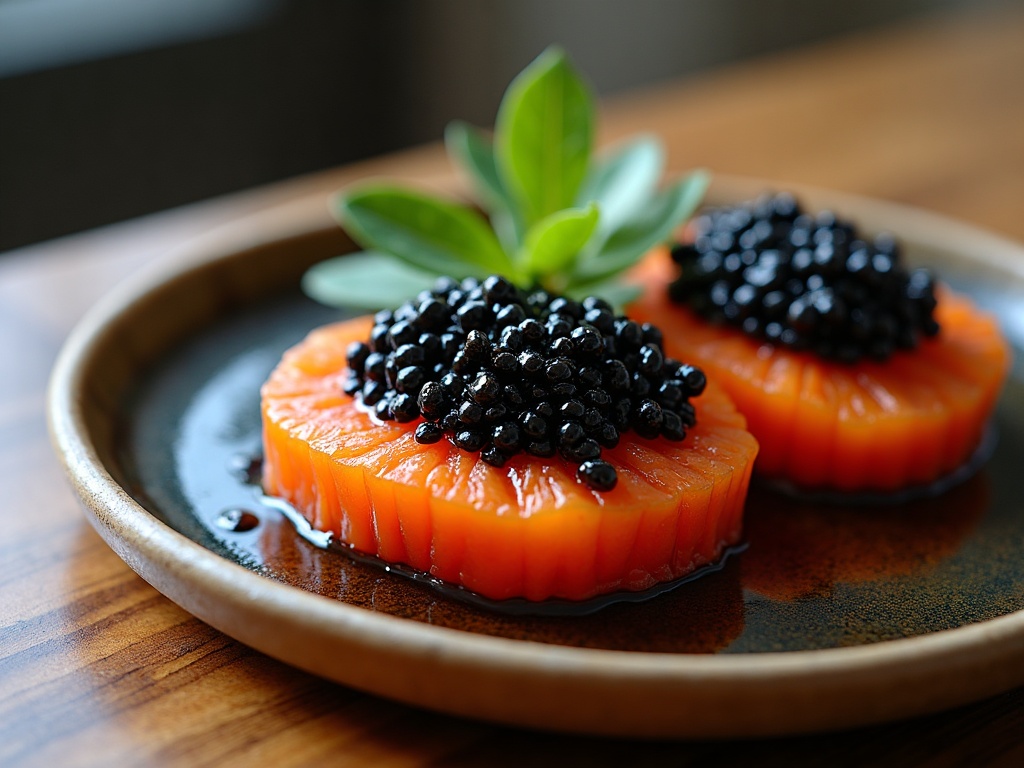
What Makes Caviar... Actually Caviar?
Caviar comes exclusively from sturgeon, a family of fish that's been swimming the planet for over 250 million years. Sturgeon are the most endangered group of species on Earth, with 85% at critical risk (IUCN Red List, 2022). That single fact explains why real caviar costs what it does.
If it comes from a sturgeon, it's caviar. If it comes from salmon, trout, lumpfish, or anything else, it's roe. Good roe, sometimes. But not caviar.
Why Does Species Matter So Much?
Every sturgeon species produces eggs with distinct characteristics. Huso huso (Beluga) yields enormous, delicate pearls. Acipenser stellatus (Sevruga) produces tiny, intensely flavoured beads. Diet, water temperature, age at harvest, and producer skill all affect the final product, but species sets the baseline.
We've tasted hundreds of batches across all major species. A mediocre Beluga and a superb Oscietra? We'd take the Oscietra every time.
All legally traded caviar must carry CITES documentation, tracing it from farm to tin. No paperwork, no trust.
Beluga: The Quiet Aristocrat
Beluga doesn't need to prove anything. It walks into the room and the room notices.
Species: Huso huso
Origin: Historically Caspian Sea. Now primarily farmed in Italy, Germany, Bulgaria and China.
Egg size: Largest of any caviar, 3.0-3.5mm
Colour: Pale silver-grey to dark anthracite. Lighter eggs are rarest and most prized.
Texture: The eggs dissolve on the palate with almost no resistance, like warm butter disappearing on your tongue.
What Does Beluga Actually Taste Like?
Buttery. That's the word everyone reaches for, and it's accurate. But good Beluga has a long, creamy finish with a whisper of the sea that never becomes aggressively briny.
Some people find that restraint underwhelming. They expect fireworks for £20 a gram and get silk instead. Beluga whispers where other caviars shout. The flavour doesn't announce itself. It unfolds slowly, deliberately, then lingers long after the last egg has gone.
Why so expensive? Huso huso takes 15 to 20 years to reach maturity (FAO Fisheries, 2023). Two decades of feeding and monitoring a single fish before it produces a gram of caviar.
Price range: £150-£250 per 100g
Best for: Celebrations, collectors, anyone who already knows they love caviar
Our take: Extraordinary when it's good. But don't start here. It's like beginning your wine journey with Romanee-Conti.
Oscietra: The Connoisseur's Favourite
Ask any insider and this is what they choose. Complex, surprising, endlessly interesting.
Species: Acipenser gueldenstaedtii (Oscietra sturgeon)
Origin: Originally Caspian and Black Seas. Now farmed in Italy, Israel, Uruguay, Bulgaria, France and China.
Egg size: Medium, 2.5-3.0mm
Colour: Widest range of any caviar: golden amber, olive green, dark brown, jet black. Colour varies with age and diet, not quality.
Texture: Firm, with a satisfying pop. These eggs burst against your palate like tiny, briny jewels.
Why Does Oscietra Keep You Coming Back?
Nutty. That's Oscietra's calling card. A rich, walnut-like warmth underpins the marine flavour, completely unique among caviars. You won't find it in Beluga or Sevruga.
Where Beluga offers one beautiful note sustained over a long finish, Oscietra gives you a progression. Briny first, then nutty, then a clean minerality that lingers. It changes as it warms on your tongue, evolving and revealing new layers.
Golden variety (sometimes marketed as "Imperial") comes from older fish and carries a more pronounced butterscotch sweetness. Rarer and priced accordingly.
In our experience, Oscietra wins more converts than Beluga in blind tastings. People expect Beluga to be most flavourful because it's most expensive, but flavour intensity and price don't correlate that way.
Price range: £80-£180 per 100g
Best for: Dinner parties, impressing someone who knows food, the everyday luxury of a serious caviar lover
Our take: If we could only eat one caviar for the rest of our lives, this is it.
Discover our Oscietra collection and taste the difference for yourself.
Sevruga: Small Eggs, Big Opinion
This caviar has something to say, and it's not lowering its voice.
Sevruga is the most intensely flavoured of the classic Caspian trio. Production accounts for less than 10% of global farmed output (Seafood Source, 2024), making it increasingly sought after.
Species: Acipenser stellatus (stellate sturgeon)
Origin: Caspian, Black and Azov Sea basins. Limited farming in Iran, the Caspian and select European operations.
Egg size: Smallest of the major caviars at 2.0-2.5mm
Colour: Dark grey to near-black, with a characteristic sheen
Texture: Fine-grained, almost creamy when pressed against the palate. The small eggs release flavour in one concentrated wave.
Bold, Briny, Unapologetic
If Beluga whispers and Oscietra converses, Sevruga shouts. Intensely marine, with a pronounced brininess with a mineral backbone. It hits the tongue and blooms into something deep, savoury, almost electric.
There's also a savoury umami quality that makes Sevruga extraordinary with ice-cold vodka or bone-dry champagne. The small egg size means flavour arrives all at once rather than building gradually. It's caviar for people who want to feel something.
Why isn't it more popular? The flavour is polarising. People who love it really love it. People who don't reach for the Oscietra.
Price range: £100-£200 per 100g
Best for: Experienced caviar lovers who want intensity, vodka pairings, blini and soured cream
Our take: The caviar equivalent of a peated Islay whisky. If you know, you know.
Kaluga: Beluga's Clever Cousin
Ninety per cent of the Beluga experience at half the price. The caviar the smart money buys.
Species: Huso dauricus (Kaluga sturgeon)
Origin: Amur River basin (the Caspian-China border). Almost all commercial Kaluga comes from Chinese farms.
Egg size: Large, 2.8-3.2mm, approaching Beluga proportions
Colour: Dark amber to brown, sometimes with olive undertones
Texture: Smooth and buttery, similar to Beluga but with slightly more structure.
Is Kaluga Really That Close to Beluga?
Kaluga belongs to the same genus (Huso), and the flavour shows it. Creamy, buttery, gentle marine character. But Kaluga brings its own personality, a subtle earthiness, almost like roasted hazelnuts. Where Beluga floats, Kaluga has its feet on the earth.
Is it "as good as" Beluga? Wrong question. Think of two siblings: similar bone structure, different personalities. The value proposition is hard to ignore: large, beautiful eggs with a luxurious mouthfeel at 40-60% of Beluga's price.
Price range: £60-£120 per 100g
Best for: Anyone who loves Beluga's style but wants better value, dinner party centrepieces, converting sceptics
Our take: If someone gave us £100 and said "impress six guests," we'd buy Kaluga without hesitating.
Baeri (Siberian): The Reliable Friend
Always good, never pretentious, and the perfect starting point.
Baeri dominates global production, accounting for over 60% of all farmed caviar worldwide (Eumofa, 2024). That ubiquity is both its strength and the reason snobs dismiss it. The snobs are wrong.
Species: Acipenser baerii (Siberian sturgeon)
Origin: Native to Siberian rivers. Farmed across France, Italy, Germany, China, Uruguay and beyond.
Egg size: Small to medium, 2.2-2.8mm
Colour: Dark brown to black
Texture: Soft and yielding, with a gentle pop.
Why Does Baeri Deserve More Respect?
It lacks the drama of Beluga's enormous pearls or Sevruga's intensity. What it offers is consistency, approachability, and real pleasure at a price that doesn't require a second mortgage.
Good Baeri tastes clean and mildly briny, with a smooth, slightly sweet finish. It won't challenge your palate or demand full attention. That's exactly why it's ideal for newcomers.
The quality range is enormous, though. Mass-produced Baeri from factory farms can taste muddy and flat. Well-raised Baeri from a respected producer is a completely different product. Provenance matters here more than with any other type.
Price range: £30-£80 per 100g
Best for: First-timers, cooking with caviar, everyday luxury, gifts for the caviar-curious
Our take: This is where we tell most people to start. Not because it's cheap, but because it teaches your palate what caviar is before you spend more.
Sterlet: The Tsar's Caviar
Rarest of the bunch you'll encounter commercially. Annual production: under 5 tonnes globally.
Species: Acipenser ruthenus
Egg size: Small, 1.8-2.2mm | Colour: Light to medium grey | Texture: Delicate and soft
Sterlet was reserved for Caspian tsars and Persian royalty. Sterlet's flavour is delicate, with floral notes no other caviar possesses. Honestly, it's more historically significant than gastronomically essential. If you encounter it, try it for the story alone.
Price range: £80-£150 per 100g
Best for: Collectors, history enthusiasts, completing a tasting flight
Salmon Roe (Ikura): Not Caviar, Still Superb
Not caviar. Full stop. But it deserves its place here because it's what most people encounter first.
Species: Various salmon (chum, sockeye, pink, king)
Egg size: Very large, 5-8mm | Colour: Vivid orange to deep red
Texture: Firm skin that pops dramatically, releasing bright, oceanic liquid
The eggs are huge, jewel-bright orbs that catch the light. The pop is theatrical. The flavour is bright, clean and oceanic, with none of the subtlety that defines sturgeon caviar. It's also remarkably versatile: sushi, scrambled eggs, pasta, baked potatoes, or straight from the jar.
Price range: £3-£8 per 100g
Best for: Cooking, casual entertaining, sushi, big bold flavours on a budget
Our take: We always have a jar in the fridge.
Caviar Comparison Table
| Type | Egg Size | Colour | Flavour | Price/30g | Best For |
|---|---|---|---|---|---|
| Beluga | Large (3.0-3.5mm) | Silver-grey to dark | Buttery, delicate, long finish | £80-£150+ | Ultimate celebrations |
| Oscietra | Medium (2.5-3.0mm) | Gold to dark brown | Nutty, complex, mineral | £24-£54 | Dinner parties, daily luxury |
| Sevruga | Small (2.0-2.5mm) | Dark grey to black | Intense, briny, umami | £30-£60 | Bold palates, vodka pairing |
| Kaluga | Large (2.8-3.2mm) | Amber to brown | Buttery, earthy, smooth | £18-£36 | Smart Beluga alternative |
| Baeri | Small-med (2.2-2.8mm) | Dark brown to black | Clean, mild, slightly sweet | £9-£24 | Beginners, cooking |
| Sterlet | Small (1.8-2.2mm) | Light grey | Delicate, floral, subtle | £24-£45 | Collectors, tastings |
| Salmon roe | Very large (5-8mm) | Orange to red | Bright, oceanic, bold | £1-£2.40 | Cooking, sushi, casual |
Which Caviar Should You Choose?
The Decision Tree
Trying caviar for the first time?
Start with Baeri. It teaches your palate what sturgeon caviar actually tastes like, without the pressure of a £200 tin.
Hosting a dinner party?
Oscietra. It photographs beautifully, sparks conversation and satisfies both novices and connoisseurs.
Celebrating something truly special?
Beluga. The anniversary, the milestone, the once-in-a-decade evening where nothing else will do.
Want luxury without the Beluga price?
Kaluga. Same genus, similar butteriness, 40-60% less money.
Cooking with caviar?
Salmon roe or Baeri. Never cook with premium caviar. Heat destroys the nuance.
What Flavours Do You Prefer?
Mild and buttery: Beluga or Kaluga
Complex and nutty: Oscietra
Bold and briny: Sevruga
Clean and approachable: Baeri
Bright and oceanic: Salmon roe
What's Your Budget?
Under £50 (per 100g): Baeri. Look for well-sourced French or Italian, and you'll be impressed.
£50-£120: The sweet spot. Kaluga gives you luxury-sized eggs. Mid-range Oscietra delivers complexity that punches above its weight.
£120+: Oscietra Gold, premium Sevruga, or Beluga. Something truly special.
We've helped hundreds of customers choose their first caviar. The single most common mistake? Starting too expensive. Start with Baeri or Kaluga. Build your palate. Then work up.
Explore the full Beleaev caviar collection and find the variety that fits your palate and occasion.
Further Reading
Shop the Beleaev caviar collection, responsibly farmed, CITES-certified, with next-day UK delivery.
Beluga · Oscietra · Baeri · Tasting Sets · Shop all
FAQ
What Is the Most Expensive Caviar in the World?
Almas caviar, from albino Beluga sturgeon, holds the record at roughly £20,000 per kilogram. For commercially available caviar in the UK, standard Beluga tops the list at £150-£250 per 100g. The price reflects the 15-20 year maturation period.
What Is the Difference Between Beluga and Oscietra?
Beluga eggs are larger (3.0-3.5mm vs 2.5-3.0mm), paler, and deliver a buttery, delicate flavour. Oscietra is nuttier, more complex, and significantly less expensive. Most professional tasters consider Oscietra the better all-round eating experience. They're different expressions of luxury, not better and worse.
Is All Fish Roe Caviar?
No. True caviar comes exclusively from sturgeon. Salmon roe, trout roe, lumpfish roe and tobiko are all fish eggs, but they're properly called "roe." The distinction is protected in most European markets. If a product doesn't specify a sturgeon species, it almost certainly isn't genuine caviar.
What Is the Best Caviar for Beginners?
Baeri (Siberian sturgeon) is the ideal starting point: clean, approachable, priced at £30-£80 per 100g. Kaluga is another excellent first choice for larger eggs. Both teach your palate what sturgeon caviar tastes like without a premium price tag.
Is Beluga Caviar Legal in the UK?
Yes, provided it carries valid CITES documentation proving it was farm-raised. Wild Beluga fishing has been banned since 2005. The UK permits import and sale of farmed Huso huso caviar through licensed retailers with proper traceability paperwork.
Pick One and Taste It
Seven types. Seven distinct personalities. Reading about them only gets you so far.
Whether you start with Baeri to get your bearings or jump straight to Oscietra, the important thing is to start somewhere. Caviar rewards curiosity. And if you're unsure, our tasting sets put three or four varieties side by side.
Discover the Beleaev collection and find the caviar that's right for you.
Explore the full caviar collection at Beleaev for next-day UK delivery.
Beleaev Caviar & Gourmet is an international caviar and gourmet company sourcing responsibly farmed Baeri, Oscietra, Imperial and Beluga caviar, delivered within 24-48 hours. Next-day delivery across the United Kingdom.
 447706084493

