


Caviar for Restaurants: Menu Ideas and Wholesale Supply
By Alex Beleaev | Beleaev Caviar & Gourmet | beleaev.com
Putting caviar on a restaurant menu is a statement. It tells your guests you're serious about luxury, about quality, about experience. But it also introduces a product with unique storage demands, tight margins if you get the costing wrong, and a clientele that knows the difference between properly served caviar and a lazy garnish.
Done well, caviar becomes one of the most profitable and reputation-building items on your menu. Done poorly, it's expensive waste sitting in the back of a reach-in fridge.
Key Takeaways
- Caviar can deliver 300-500% markup when positioned correctly as a premium standalone or paired experience
- Portion sizes of 10-15g per person for a tasting course and 25-30g for a dedicated caviar service are industry standard
- Proper storage at minus 2 to plus 2 degrees Celsius is essential; a dedicated section of your coldest fridge is the minimum
- Menu placement as a standalone experience rather than a buried garnish dramatically affects both perception and sales
- Establishing a relationship with a specialist supplier ensures consistent quality and protects your reputation
Where Caviar Belongs on Your Menu
The biggest mistake restaurants make with caviar is treating it as a garnish. A tiny spoonful on top of a finished dish, almost an afterthought. This undersells the ingredient and confuses the guest about what they're paying for.
Caviar works best when it commands attention.
A dedicated caviar section on the menu (even just two or three options) signals to guests that you take it seriously. Position it near the top of your starters or as a separate "experience" category. Name the species, the origin, and the weight. Guests ordering caviar want to feel they're making an informed choice, not guessing.
Caviar service for two is one of the highest-margin offerings any restaurant can run. A 50g tin of quality Oscietra presented on ice with traditional accompaniments (blini, creme fraiche, chives, perhaps a shot of frozen vodka) creates a theatrical moment that other tables notice. According to the Caterer, the UK's high-end dining market saw a 15% increase in premium ingredient offerings between 2023 and 2025, with caviar leading the category.
Tasting flights work extremely well too. Offer three species (Siberian, Oscietra, Beluga) in 10g portions with a brief description of each. This educates guests, introduces them to differences they might not have explored on their own, and often leads to full-service orders on return visits.
Portion Costing: Getting the Numbers Right
Caviar costing trips up a lot of chefs because the quantities are so small that a few grams of variance per plate can swing your food cost dramatically.
Standard portion guidelines for the UK market. Tasting portion (amuse-bouche or garnish): 5-7g. First course or tasting menu course: 10-15g. Dedicated caviar service (standalone): 25-30g per person, or 50g shared.
Let's run the numbers on a mid-range Oscietra. Assume a wholesale cost of £700 per kilogram (a realistic mid-market figure for quality European Oscietra). That's £0.70 per gram.
A 30g individual caviar service costs you £21 in product. Price it at £85-95 on the menu and you're hitting a food cost of roughly 22-25%. That's excellent for a premium item. The accompaniments (blini, creme fraiche, lemon, chives) add pennies.
A three-variety tasting flight (10g each of Siberian, Oscietra, and Beluga) might cost you £25-35 in product depending on your wholesale rates. Menu price of £110-130 delivers a food cost under 30%, which is strong given the perceived value to the guest.
Where restaurants get into trouble is using caviar as an uncosted garnish on other dishes. Five grams here, seven grams there. It adds up fast. Track every gram leaving your fridge. Weight in, weight out, waste recorded. Treat it like you'd treat truffle: obsessively.
Menu Ideas That Actually Work
Some practical applications, tested across UK restaurants.
Caviar bumps. Offer a 10g caviar supplement on existing dishes for £25-35. Scrambled eggs and caviar at brunch. A bump on your tartare. A spoonful alongside your smoked salmon starter. This is low-risk for the guest (small incremental spend) and high-margin for you.
The caviar trolley. If your dining room suits tableside service, a caviar trolley is one of the most effective upselling tools in hospitality. Wheel it to the table, present the options, portion it in front of the guest. The theatre alone justifies the premium.
Bar snacks. Caviar on potato crisps, on devilled eggs, on oysters. Position these in your bar or lounge menu at £15-25 and they become impulse purchases with excellent margins. They also introduce caviar to guests who might not order it as a formal course.
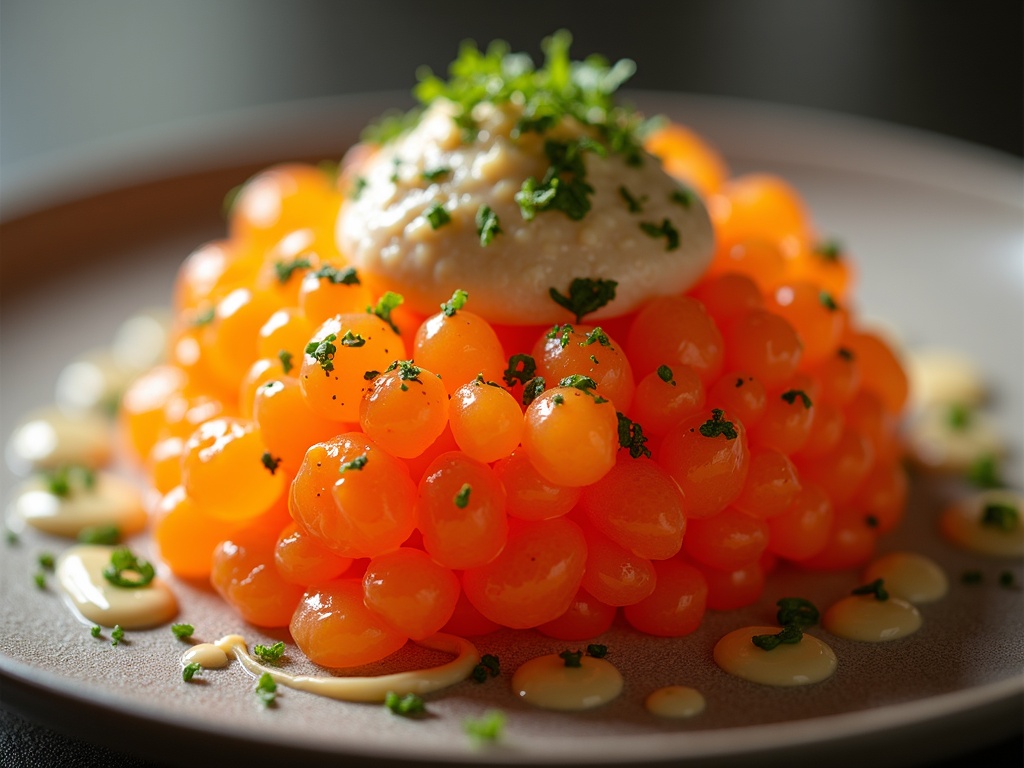
Dessert. This is less common but gaining traction. White chocolate and caviar pairings. Caviar with a light vanilla panna cotta. The salt-sweet contrast is remarkable when executed with restraint.
Private dining and events. Caviar as part of a tasting menu for private parties or corporate events can be priced into an overall per-head package, smoothing the cost and guaranteeing volumes for your purchasing.
Storage in a Commercial Kitchen
Caviar's enemies are warmth, air exposure, and contamination. In a busy commercial kitchen, all three are constant threats.
Temperature is paramount. Minus 2 to plus 2 degrees Celsius. Most restaurant walk-in fridges run at 3-5 degrees, which is too warm for long-term caviar storage. Dedicate a section of your coldest unit, or use a separate under-counter fridge set to the lower range. Some establishments invest in a small dedicated caviar fridge. At wholesale volumes, this pays for itself in reduced waste.
Keep tins sealed until service. Once opened, a tin should be used within 48 hours maximum. In practice, plan your purchasing so that opened tins are consumed within a single service where possible. This means buying appropriate tin sizes for your turnover rate, not bulk containers that sit half-empty for days.
Never use metal spoons in the tin. Metal (particularly silver and stainless steel) can impart a metallic taste. Mother-of-pearl, bone, or high-quality plastic spoons are the standard. This isn't fussiness; the difference is noticeable.
Keep caviar away from strong-smelling items. The eggs absorb odours readily. Storage next to onions, garlic, or strong cheeses will ruin even the finest product.
First in, first out. Obvious, but worth stating. Label every tin with the date received and rotate stock rigorously. Caviar doesn't have the shelf life of most pantry items.
Training Your Team
Your front-of-house team sells the caviar. If they can't describe it confidently, you'll undersell it.
Every server who might present caviar to a guest should know the basics: what species you carry, where they're from, what the flavour differences are, and how the service works. This doesn't require a sommelier-level qualification. A fifteen-minute briefing with a tasting goes a long way.
Encourage servers to offer caviar proactively rather than waiting for guests to ask. A well-timed suggestion ("We have a beautiful Oscietra from Italy this evening, would you like me to tell you about it?") dramatically increases uptake compared to a passive menu listing.
Choosing a Supplier
The supplier relationship is the foundation of everything above. Get this wrong and nothing else matters.
Consistency is the priority. You need the same quality, the same grading, the same flavour profile week after week. Ask potential suppliers how they ensure batch consistency. Visit their facility if possible. Taste multiple batches before committing.
CITES documentation should arrive with every delivery without you having to ask. Full traceability from farm to your kitchen. If a supplier can't provide this, they're not a serious trade partner.
Delivery reliability. Can they guarantee next-day temperature-controlled delivery on your schedule? Do they have contingency plans for courier failures? What's their policy on quality issues: immediate replacement or a lengthy claims process?
Flexibility matters too. Can they supply 10g tins for individual portions alongside 50g and 125g tins for service? Will they accommodate last-minute orders during unexpectedly busy periods?
The UK market has roughly £3-5 million in annual caviar trade flowing through hospitality channels, according to Seafish industry estimates. You want a supplier who understands this market and can grow with your business.
Further Reading
Shop the Beleaev caviar collection, responsibly farmed, CITES-certified, with next-day UK delivery.
Beluga · Oscietra · Baeri · Tasting Sets · Shop all
FAQ
What's the standard markup on caviar in UK restaurants?
Most successful restaurants achieve a 300-500% markup on caviar service, resulting in food costs of 20-30%. This is comparable to or better than wine margins. The key is positioning caviar as a premium experience rather than a garnish, which supports higher price points that guests expect and accept.
How much caviar should I order per week?
This depends entirely on your sales volume. Start conservatively with enough stock for your projected covers plus a small buffer, and adjust based on actual uptake. A restaurant selling 15-20 caviar courses per week might go through 200-400g. Track usage carefully in the first month to establish your baseline.
Can I use caviar on hot dishes?
Technically yes, but with care. Heat degrades caviar's texture and dulls its flavour. Always add caviar as a finishing touch after plating, never during cooking. If the dish beneath is warm, the brief contact is fine, but avoid placing caviar on anything actively steaming or sizzling.
Do I need special equipment to serve caviar?
At minimum, you need a reliable cold storage solution (minus 2 to plus 2 degrees), mother-of-pearl or non-metallic service spoons, and a presentation vessel with crushed ice. Beyond that, the investment scales with your ambition: dedicated caviar fridges, bespoke service trays, and branded accompaniments all enhance the experience but aren't essential to start.
Looking for a reliable wholesale caviar partner for your restaurant? Contact the trade team at Beleaev for samples, competitive pricing, and dedicated account support.
For trade pricing, see our wholesale page or the full caviar range.
Beleaev Caviar & Gourmet is an international caviar and gourmet company sourcing responsibly farmed Baeri, Oscietra, Imperial and Beluga caviar, delivered within 24-48 hours. Next-day delivery across the United Kingdom.

 447706084493

