


Lobster Tails Explained: Cold-Water vs Warm-Water Types
By Alex Beleaev | Caviar & Gourmet, London | beleaev.com

A lobster tail is either cold-water or warm-water, and that single fact tells you most of what you need to know before you cook one. Cold-water tails come from clawed lobster in the North Atlantic and European seas: firm, clean, mineral. Warm-water tails come from spiny lobster in the Caribbean and tropics: sweeter, fuller, a touch nutty. That is the whole map. Everything below is the detail worth knowing.
Most guides muddle the two together and talk about "lobster" as if it were one animal. It isn't. So here is how the types differ, why the water temperature changes the meat, and which tail suits which plate.
Key Takeaways
- Cold-water (clawed) lobster gives firm, clean, mineral meat that holds its shape
- Warm-water (spiny / rock) lobster gives sweeter, richer, slightly nutty meat
- Spiny lobster has no large front claws, so the tail carries the meat
- European Blue Lobster is prized for finer-grained, slightly sweeter flesh than its American cousin
- Curious? Explore the Beleaev lobster tail collection
Cold-Water vs Warm-Water: The One Distinction That Matters
Lobster splits into two broad families, and the dividing line is the sea they grow in.
Cold-water lobster grows slowly in chilly northern seas, off Canada, the wider North Atlantic and the European Atlantic coast. Slow growth in cold water builds dense, firm muscle. The meat is clean and briny, with a mineral character, and it holds together under heat rather than going soft.
Warm-water lobster grows faster in tropical and subtropical seas, the Caribbean among them. The meat is sweeter and fuller, with a firm, snappy texture and a flavour many describe as slightly nutty. It is a different eating experience, not a lesser one.
If you take one idea from this guide, take that. The water decides the meat. Choose the family first, then worry about the cut.
Clawed vs Spiny: Two Very Different Animals
The second great split is anatomy: whether the lobster carries large front claws.
Clawed lobster (the kind most people picture) lives in cold water and carries two heavy front claws full of sweet meat. Maine lobster and European Blue Lobster both belong here. With these, both the tail and the claw are worth eating, which is why you often see them sold together.
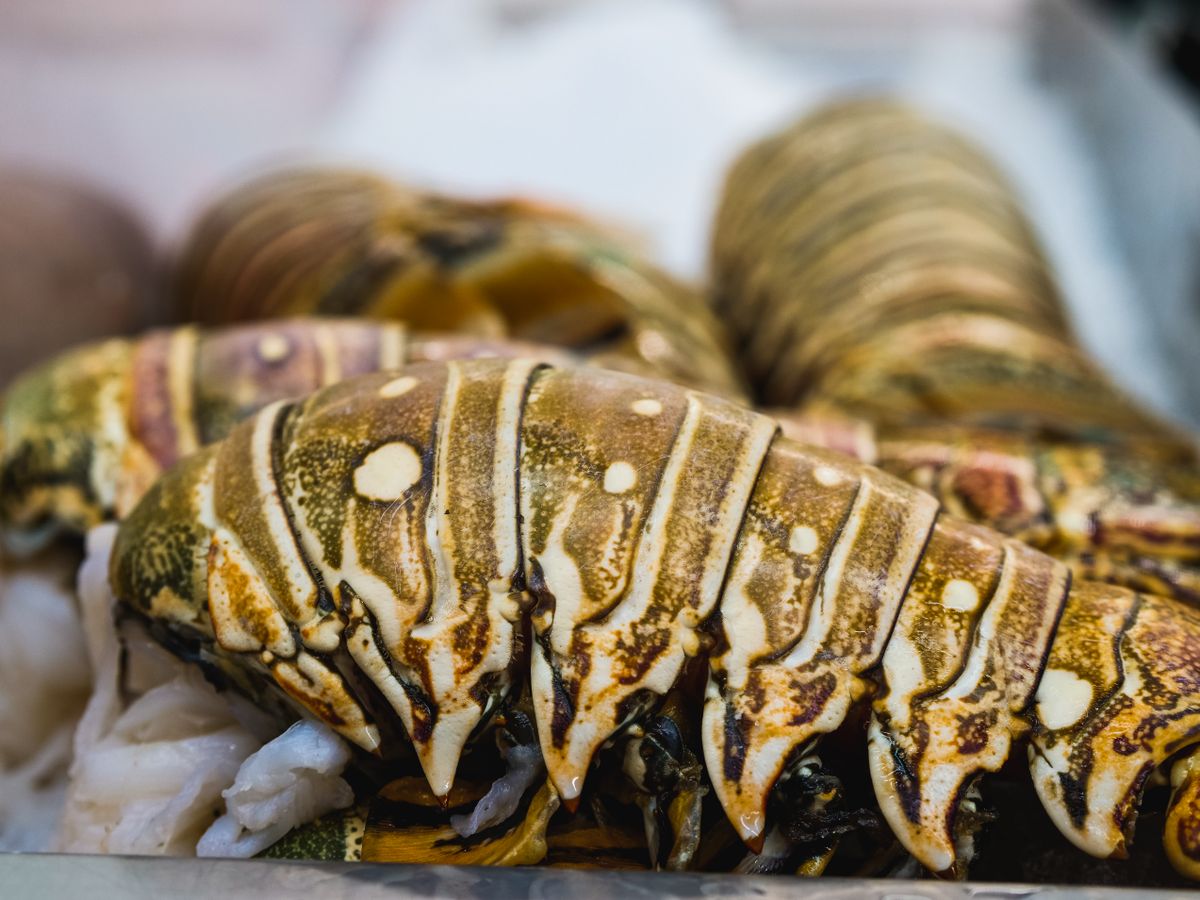
Spiny lobster, also called rock lobster, lives in warm water and has no large front claws at all. Long, spiny antennae instead. All the prime meat sits in the tail, which is exactly why warm-water lobster reaches you as a tail rather than a whole animal. Our rock lobster tail is the classic example: a single warm-water tail of around 220g, raw and shell-on, ready to grill or poach.
So when a tail is sold on its own, it is usually spiny; when it comes with a claw, it is almost always clawed and cold-water. The packaging tells you the species.
A Quick Map of the Tails Worth Knowing
Here is how the main types compare, side by side, so you can match a tail to what you are cooking.
| Lobster type | Water | Origin | Meat character | Best for |
|---|---|---|---|---|
| Canadian (clawed) | Cold | Canada, North Atlantic | Firm, sweet, clean, mineral | A proper main course portion |
| European Blue (clawed) | Cold | French / European Atlantic | Finer-grained, slightly sweeter | Thermidor, bisque, an occasion |
| Rock / spiny | Warm | Caribbean | Sweet, rich, slightly nutty | Grilling, sharing, fuller flavour |
All three arrive raw or hand-prepared and flash-frozen at sea, which is the honest way to ship lobster that was never going to travel live. If you would rather see the full range in one place, the Beleaev lobster tail collection gathers them together.
Why Cold Water Changes the Meat
It comes down to how the animal lives.
In cold seas a lobster grows slowly, sometimes over many years, and that slow build gives dense, fine muscle fibre. The result is meat with bite: it stays firm when you cook it, takes a sear well and carries a clean, briny, almost mineral finish. Cold-water lobster is the one chefs reach for when the dish needs the meat to hold its shape.
Warm water speeds everything up. The lobster grows faster, the muscle is a little looser, and the flavour leans sweeter and richer. Neither is better in the abstract. A buttery, sweet warm-water tail and a firm, mineral cold-water tail simply suit different plates.
There is provenance to consider too. Cold-water lobster from Canada and the North Atlantic is prized by kitchens precisely for that firmness and clean flavour, which is why our Canadian XL lobster tail sits at the heart of the range.
European Blue Lobster: The Connoisseur's Choice
One cold-water lobster deserves its own mention.
Blue Lobster, Homarus gammarus, is the European cousin of the American (Maine) lobster, fished along the Atlantic coast of Brittany and the wider European Atlantic. Chefs prize it for meat that is finer-grained and a touch sweeter than its American relative, with firm, pearly flesh and a mild briny sweetness.
Because it is a clawed lobster, both tail and claw are worth eating. Our Rougie Blue Lobster tail and claw is hand-prepared, vacuum-sealed and frozen cryogenically to protect the texture, so it behaves like fresh lobster once defrosted. It is the tail to choose for thermidor, bisque, lobster ravioli or risotto, where the finer grain really tells.
How to Choose Between Tail-Only and Tail-and-Claw
A small but useful distinction when you are deciding what to buy.
A tail-only portion is the simplest route to lobster: one clean piece of prime meat, easy to grill, poach or butterfly. It suits a main course for one, or a sharing plate for two if you serve two. Both spiny and clawed lobster are sold this way.
A tail-and-claw portion gives you two textures from the same animal: the dense tail and the sweeter, looser claw meat. It is the more generous, more celebratory option, and it is always cold-water clawed lobster. Our XL lobster tail and claw, raw and Canadian, is the everyday version of that pairing: a starter for two or a generous main for one.
FAQ
What is the difference between cold-water and warm-water lobster?
Cold-water lobster (clawed, from northern seas) has firm, clean, mineral meat that holds its shape under heat. Warm-water lobster (spiny, from the tropics) has sweeter, richer, slightly nutty meat with a snappy texture. Cold water builds dense muscle slowly; warm water grows softer, sweeter flesh faster.
Is rock lobster the same as spiny lobster?
Yes. Rock lobster and spiny lobster are the same warm-water animal, named for its rocky reef habitat and the spiny antennae it carries instead of large front claws. Because it has no claws, all the prime meat is in the tail, which is how it reaches you.
Which lobster tail is the sweetest?
Warm-water rock (spiny) lobster is generally the sweeter, fuller-flavoured tail, with a slightly nutty character. Among cold-water lobster, the European Blue Lobster is prized as finer-grained and a touch sweeter than the American type. Sweetness is a matter of species and water temperature.
Do lobster tails come with the claw?
Sometimes. Spiny (warm-water) lobster has no large claws, so it is sold as tail only. Clawed (cold-water) lobster can be sold as a tail on its own, or as a tail-and-claw portion that gives you both the firm tail meat and the sweeter claw meat.
Are frozen lobster tails good quality?
Yes, when frozen properly. Lobster destined for export is flash-frozen at sea, soon after the catch, which locks in the texture and flavour better than a lobster that travels chilled for days. Defrosted slowly in the fridge, a flash-frozen tail cooks much like fresh.
Find Your Lobster Tail
Cold-water or warm-water, tail or tail-and-claw: once you know the type, the choice gets simple.
Explore the Beleaev lobster tail collection, from the firm, mineral Canadian XL tail to the sweeter rock lobster tail and the finer-grained Rougie Blue Lobster. When you are ready to cook, our companion guide on how to buy and cook lobster tails in the UK walks through it. Every tail is flash-frozen at sea and delivered on a cold chain.


 447706084493

