


How to Build the Perfect Cheeseboard: British & French
By Alex Beleaev | Caviar & Gourmet, London | beleaev.com

A good cheeseboard is three to five cheeses, chosen for contrast, served at room temperature with a few sharp, sweet things alongside. That's the whole principle. Pick a soft one, a hard one and a blue, add a wild card, and you have a board that reads beautifully and tastes even better.
The mistake most people make is buying five cheeses that all taste roughly the same. A board is about range: soft against firm, mild against sharp, cow against sheep. Get the contrast right and even three cheeses look generous. Here's how the British and French classics fit together, and what to put around them.
Key Takeaways
- Three to five cheeses is plenty; aim for one soft, one hard, one blue, plus a wild card
- Build contrast across milk type, texture and strength, not five versions of the same thing
- Take cheese out of the fridge an hour before serving so the flavour wakes up
- Pair with quince paste, honeycomb, walnuts and oatcakes; pour port or a structured red
- Build your own from the Beleaev gourmet collection
How Many Cheeses Should Be on a Board?
Fewer than you think. Three good cheeses beat seven mediocre ones every time.
For a small gathering, three is the sweet spot: a soft cheese, a hard cheese and a blue. For a larger table or a proper cheese course, stretch to five and add a wild card, something with a washed rind or an unusual milk. Past five and people stop tasting and start grazing, and the board loses its shape.
Allow roughly 60 to 70g of cheese per person if it follows a meal, and closer to 120g per person if the board is the main event. Better to run a little short than to send everyone home overfed on the one cheese nobody touched.
The Soft Cheeses: Camembert and Brie-Style
Start soft. A bloomy-rind cheese is the most welcoming thing on any board, and the one people reach for first.
Our Tunworth British Camembert is the one to beat. Made in Hampshire from pasteurised cow's milk, it has a bloomy white rind, a gentle mushroom aroma and an interior that turns properly gooey once it ripens. It's a British answer to a French classic, and frankly it holds its own against anything. Serve it ripe on the board, or bake the 250g wheel whole and let people dip into the molten centre.
For a lighter, brighter option, Perl Wen from Caws Cenarth in Wales is an organic brie-style cheese, clean and citrusy with a soft, creamy centre. It's a gentler introduction than a ripe Camembert, and a lovely partner to honeycomb.
If you want range on a single board, you don't need both. Pick the Camembert for depth, the Perl Wen for freshness, and let a firmer cheese carry the contrast.
The Hard Cheeses: Comté and Manchego
Every board needs a firm cheese for backbone, something you can shave into proper slivers.
Comté Vieux, matured eighteen months and more, is a French Alpine cheese with deep nutty, brown-butter and toasted-hazelnut notes and a firm, crystalline bite. Those little crunchy crystals are a sign of long ageing, and they're part of the pleasure. It's superb on the board and just as good grated into a gratin.
Manchego DOP brings something different again. Spain's most famous cheese, made from the milk of Manchega sheep in La Mancha, it's firm, nutty and buttery with a piquant finish. Sheep's milk gives it a richness cow's milk can't, and it's the cheese that proves a board should never stick to one animal.
The Blues: Stilton and Roquefort
A blue is the full stop at the end of the board. It's the strongest thing on the plate, so it goes last.
Colston Bassett Stilton is the benchmark English blue, made in Nottinghamshire. Rich, deep and creamy with a mellow blue tang, it's the Christmas-table icon for good reason, and it was born to sit next to a glass of port and a stack of oatcakes.
Roquefort AOP is its French counterpart and a sharper customer altogether. Made from ewe's milk and aged in the Combalou caves, it's salty, creamy and properly assertive. Crumble it over a salad, melt it into a sauce, or serve it with walnuts and a drizzle of honey to soften the edge.
One blue is usually enough. If you're serving both, keep them well apart on the board so the Roquefort doesn't overpower the Stilton.
The Wild Card: A Washed-Rind Cheese
This is the one that gets people talking. A washed-rind cheese smells far stronger than it tastes, and that contradiction is the fun of it.
Golden Cenarth is the one we reach for: an award-winning Welsh washed-rind cheese from Caws Cenarth, soft and oozing with a real savoury depth. It was a Supreme Champion at the British Cheese Awards, and it earns the billing. Bake it whole like a Camembert, or serve it ripe and let it slump across the board.
A washed-rind cheese sits between the soft and the blue in strength, which makes it the perfect bridge on a five-cheese board. It's also the one most likely to convert someone who thinks they don't like "smelly" cheese.
What to Serve Alongside
The cheese is the star. Everything else is there to flatter it.
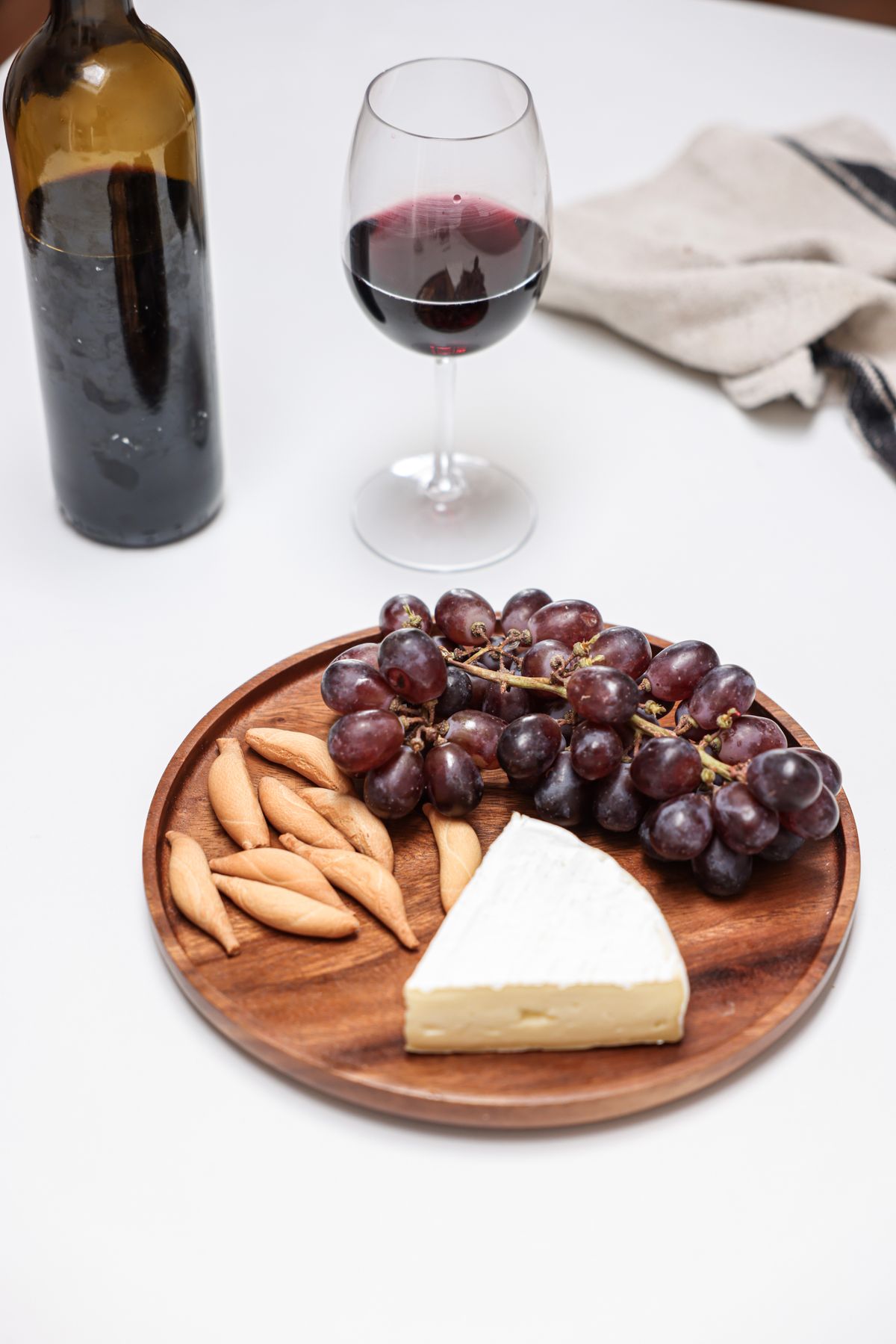
The classic accompaniments earn their place. Membrillo, the Spanish quince paste, is the traditional partner for Manchego and aged cheeses, sweet and firm enough to slice. English honeycomb drizzled over a blue or a soft cheese is one of the great simple pleasures. Add walnuts for crunch, a few grapes or fresh figs for acidity, and good oatcakes or a plain sourdough as the neutral base.
| Cheese type | Our pick | Milk | Pair it with |
|---|---|---|---|
| Soft, bloomy rind | Tunworth Camembert | Cow | Honeycomb, fig |
| Hard, aged | Comté Vieux 18-month | Cow | Walnuts, dark bread |
| Hard, sheep | Manchego DOP | Sheep | Membrillo, almonds |
| Blue | Colston Bassett Stilton | Cow | Port, oatcakes |
| Washed rind | Golden Cenarth | Cow | Crusty bread, ale |
For wine, a tawny port is the natural friend of a blue, while a structured red handles the hard cheeses and a crisp white lifts the soft ones. Cider and a good amber ale work beautifully too, especially with the washed-rind.
The last detail matters most: take everything out of the fridge a full hour before serving. Cold cheese tastes of almost nothing. Warm it to room temperature and the flavour, and the aroma, comes alive.
FAQ
How many cheeses do I need for a cheeseboard?
Three to five. For a small group, choose one soft, one hard and one blue. For a larger table, add a washed-rind cheese and a second hard option. Allow around 60 to 70g per person after a meal, or 120g if the board is the centrepiece.
What is the correct order to eat cheese on a board?
Work from mildest to strongest so your palate isn't overwhelmed early. Begin with the soft, bloomy-rind cheese, move through the hard and aged styles, then finish with the blue. The washed-rind cheese sits comfortably between the hard cheeses and the blue.
Should cheese be served cold or at room temperature?
Always at room temperature. Take the board out of the fridge a full hour before serving. Cold mutes both flavour and aroma, particularly in soft and blue cheeses, while a little warmth lets the texture soften and the character come through.
What do you put on a cheeseboard besides cheese?
Quince paste, honeycomb, fresh and dried fruit, walnuts, and a neutral base of oatcakes or sourdough. Keep accompaniments simple so they flatter the cheese rather than compete with it. A glass of port or a structured red completes the board.
Can you make a British-only cheeseboard?
Easily, and a fine one. A Tunworth Camembert, a washed-rind Golden Cenarth and a Colston Bassett Stilton give you soft, savoury and blue, all made in Britain. Add a Welsh Perl Wen for freshness and you have a complete board without crossing the Channel.
Build Your Own Board
The perfect cheeseboard isn't about spending the most. It's about contrast: soft against hard, mild against sharp, and a wild card to spark conversation.
Build yours from the Beleaev gourmet collection, starting with the Tunworth Camembert for the soft slot and Colston Bassett Stilton for the blue. Round it out with the pantry essentials, the membrillo and honeycomb that make a board sing. And if you're ready to order, our guide to buying artisan cheese online in the UK covers what to choose and how it arrives.
Related guide: How to eat English honeycomb for serving sizes, edible wax and cheese pairings.
 447706084493

