

Caviar for Sushi: Choosing Roe That Works
By Alex Beleaev | Beleaev Caviar & Gourmet | beleaev.com
Sushi and roe were made for each other: warm seasoned rice, cool bursting pearls, a sheet of crisp nori holding the contrast together. But "caviar" on a sushi menu covers everything from ten-a-penny tobiko to sturgeon pearls worth more than the rest of the platter. Here is what each one does, and where true caviar genuinely earns its place on rice.
Key Takeaways
- Tobiko, masago and ikura are the workhorse roes of sushi, and rightly so
- True sturgeon caviar shines on nigiri and gunkan as a finishing luxury
- Mild grades (Baeri, Imperial) suit rice; aggressive brine fights it
- Add caviar after any soy dip; soy steamrolls the pearls
- A 30g tin finishes 12-16 pieces generously
The Roe Family on a Sushi Menu
Tobiko (flying fish) brings the crunch and the colours; masago (capelin) is its smaller, softer cousin. Ikura, the big amber salmon pearls, is the king of gunkan and the closest thing sushi has to a roe centrepiece. All three are honest, delicious and affordable, and none of them is caviar.
Sturgeon caviar enters as something else entirely: not texture confetti but a flavour event, draped over a finished piece the way a fine kitchen uses truffle.
Where True Caviar Belongs

Three placements repay the spend. A quenelle on scallop or sea bream nigiri, where sweet flesh meets saline cream. A gunkan of caviar alone, rice and nori and nothing else, which is the purest way to taste the pairing. And a spoon over tamago or a soft-yolk piece, the egg-on-egg trick borrowed from Caspian service.
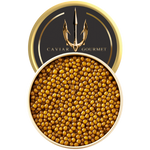
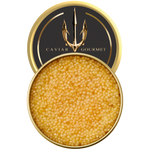
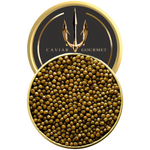
Grade matters more than badge here. Rice vinegar and nori already bring acidity and umami, so choose pearls that cooperate: Royal Baeri for its mild butter, or Imperial gold when the moment calls for theatre. Sevruga-style intensity tends to argue with the rice.
The Rules That Keep It Luxurious
Add caviar after the soy stage; one dip erases £10 of nuance. Keep wasabi microscopic near the pearls. Serve the topped pieces immediately, while the contrast of warm rice and cold roe is alive. And portion sanely: 30g finishes a dozen-plus pieces with generosity to spare.
For technique beyond sushi night, our caviar sushi hand-roll recipe builds the home version step by step. Pearls, spoons and the rest of the kit ship chilled UK-wide from the caviar collection in 24-48 hours.
Frequently Asked Questions
What is the orange caviar on sushi?
Usually ikura (salmon roe) for the large pearls or tobiko (flying fish roe) for the small crunchy ones. Both are true roes; neither is sturgeon caviar.
Is real caviar used in Japanese restaurants?
At the top end, yes, as a finishing garnish on nigiri, gunkan and tasting-menu pieces, used in small, deliberate amounts.
Which caviar is best for homemade sushi?
A mild farmed grade. Baeri gives the friendliest butter-and-brine balance; Imperial gold adds occasion. Save the boldest grades for the spoon.
How much caviar do I need for a sushi night?
A 30g tin tops 12-16 pieces generously. For a party platter, 50g lets everyone meet the good stuff twice.


 447706084493

