


The History of Caviar: From Persian Kings to Modern Tables
By Alex Beleaev | Beleaev Caviar & Gourmet | beleaev.com
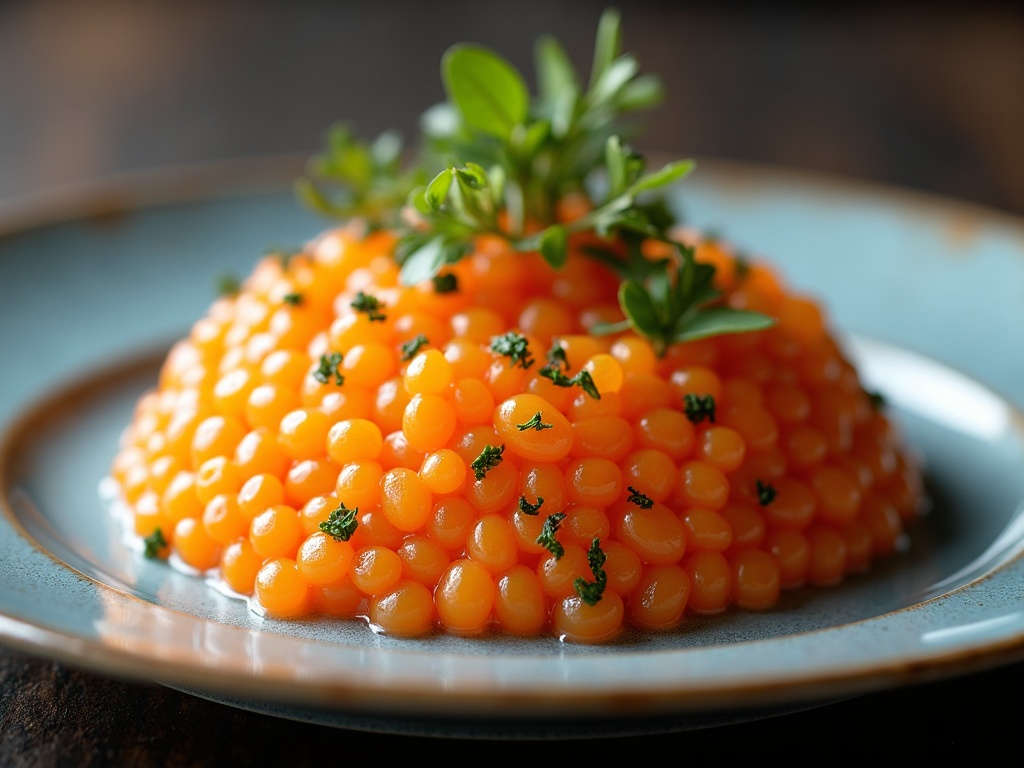
Somewhere around 400 BC, a Persian fisherman pulled a sturgeon from the Caspian Sea, sliced it open, and salted the eggs inside. He probably had no idea he was starting a 2,400-year obsession that would fuel empires, bankrupt ecosystems, and eventually land on your table at three figures a tin.
The history of caviar isn't a straight line from ancient Persia to modern luxury. It's a wild ride through royal courts, American frontier saloons, black markets, and Chinese fish farms. And every chapter tells you something about how humans relate to the things they consider precious.
Key Takeaways
- The word "caviar" likely derives from the Persian "chav-jar," meaning cake of power or strength
- The Romanov dynasty turned caviar into a symbol of elite status across Europe
- America was the world's top caviar producer in the 1880s, with bars giving it away free
- Overfishing collapsed Caspian sturgeon populations by 90% between 1978 and 2002
- Modern aquaculture now produces caviar of exceptional quality across four continents
Where Did Caviar Originate?
Persia. The Caspian Sea coast, to be precise.
The earliest records of sturgeon egg consumption trace back to the Achaemenid Empire, roughly the 4th century BC. Persian fishermen called their prized catch "chav-jar," a term most linguists translate as "cake of power" or "cake of strength." They believed the salted eggs gave warriors energy before battle and cured ailments ranging from depression to poor circulation.
Whether any of that was true is another matter entirely. What we know for certain is that the Caspian Sea, bordered by five countries including modern-day Iran, Azerbaijan, Kazakhstan, and Turkmenistan, held the largest concentration of sturgeon species on the planet. Five species thrived in those waters: Beluga, Oscietra, Sevruga, Starry, and Ship sturgeon. The Persians were simply the first people organised enough to harvest them systematically.
The Greeks and Romans knew about sturgeon too. Aristotle mentioned them. Roman writers described elaborate banquets where sturgeon was presented on silver platters decorated with flowers. But these were whole fish, roasted or smoked. The focus on the eggs as a delicacy in their own right? That was a Persian invention.
By the time the Mongol Empire swept through Central Asia in the 13th century, salted sturgeon roe had become a trade commodity moving along the Silk Road. Batu Khan, grandson of Genghis, reportedly served caviar at victory feasts. The eggs had already made the jump from practical battlefield nutrition to ceremonial luxury.
How Did Imperial Courts Turn Caviar Into a Symbol of Power?
If Persia invented caviar, the imperial courts of the Caspian perfected the mythology around it.
The Caspian love affair with sturgeon roe began in earnest under the Romanov dynasty. Ivan the Terrible, in the 16th century, was fond enough of the stuff to demand regular deliveries from Astrakhan fishermen at the mouth of the Volga. But it was Peter the Great who truly weaponised caviar as a tool of statecraft.
Peter appointed a dedicated official, sometimes called the "caviar chancellor," to oversee the harvest and ensure the finest eggs reached the imperial table. He served caviar at diplomatic banquets specifically to impress visiting European ambassadors. The strategy worked. By the early 1700s, European aristocrats associated caviar with imperial power, sophistication, and mystery.
Catherine the Great pushed things even further. She imported French chefs to develop new ways of presenting caviar and sent tins as diplomatic gifts across Europe. The French court, never shy about adopting other cultures' luxuries, embraced it completely. By the late 18th century, Parisian haute cuisine had adopted caviar as a staple of fine dining.
The imperial monopoly on Caspian fishing rights meant the tsars controlled both supply and narrative. Caviar wasn't just expensive because it was rare. It was expensive because the people selling it were, quite literally, emperors. That association between caviar and absolute power embedded itself in Western culture so deeply that it persists to this day.
According to the United Nations Food and Agriculture Organization, the Caspian produced approximately 2,000 tonnes of caviar annually during the late imperial period (FAO Fisheries Report, historical data). Nearly all of it came from wild Caspian sturgeon.
What Happened in America's Caviar Boom?
This is the chapter that surprises everyone.
In the 1870s, a German immigrant named Henry Schacht set up a caviar processing operation on the Delaware River in New Jersey. He'd noticed something remarkable: American rivers were absolutely teeming with sturgeon. Lake sturgeon, Atlantic sturgeon, shortnose sturgeon. They were everywhere, and nobody was paying attention to the eggs.
Schacht started exporting American caviar to Europe, sometimes relabelling it as Caspian to fetch higher prices. Within a decade, the United States had become the world's largest caviar producer. By 1885, American operations were processing over 150 tonnes annually, according to records from the US Fish Commission.
And here's the part that stings if you've just paid good money for a tin. American saloon bars in the 1880s and 1890s gave caviar away for free. Bowls of it sat on bar counters like peanuts or pretzels, because the salt made people thirsty and thirsty people bought beer. Sturgeon was so abundant that fishermen considered it a nuisance catch.
The abundance didn't last. By 1900, American sturgeon populations had been devastated. Rivers were overfished, dammed, and polluted. The Delaware River fishery collapsed entirely. Lake sturgeon in the Great Lakes region suffered the same fate. A resource that had seemed inexhaustible vanished in roughly twenty years.
The American caviar story is a cautionary tale that the industry would repeat, on a much larger scale, a century later.
Why Did the Caspian Caviar Industry Collapse?
For most of the 20th century, the Caspian states managed sturgeon fishing with iron-fisted quotas. Caviar production was a state enterprise, tightly regulated. Quality was high. Stocks were stable.
Then that system fell apart.
When that system dissolved in 1991, Caspian fishing rights fragmented among five newly independent nations. Enforcement evaporated overnight. Poaching exploded. Criminal networks moved into the vacuum, running illegal fishing operations that dwarfed the legal harvest.
The numbers are staggering. Between 1978 and 2002, Caspian Beluga sturgeon populations declined by approximately 90% (WWF Sturgeon Report, 2021). Total Caspian caviar production, which had held steady at around 2,500 tonnes through the mid-twentieth century, crashed to fewer than 50 tonnes by 2005. The Convention on International Trade in Endangered Species (CITES) imposed increasingly strict regulations, eventually banning most wild Caspian caviar exports entirely.
Iran maintained better fishing management than its neighbours, but even Iranian harvests plummeted. The Caspian Sea itself was changing too: rising water temperatures, pollution from oil extraction, and the introduction of invasive species all hammered sturgeon habitats.
By the early 2000s, wild Caspian caviar was essentially finished as a commercial product. A tradition stretching back over two millennia had been destroyed in a single decade.
How Did Aquaculture Change Everything?
The collapse of wild caviar created a problem and an opportunity at the same time.
Sturgeon aquaculture had existed in small experimental forms since the 1970s, primarily in the Caspian states and France. But the Caspian crisis, combined with soaring prices for whatever wild caviar still trickled onto the market, triggered a global farming revolution.
Italy was among the first movers. Italian producers in Brescia built some of Europe's largest sturgeon farms from 2000 onward. France followed, with operations in Aquitaine that benefited from the region's long tradition of Oscietra farming dating back to the 1920s. China, starting from almost nothing in the early 2000s, scaled up at astonishing speed. By 2020, China produced approximately 60% of the world's farmed caviar, roughly 200 tonnes annually, according to industry data compiled by the Sturgeon Alliance.
Israel, Uruguay, Germany, the United States, and the United Kingdom all developed their own operations. The technology improved rapidly. Early farmed caviar had a reputation for inconsistency, but modern aquaculture controls water temperature, feed composition, and harvesting timing with precision that wild fisheries never could.
Is farmed caviar identical to the legendary wild Caspian product? No. But many experts argue it's more reliable, and the best farmed eggs rival anything that came out of the Caspian in its prime. The flavour profiles are genuine. The textures are right. What's different is the backstory.
Sustainability is the other crucial shift. Farmed sturgeon aren't taken from wild populations. CITES regulations now require all commercially traded caviar to come from aquaculture or from approved, quota-managed fisheries. Every legal tin carries an alphanumeric code identifying the species, farm, country, and harvest year.
What Does the Future of Caviar Look Like?
The industry is still evolving fast.
Cellular aquaculture companies are experimenting with lab-grown caviar, producing sturgeon eggs from cell cultures without raising fish at all. The technology is in its early stages, but several startups have attracted significant venture capital funding. Whether consumers will accept cultured caviar as "real" remains an open question.
Meanwhile, rewilding efforts are underway. The Danube River, once home to thriving sturgeon populations, is the focus of a major European restoration programme. Captive-bred sturgeon have been released into rivers across Europe with the goal of re-establishing self-sustaining wild populations within the next two decades.
Demand continues climbing. The global caviar market was valued at approximately $550 million in 2023 and is projected to grow steadily through 2030 (Grand View Research, 2024). Much of that growth comes from new consumers in Asia and the Middle East who are discovering caviar for the first time.
The egg that started as a warrior's ration on the Caspian shoreline now sits at the intersection of luxury, sustainability, science, and conservation. Twenty-four centuries in, caviar's story is still being written.
Further Reading
- history of caviar (Britannica)
- Persian Empire and trade (Britannica)
- Caspian Sea ecology (Britannica)
Shop the Beleaev caviar collection, responsibly farmed, CITES-certified, with next-day UK delivery.
Beluga · Oscietra · Baeri · Tasting Sets · Shop all
FAQ
When was caviar first eaten?
The earliest documented consumption dates to roughly the 4th century BC in the Persian Empire, where fishermen on the Caspian Sea salted sturgeon eggs as a high-energy food and supposed medicinal remedy.
Why is caviar so expensive?
Sturgeon take between 7 and 20 years to reach maturity before they produce eggs. That extraordinarily long growth cycle, combined with the skill required to harvest and cure the roe, keeps production costs high. Limited supply and sustained demand do the rest.
Is wild caviar still available?
Very little. CITES regulations have effectively ended large-scale wild caviar trade. Almost all commercially available caviar now comes from sustainable aquaculture farms. Legal wild caviar exists from a handful of approved fisheries, but in tiny quantities.
Which country produces the most caviar today?
China. Chinese sturgeon farms now account for roughly 60% of global production. Italy, France, and the United States are significant producers as well.
From Persian kings to your table, caviar's journey spans empires, extinctions, and reinventions. If 2,400 years of history have you curious enough to taste for yourself, explore the collection at Beleaev and discover what all the fuss has been about since 400 BC.
Explore the full caviar collection at Beleaev for next-day UK delivery.
Beleaev Caviar & Gourmet is an international caviar and gourmet company sourcing responsibly farmed Baeri, Oscietra, Imperial and Beluga caviar, delivered within 24-48 hours. Next-day delivery across the United Kingdom.

 447706084493

