


By Alex Beleaev | Beleaev Caviar & Gourmet | beleaev.com
There's a caviar that most casual enthusiasts have never heard of, yet professional tasters rank it alongside the finest in the world. Kaluga caviar comes from the river beluga, a massive Amur River sturgeon that produces eggs rivalling Beluga in size and butteriness. The catch? It costs significantly less.
If you've been priced out of Beluga but crave those large, silky pearls, Kaluga deserves your serious attention.
Key Takeaways
- Kaluga caviar comes from Huso dauricus, a close relative of the Beluga sturgeon
- Egg size rivals Beluga (2.8 to 3.5mm), with a similar buttery, creamy profile
- Prices typically run 40 to 60 percent lower than equivalent Beluga
- Most Kaluga is farmed in China's Heilongjiang province, with quality improving dramatically over the past decade
- The hybrid "Kaluga x Amur" is the most common variety and offers excellent consistency
What Exactly Is Kaluga?
Kaluga sturgeon (Huso dauricus) is the Beluga's East Asian cousin. Both belong to the Huso genus, making them the only two species in their family. Native to the Amur River basin, which forms the border between Russia and China, the Kaluga can grow to over 5 metres and live for decades.
The species produces large eggs with a flavour profile strikingly close to Beluga: buttery, creamy, with a gentle sea-salt finish. The similarities aren't coincidental. Genetically, Huso dauricus is the closest living relative to Huso huso.
China's sturgeon farming industry has grown enormously since the early 2000s. According to the FAO, China now produces over 60 percent of the world's farmed caviar, with Kaluga and its hybrids representing a major share of that output. The Qiandao Lake farms in Zhejiang province alone produce dozens of tonnes annually.
Kaluga vs Beluga: The Honest Comparison
| Feature | Kaluga | Beluga |
|---|---|---|
| Species | Huso dauricus | Huso huso |
| Egg size | 2.8 to 3.5mm | 3.0 to 3.5mm |
| Colour | Amber gold to dark grey | Light grey to dark grey |
| Flavour | Buttery, creamy, mild brininess | Buttery, creamy, delicate sea notes |
| Texture | Silky pop, slightly firmer than Beluga | Ultra-delicate, melting |
| Finish | Clean, medium length | Clean, long, lingering |
| Price range (UK) | £60 to £120 per 30g | £150 to £350+ per 30g |
| Maturation time | 10 to 16 years | 18 to 25 years |
| Best for | Everyday luxury, smart entertaining | Special occasions, prestige gifting |
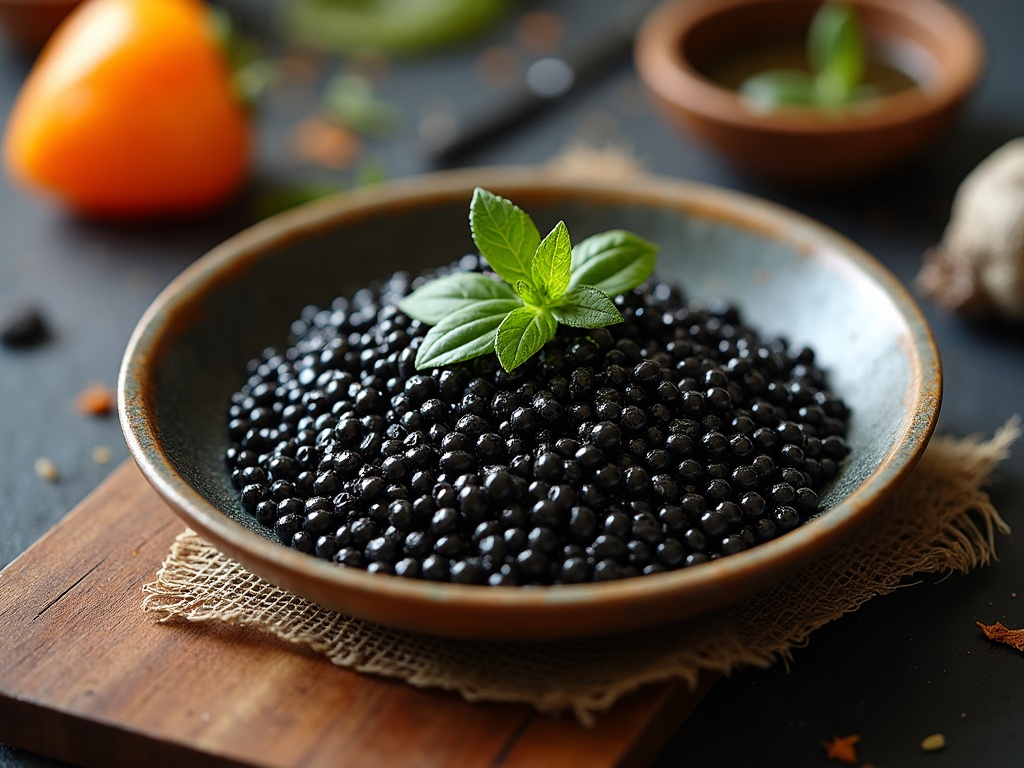
The Flavour Experience
Good Kaluga caviar hits many of the same notes as Beluga. That initial burst of clean butter, a whisper of cream, and a gentle salinity that fades slowly. It's approachable, unchallenging, and deeply satisfying.
Where does it differ? The texture is marginally firmer. Beluga eggs have this almost supernatural delicacy, dissolving before you've properly registered the pop. Kaluga eggs hold together a fraction longer, giving you a more distinct burst. Some tasters consider this an improvement. We'd call it a lateral difference rather than a step down.
The flavour also tends to be very slightly more assertive than top-grade Beluga. There's a touch more salt presence, a hint more of the sea. In a blind tasting, this often leads people to rate Kaluga as "more flavourful" even if Beluga scores higher on pure refinement.
Our honest take: in a side-by-side tasting with an expert panel, Beluga edges ahead on delicacy and that ineffable sense of luxury. But serve Kaluga on its own, without Beluga next to it for comparison, and most people will be completely, thoroughly satisfied.
The Hybrid Question
Most Kaluga caviar sold in the UK is actually from a hybrid: Kaluga crossed with Amur sturgeon (Acipenser schrenckii). This cross, sometimes labelled "Kaluga Hybrid" or "River Beluga," was developed to combine Kaluga's large egg size with Amur sturgeon's faster maturation and adaptability to farming conditions.
Don't let the word "hybrid" put you off. This isn't some compromise product. The hybrid produces consistently excellent caviar with eggs in the 2.5 to 3.2mm range. Many of the most decorated caviars at international food awards come from Kaluga hybrid stock.
The pure Kaluga (non-hybrid) is rarer and commands a premium, but the quality difference between pure and hybrid is marginal enough that most experts consider it irrelevant for practical purposes.
Why Kaluga Costs Less
The economics are straightforward. Kaluga sturgeon mature in 10 to 16 years versus Beluga's 18 to 25. Chinese farms benefit from lower labour and land costs, and decades of investment have created genuine economies of scale. CITES trade data from 2024 shows that China exported more farmed sturgeon caviar than any other country, with pricing that European farms simply cannot match.
That price gap doesn't reflect a quality gap. It reflects supply chain efficiency and farming economics. A well-graded Kaluga from a top Chinese farm can rival a mid-tier Beluga from a European operation.
The smart money knows this. High-end restaurants across London increasingly list Kaluga on their menus, often at a price point that allows them to be generous with portions while maintaining margins.
How to Evaluate Quality
Not all Kaluga is created equal. What to look for:
Egg firmness. Gently press the surface of the caviar in the tin. The eggs should be distinct, not mushy. Each pearl should separate cleanly from its neighbours.
Colour consistency. Good Kaluga should show even colour across the tin. A mix of light and dark eggs in the same tin suggests inconsistent grading.
Aroma. Fresh Kaluga smells clean, faintly oceanic, perhaps with a hint of butter. Any strong fishy or ammonia notes indicate problems with storage or freshness.
Salt level. Premium Kaluga is lightly salted (malossol, meaning "little salt"). If saltiness dominates the flavour, the caviar may be lower grade with heavier salting used to extend shelf life.
Serving Kaluga Caviar
Treat Kaluga exactly as you would Beluga. Minimal accompaniments, maximum attention to the caviar itself.
Serve it chilled (minus 2 to plus 2 degrees Celsius), on a mother-of-pearl or bone spoon. Never metal, which can impart a metallic taste. A plain blini or a small piece of toast with a whisper of unsalted butter is all you need alongside it.
Champagne is the classic pairing. A Blanc de Blancs works particularly well, its citrus and brioche notes complementing Kaluga's butter and cream. Ice-cold vodka is equally appropriate if you prefer a clean palate between spoonfuls.
The Sustainability Angle
Kaluga sturgeon is listed as critically endangered in the wild by the IUCN. Wild fishing has been banned in China since 1998 and in Russia since 1958. All legal Kaluga caviar comes from aquaculture.
Chinese sturgeon farms have faced scrutiny over environmental practices, but the leading operations now meet international standards. Look for CITES certification (mandatory for all legal caviar trade) and ideally additional certifications like ASC (Aquaculture Stewardship Council).
The sheer scale of Chinese production has, somewhat counterintuitively, reduced poaching pressure on wild Kaluga populations. When farmed caviar is readily available at reasonable prices, the economic incentive for illegal harvest diminishes.
Our Verdict
Kaluga is the insider's choice. It delivers 85 to 90 percent of the Beluga experience at 40 to 60 percent of the cost. For anyone who loves the idea of large-pearled, buttery caviar but finds Beluga pricing prohibitive, Kaluga is the obvious answer.
We'd go further. For regular enjoyment (not once-a-year occasions but real, repeated pleasure), Kaluga is actually the better purchase than Beluga. You'll eat more of it, more often, and that frequency of enjoyment trumps the marginal quality difference every single time.
Stop saving caviar for special occasions. We don't stock Kaluga ourselves, but a tin of our Beluga or Oscietra turns an ordinary Wednesday extraordinary.
Further Reading
Shop the Beleaev caviar collection, responsibly farmed, CITES-certified, with next-day UK delivery.
Beluga · Oscietra · Baeri · Tasting Sets · Shop all
FAQ
Is Kaluga caviar the same as Beluga?
No, they come from different species, though the two are closely related. Kaluga (Huso dauricus) is the Beluga's (Huso huso) closest genetic relative, which explains the similar egg size and buttery flavour profile.
Why is Kaluga caviar cheaper than Beluga?
Shorter maturation time (10 to 16 years vs 18 to 25), efficient large-scale farming in China, and lower production costs all contribute. The price difference does not indicate lower quality.
Is Kaluga caviar good quality?
Premium Kaluga from reputable farms is excellent. It regularly wins awards at international food competitions and appears on menus at Michelin-starred restaurants across Europe.
What does "Kaluga Hybrid" mean on the label?
It means the caviar comes from a cross between Kaluga sturgeon and Amur sturgeon. This hybrid is widely farmed and produces consistently high-quality caviar with large eggs.
Discover our premium caviar range at Beleaev. Every tin is CITES-certified, temperature-controlled from farm to door, and delivered next day across the UK.
Explore the full caviar collection at Beleaev for next-day UK delivery.
Beleaev Caviar & Gourmet is an international caviar and gourmet company sourcing responsibly farmed Baeri, Oscietra, Imperial and Beluga caviar, delivered within 24-48 hours. Next-day delivery across the United Kingdom.
 447706084493

