



Jamon Iberico de Bellota: The Story Behind Spain's Ham
By Alex Beleaev | Caviar & Gourmet, London | beleaev.com

Jamon iberico de bellota is cured ham from black Iberian pigs that spent their final months roaming oak woodland, eating almost nothing but acorns. The acorn fat works its way through the muscle, the leg cures slowly for three years or more, and the result is a ham that softens on the tongue at body temperature. That is the short version. The long version is one of the great stories in food.
Most ham sold as "Iberico" in Britain is a paler relation of the real thing. The grade matters, the breed matters, and the diet matters most of all. So here is what de bellota actually means, why the dehesa makes it possible, and how to read a label before you part with your money.
Key Takeaways
- "Bellota" means acorn-fed; it is the top grade of Iberico ham
- The pigs are pure or part Iberico, raised free in the dehesa oak pasture
- A flagship leg cures for 36 months and beyond in the cellars of Jabugo
- The fat melts at body temperature, which is the whole point of it
- Curious? Explore the Beleaev charcuterie collection
What Does Jamon Iberico de Bellota Mean?
Two words carry the weight here, and they answer different questions.
Iberico is the breed. It refers to the black Iberian pig, an old Mediterranean breed with dark skin, slim legs and a rare gift: it lays down fat inside the muscle, not just around it. That marbling is what lets the ham melt the way it does. Pigs are sold as 100% Iberico or as a cross, and the percentage is stated on the leg by law.
Bellota is the diet. It means acorn, and it is the highest of the Iberico grades. To earn it, the pigs must spend the montanera, the autumn-to-winter acorn season, free in the dehesa, fattening on fallen acorns and wild grasses. Lower grades (cebo and cebo de campo) are reared on feed, or feed plus pasture. Bellota is acorns and freedom, and you taste the difference in the finish.
So jamon iberico de bellota is a leg from an Iberian-breed pig, acorn-fattened in open oak woodland. Our 5J 100% Jamon Iberico Bellota is the purest expression of both words: 100% Iberico, bellota grade, with a producer certificate to prove it.
The Dehesa: Where the Ham Begins
You cannot understand the ham without the landscape that makes it.
The dehesa is a vast, managed oak savannah that runs across south-western Spain and into Portugal: scattered holm and cork oaks over open grassland, grazed for centuries. In autumn the oaks drop their acorns, and a single pig can put on a kilo a day during the montanera, foraging across hectares of woodland for its food.
That exercise and that diet do two things. The roaming builds lean, well-worked muscle. The acorns flood the fat with oleic acid, the same soft fat you find in olive oil, which is why bellota fat is glossy, almost translucent, and melts so low. A ham fattened on acorns simply behaves differently from one fattened on feed.
It is also why the real thing is never cheap or quick. The dehesa cannot be rushed or scaled like a feedlot. The land, the oaks and the season set the pace.
How Iberico Ham Is Cured
After the montanera comes the long, patient part.
The fresh leg is buried in sea salt for a period roughly matched to its weight, then washed and moved to rest while the salt settles through the meat. From there it hangs in natural cellars, where the temperature shifts with the seasons and the ham slowly loses moisture and concentrates its flavour. A flagship leg cures for 36 months and beyond.
| Grade | Diet | Typical cure | Character |
|---|---|---|---|
| Cebo | Grain feed, indoors | 24 months+ | Mild, accessible |
| Cebo de campo | Feed plus pasture | 24-36 months | Fuller, rounder |
| Bellota | Acorns, free range | 36 months+ | Deep, nutty, melting |
The producer matters as much as the years. Cinco Jotas, known as 5J, has cured ham in Jabugo since 1879, and its cellars are part of why the house is held in such regard. Time alone does not make a great ham. Time plus a great maker does.
How to tell the cure is real
A properly cured bellota leg shows it. The lean is deep garnet, marbled with fine veins of soft fat. At room temperature those veins turn glassy and start to weep slightly: the sign of acorn fat doing its work. White crystals of tyrosine, an amino acid thrown off by long curing, often speckle the surface. Far from a fault, they are a quiet badge of age.
Jamon Iberico Is Not the Only Spanish Treasure
Iberico ham is the headline, but Spain and its neighbours cure a whole cast of supporting players, and a good board leans on all of them.
Cecina de León is the one to know next: oak-smoked, air-dried beef from north-west Spain, aged at least seven months until it turns near-black at the edges. It is often called the Iberico ham of the cow, and sliced paper-thin under olive oil and Parmigiano it earns the comparison. Then there is sobrasada, the soft, spreadable, paprika-rich sausage of Mallorca, made beautifully by Casa Riera Ordeix in Catalonia since 1852.
Italy answers with its own cured pork. Coppa is air-dried shoulder, silky and gently marbled, sweet on the palate with a peppery finish. And guanciale, cured pork jowl with black pepper, is the Roman secret behind a true carbonara. Spanish lomo, cured pork loin, rounds out the picture: lean, elegant, and a fine partner to the richer hams.
How to Serve Jamon Iberico de Bellota
The serving is where most people, frankly, get nervous and then overthink it.
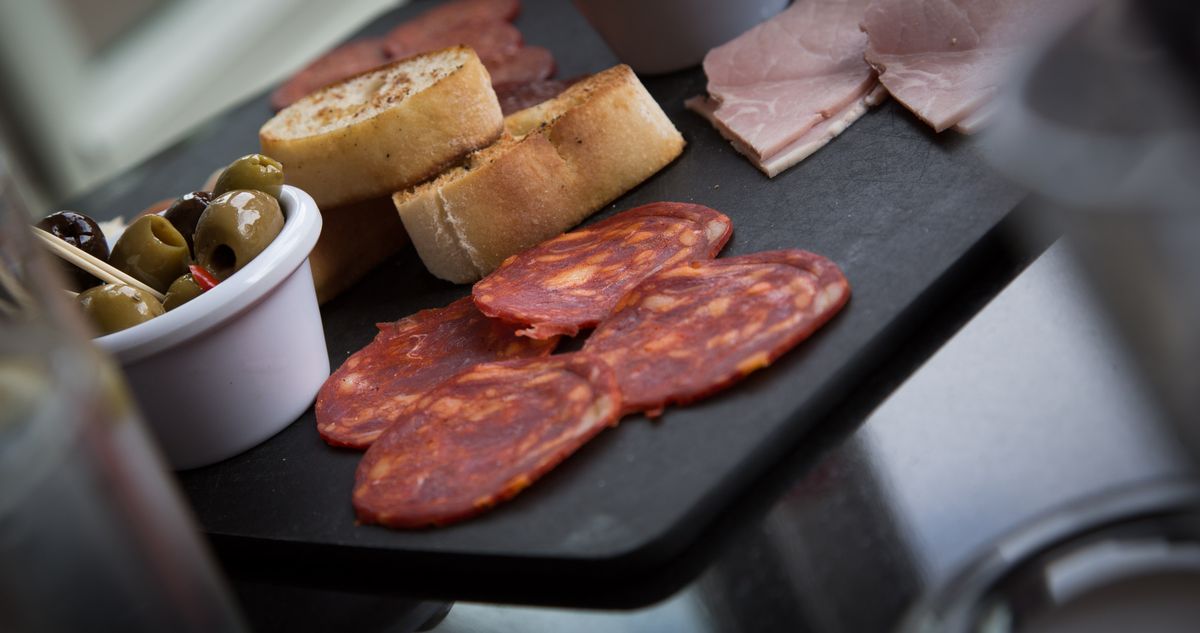
Carve it by hand, in thin, almost see-through slices, each one carrying a little rim of fat. Lay them flat on a warm plate rather than a cold one, so the fat begins to soften and release its aroma. Bring the ham up to room temperature before serving, never straight from the fridge: cold mutes everything the cure spent three years building.
Eat it with your fingers, on its own, before you eat it with anything else. After that, a torn piece of bread, a few salted almonds, a glass of fino or manzanilla sherry. No oil, no garnish, no cleverness. The ham has already done the work.
How to Spot Genuine Iberico
A handful of checks separate a great leg from a hopeful label.
Read the breed percentage. Spanish law requires it. "100% Iberico" is the purest; a lower percentage means a cross. Both can be good, but only one is the full-blooded original.
Look for bellota, plainly stated. The grade is regulated and should be written, not hinted at. Vague "Iberico-style" usually means grain-fed, not acorn.
Ask for the certificate. A serious bellota leg comes with producer documentation tying it to its grade and origin. Ours does.
Be realistic about price. The dehesa, the acorns and three years of curing cost what they cost. A whole bellota leg is an investment, closer to a fine wine than a sandwich filler, and it is priced accordingly.
FAQ
What is the difference between jamon iberico and serrano?
Breed and diet. Serrano is made from white pigs, cured for less time, and is the everyday Spanish ham. Iberico comes from the black Iberian pig, with fat marbled through the muscle. Bellota Iberico, acorn-fed and long-cured, sits in a different league of richness and depth.
Why is jamon iberico de bellota so expensive?
Because almost nothing about it can be hurried. The pigs roam free across the dehesa for an entire acorn season, the breed grows slowly, and a flagship leg cures for 36 months and beyond. The land, the diet and the years all carry real cost.
Is the white speckling on Iberico ham mould?
No. Those small white crystals are tyrosine, an amino acid released during long curing. They are a natural sign of a well-aged ham and are perfectly good to eat. Soft, glassy fat that weeps at room temperature is another mark of genuine bellota.
How should I store a whole Iberico leg?
Keep it in a cool, dry spot away from direct sun, and cover the cut face with its own fat or a cloth between sessions. A leg that has been started keeps for weeks. Slice only what you will eat that day, and always let the slices reach room temperature before serving.
How long does jamon iberico de bellota keep?
A sealed leg holds for many months in a cool place. Once you begin carving, work through it over a few weeks, keeping the exposed face protected with its trimmed fat. Pre-sliced packs are best enjoyed within a few days of opening.
Taste the Story for Yourself
Numbers and grades only carry you so far. The point of bellota is the first slice, laid on a warm plate, melting before you have really begun to chew.
Explore the Beleaev charcuterie collection, from a whole 5J bellota leg for the table to Cecina de León for something leaner. If you would rather start with how to buy and build a board at home, read our companion guide to buying jamon iberico and Spanish charcuterie. Every piece is sourced with provenance and delivered with care.


 447706084493

