
Blinis
£5.00
4.82/5 · 38 reviews
£5.00

£8.00

£6.00

£23.90

By Alex Beleaev | Beleaev Caviar & Gourmet | beleaev.com
A 30g tin of premium caviar can cost more than a bottle of vintage champagne. For something that looks like tiny dark beads, the price tag raises eyebrows. Fair enough.
But here's the thing: once you understand what goes into producing those beads, the price starts making a lot more sense. This isn't a story about luxury markups or clever branding. It's about biology, time, craftsmanship and a supply chain that would make most food producers weep.
Key Takeaways
- Sturgeon take 8 to 20 years to mature before producing eggs, making caviar one of the slowest food products on earth.
- Wild sturgeon populations have declined by over 90% since the 1990s, pushing nearly all species onto the IUCN Red List.
- Every tin passes through hand-grading, salt-curing, cold chain transport and quality checks that most foods never require.
- Beluga caviar commands the highest prices because the Huso huso sturgeon takes 18 to 25 years to reach maturity.
This is the single biggest factor behind caviar's price tag. Sturgeon are ancient fish, survivors from the dinosaur era, and they mature at a glacial pace.
An Oscietra sturgeon (Acipenser gueldenstaedtii) needs 8 to 12 years before she produces roe. Beluga? Eighteen to twenty-five years. That's not a typo. A farmer investing in Beluga caviar today won't see a return until the 2040s.
Compare that with salmon, which reaches market weight in roughly two years. Or chicken, ready in six weeks. The economics are brutal. A sturgeon farm must feed, house and monitor thousands of fish for a decade or more, absorbing costs the entire time with zero revenue from caviar.
According to the FAO, global aquaculture sturgeon production reached approximately 3,400 tonnes of caviar in 2020. That sounds like a lot until you realise the world produces over 2.7 million tonnes of farmed salmon annually. Caviar farming is a niche within a niche.
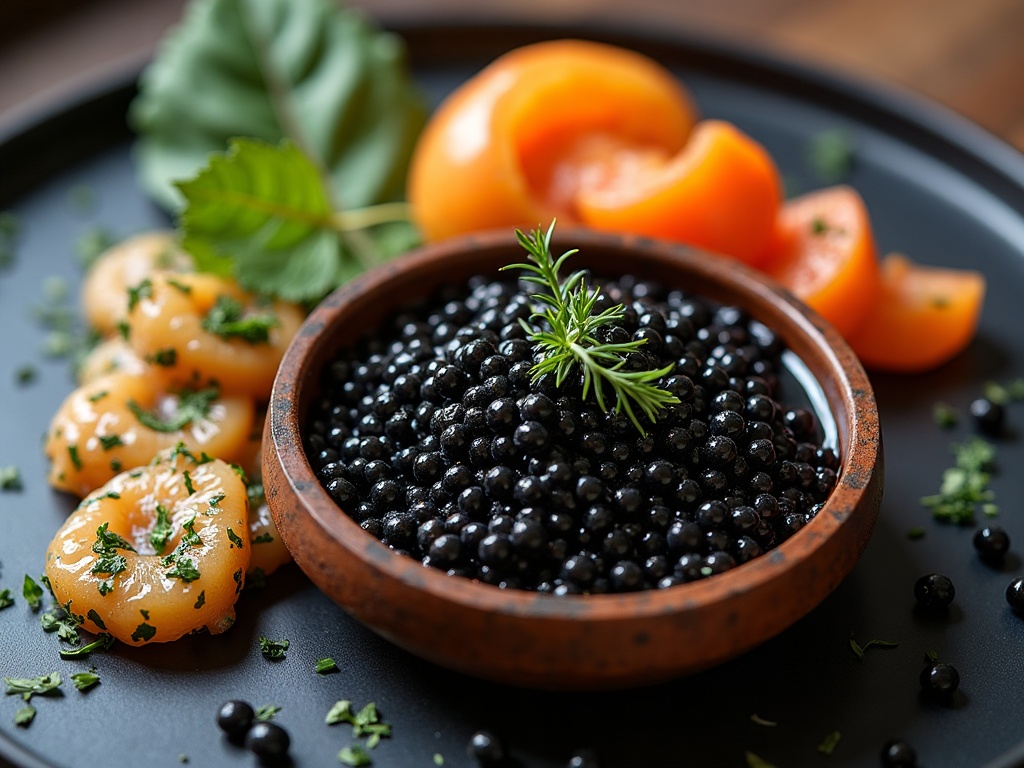
The Caspian Sea used to supply most of the world's caviar. By the late 1990s, overfishing and poaching had devastated sturgeon populations so thoroughly that CITES (the Convention on International Trade in Endangered Species) imposed strict trade controls.
The IUCN lists sturgeon as the most critically endangered group of species on earth. Over 85% of sturgeon species are classified as at risk of extinction. The World Wildlife Fund has documented a 90% decline in Caspian sturgeon populations since the mid-twentieth century.
Wild Beluga caviar from the Caspian is now effectively unavailable through legal channels. The US banned its import entirely in 2005. This scarcity pushed the industry toward aquaculture, but farming brought its own cost challenges: you still can't rush a sturgeon.
Even after waiting a decade for the fish to mature, the work is just beginning.
Determining readiness. Farmers use ultrasound technology to check egg development. Not every fish produces high-quality roe in the same season. Some need another year. The testing process requires skilled technicians and expensive equipment.
Harvesting. Traditional caviar production requires sacrificing the fish, though some farms now use a "no-kill" stripping method. Either way, the process is done by hand and demands precision. Rough handling damages the eggs, turning a premium product into fish paste.
Grading and salting. A master grader examines the roe's size, colour, firmness and flavour. This is one of the most specialised jobs in the food industry. The best graders have decades of experience and can identify dozens of quality grades by sight and touch alone.
The malossol method (Caspian for "little salt") uses between 3% and 5% salt by weight. Too much kills the delicate flavour. Too little and the product won't keep. Getting this right is as much art as science.
Packaging. Premium caviar goes into vacuum-sealed tins, often lined to prevent metallic taste transfer. The tins themselves aren't cheap, and the packing must happen in temperature-controlled rooms.
Caviar is one of the most temperature-sensitive foods you can buy. It must stay between minus 2 and plus 2 degrees Celsius from the moment it's packed until it reaches your table. That's a tighter range than most pharmaceutical products.
Every link in the chain needs specialised refrigeration: the farm, the processing facility, the distributor, the retailer and the last-mile delivery. One break in the cold chain and the product degrades. We've seen shipments worth thousands written off because a transit warehouse had a refrigeration hiccup for a few hours.
International shipping adds another layer. Caviar moving from, say, an Italian farm to a London table passes through customs inspections, CITES documentation checks and multiple handoffs. Each step costs money and introduces risk.
Let's look at where your money actually goes when you buy a 50g tin of premium Oscietra:
| Cost Component | Approximate Share |
|---|---|
| Fish farming (8-12 years) | 35-40% |
| Harvesting, grading, salting | 15-20% |
| Packaging and quality control | 5-8% |
| Cold chain logistics | 10-15% |
| CITES compliance and documentation | 3-5% |
| Retailer margin | 15-25% |
The farming phase dominates. That single line item covers years of feeding, water quality management, veterinary care and the simple cost of keeping a large, slow-growing fish alive.
Not all caviar carries the same price. The species of sturgeon determines the product's character and, consequently, its market value.
| Caviar Type | Sturgeon Species | Maturity Period | Typical Price (per 50g) |
|---|---|---|---|
| Beluga | Huso huso | 18-25 years | £120-£250+ |
| Oscietra | A. gueldenstaedtii | 8-12 years | £60-£120 |
| Sevruga | A. stellatus | 7-10 years | £50-£90 |
| Siberian | A. baerii | 5-8 years | £30-£60 |
Beluga's premium reflects three things: the extraordinary wait time, the larger egg size (which consumers prize) and the limited supply. Fewer farms bother with Beluga because the capital commitment is staggering. You're essentially running a two-decade-long investment with no caviar revenue during the growth period.
This depends on your frame of reference. Gram for gram, caviar is more expensive than gold in some years. But gold doesn't require a living creature, years of care and a cold chain staffed by specialists.
When you factor in the time horizon, the biological constraints, the craftsmanship and the logistics, caviar pricing isn't arbitrary. It reflects genuine scarcity and genuine cost. The market isn't inflated by artificial demand; it's constrained by supply that can't be easily scaled.
That said, not all caviar is created equal. Mass-market "caviar" from paddlefish or lumpfish uses the name loosely, and those products exist at much lower price points. True sturgeon caviar from a reputable source is a different product entirely.
Shop the Beleaev caviar collection, responsibly farmed, CITES-certified, with next-day UK delivery.
Beluga · Oscietra · Baeri · Tasting Sets · Shop all
Beluga sturgeon (Huso huso) take 18 to 25 years to mature, produce the largest eggs in the caviar world and exist in very limited farmed quantities. The combination of extreme wait times, restricted supply and high consumer demand pushes Beluga to the top of the price scale.
Generally, yes. Price correlates with the species' rarity, the maturity period, and the skill of the producer. Higher-priced caviars tend to have larger, more intact eggs, a creamier texture and a more complex flavour profile. That said, personal preference matters. Some people prefer a well-produced Siberian Baerii to an average Oscietra.
It's unlikely for premium sturgeon caviar. The biological growth cycle can't be shortened without compromising quality, and demand continues to grow in Asia and the Middle East. Advances in aquaculture may bring modest efficiency gains, but don't expect dramatic price drops. The fundamental constraint is time, and there's no shortcut for that.
Most supermarket "caviar" comes from non-sturgeon species like lumpfish, trout or salmon. These products are dyed, heavily salted and bear little resemblance to true sturgeon caviar. They're a completely different food category sharing only a name.
The price of caviar tells a story of patience, craft and biological reality. Every tin represents years of careful husbandry and a supply chain built around one of the most demanding foods on earth. When you open that tin, you're not just paying for flavour. You're paying for time.
Explore our range of sustainably farmed sturgeon caviar at Beleaev and taste the difference that proper sourcing makes.
Explore the full caviar collection at Beleaev for next-day UK delivery.
Beleaev Caviar & Gourmet is an international caviar and gourmet company sourcing responsibly farmed Baeri, Oscietra, Imperial and Beluga caviar, delivered within 24-48 hours. Next-day delivery across the United Kingdom.

 447706084493


