
Blinis
£5.00
4.82/5 · 38 reviews
£5.00

£8.00

£6.00

£23.90

By Alex Beleaev | Beleaev Caviar & Gourmet | beleaev.com
Walk into any good sushi restaurant and you'll spot them immediately. Those glistening, bright orange pearls perched atop a strip of nori-wrapped rice. Ikura. Salmon roe. The stuff people call salmon caviar, even though, strictly speaking, it isn't caviar at all.
That distinction matters, and we'll get into it. But first, let's talk about why these little orbs have earned such a devoted following around the world.
Key Takeaways
- Ikura is salt-cured salmon roe, prized in Japanese and Caspian cuisine for centuries
- True caviar comes only from sturgeon; salmon roe is a separate category of fish egg entirely
- Salmon caviar costs roughly 80-90% less than sturgeon caviar, making it an accessible luxury
- Its large, pop-in-your-mouth eggs and mild, briny flavour make it incredibly versatile in cooking
The word "ikura" comes from the Caspian "ikra," which simply means fish eggs. In Japan, it refers specifically to individual salmon eggs that have been separated from the skein (the membrane sac) and cured in soy sauce or salt brine.
Each egg is about 6-8mm in diameter. That's roughly three to four times larger than a typical sturgeon caviar egg. They're translucent, ranging from deep amber to vivid reddish-orange, and they have that satisfying pop when you bite into them. The flavour is clean, mildly briny, with a subtle sweetness that sturgeon caviar doesn't share.
Most commercially available ikura comes from wild Pacific salmon species: chum salmon (also called keta) produces the largest, most prized eggs, while sockeye and pink salmon offer slightly smaller alternatives.
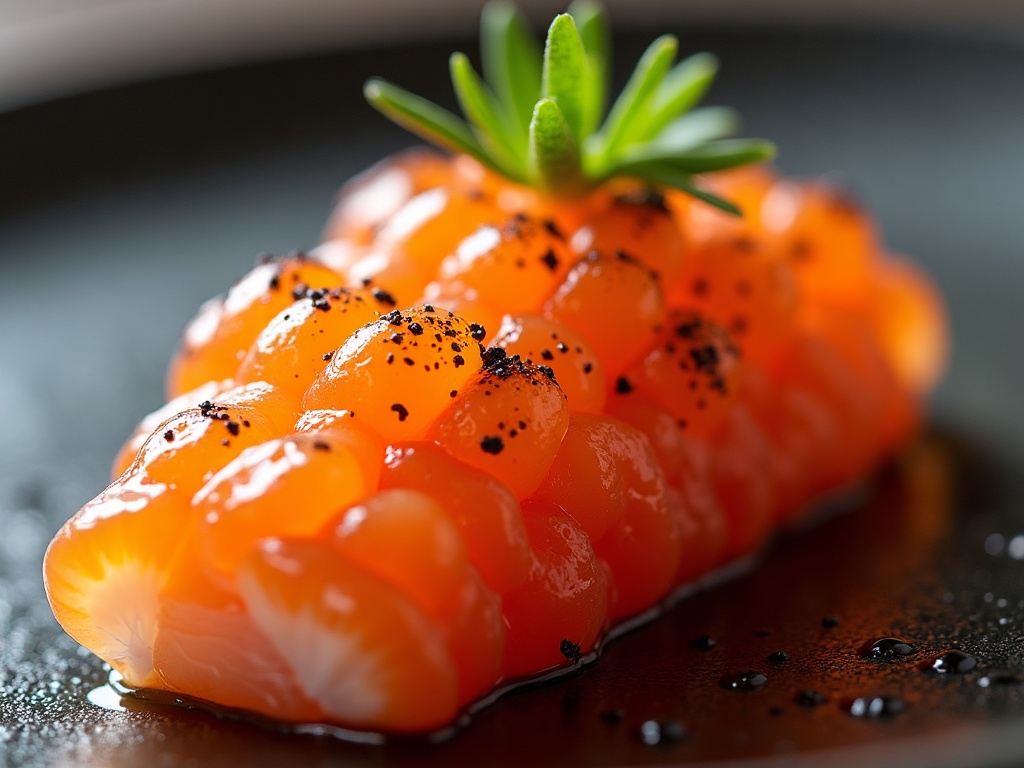
Let's be direct about something. The term "salmon caviar" is technically a misnomer. The international food industry defines caviar as the salt-cured eggs of sturgeon fish exclusively. Everything else, salmon roe included, is simply roe or fish eggs.
That said, common usage has blurred the line considerably. You'll see "salmon caviar" on menus and in shops everywhere. Just know what you're actually buying.
The differences go well beyond naming.
Size is the most obvious one. Sturgeon caviar eggs typically measure 2-3mm. Ikura eggs are two to three times that. You can pick up a single ikura egg between your fingers. Try that with Oscietra.
Flavour profiles diverge sharply too. Sturgeon caviar tends toward complex, nutty, mineral, sometimes buttery notes. Ikura is brighter, cleaner, more straightforwardly oceanic. Neither is better. They're different experiences entirely.
Then there's texture. Sturgeon caviar at its best offers a creamy melt on the palate. Ikura delivers that signature burst, a thin membrane giving way to liquid richness inside.
And price. According to Grand View Research, the global caviar market was valued at over $530 million in 2024, driven primarily by sturgeon varieties commanding premium prices. A 30g tin of quality Oscietra might run you £40-80. The same weight of good ikura? Closer to £5-10. That gap makes salmon roe a completely different proposition for home cooks and chefs alike.
Salmon roe has been eaten for centuries across the northern Pacific rim. Indigenous peoples of Alaska and the Caspian Far East preserved salmon eggs as a vital protein source during long winters. The curing techniques weren't so different from what we use today.
Japan's love affair with ikura intensified in the early twentieth century, when trade routes with the Caspian brought cured salmon roe to Hokkaido. Japanese producers refined the preparation methods, developing the soy-marinated version (ikura shoyu-zuke) that's now a staple in sushi bars worldwide.
The Caspian, meanwhile, maintained its own tradition. Red caviar (krasnaya ikra) remains an everyday food in the original households, spread on buttered bread or blini. It shows up at virtually every celebration and holiday table. The Caspian caviar market consumes an estimated 15,000-20,000 tonnes of salmon roe annually, according to Eurofish International Organisation data.
This is where salmon roe truly shines. Its size, flavour, and relatively gentle price point make it one of the most versatile luxury ingredients in the kitchen.
In Japanese cuisine, the applications are iconic. Ikura gunkan-maki (battleship sushi rolls), ikura don (rice bowls heaped with roe), and chirashi-zushi all showcase the eggs as a starring ingredient rather than a garnish.
But don't stop at Japanese food.
Scatter ikura over scrambled eggs on toast for a weekend brunch that looks like it came from a restaurant. Spoon it onto devilled eggs. Drop a generous amount onto cold pasta with creme fraiche and chives. Use it to finish a potato soup, or pile it onto buckwheat blini with soured cream for a properly Caspian appetiser.
The eggs hold their shape well under gentle handling but will burst if you cook them directly. Always add ikura as a finishing touch, after the heat is off. That pop of brine and ocean against warm food creates a contrast that's hard to beat.
For canapés and entertaining, few ingredients deliver as much visual impact per pound spent. A single jar can top dozens of small bites.
Quality varies enormously. The best ikura has firm, intact eggs with a clean smell (briny, not fishy), and a vibrant colour without any cloudiness.
Look for these indicators when buying:
Wild-caught Pacific salmon roe is generally superior to farmed Atlantic salmon roe. The eggs tend to be firmer with better flavour. Country of origin matters: Alaska, Japan, and the Caspian produce the most respected varieties.
Check the ingredient list. Quality ikura contains salmon roe, salt, and perhaps soy sauce. Avoid products loaded with preservatives, artificial colourings, or excessive additives.
Once opened, ikura should be consumed within two to three days. Keep it in the coldest part of your fridge, ideally between minus two and plus two degrees Celsius. Unopened, a properly sealed jar will keep for several weeks refrigerated, or months frozen, though freezing can soften the texture slightly.
The distinction isn't snobbery. It's about clarity. When you order caviar, you expect sturgeon eggs with all the complexity, rarity, and tradition that implies. Salmon roe is a wonderful product on its own merits. Calling it caviar doesn't elevate it; it just confuses things.
The FDA in the United States requires that any non-sturgeon roe sold as "caviar" must be prefixed with the fish species name. So "salmon caviar" is technically compliant there. The EU follows similar rules. In practice, most quality producers simply label it as salmon roe or ikura to avoid any ambiguity.
Think of it this way. Sparkling wine from outside Champagne isn't lesser because it can't use the name. It's simply a different thing. Ikura deserves appreciation on its own terms, not as a runner-up to sturgeon caviar.
Absolutely. For the price, there's almost nothing in the luxury food world that delivers as much pleasure, versatility, and visual drama. A quality jar of ikura transforms a simple dish into something memorable.
It's also an ideal gateway for people curious about roe but not ready to commit to the price of sturgeon caviar. Start with ikura, develop your palate, and then explore from there.
Shop the Beleaev caviar collection, responsibly farmed, CITES-certified, with next-day UK delivery.
Beluga · Oscietra · Baeri · Tasting Sets · Shop all
Is salmon caviar actually caviar?
No. True caviar comes exclusively from sturgeon. Salmon roe, while delicious, belongs to a separate category. The term "salmon caviar" is widely used in marketing but isn't technically accurate. Look for products labelled simply as ikura or salmon roe for clarity.
How much does ikura cost compared to sturgeon caviar?
Salmon roe typically costs £15-30 per 100g, while quality sturgeon caviar ranges from £100-500+ per 100g depending on the variety. That makes ikura roughly 80-90% less expensive, putting it within reach for regular home use rather than special occasions only.
Can you eat ikura if you're pregnant?
Medical guidance varies by country. In the UK, the NHS advises that properly cured or cooked fish products are generally safe, but raw or lightly cured fish eggs may carry a small risk. Consult your GP or midwife for personalised advice.
What's the best way to serve ikura at home?
Keep it simple. Ikura shines as a finishing ingredient: spooned over warm rice, blini, scrambled eggs, or pasta. Always add it after cooking, as heat will toughen the eggs. Serve it cold or at room temperature for the best flavour and texture.
Looking to explore the world of premium roe and caviar? Browse the full range at Beleaev for next-day UK delivery on every order.
Explore the full caviar collection at Beleaev for next-day UK delivery.
Beleaev Caviar & Gourmet is an international caviar and gourmet company sourcing responsibly farmed Baeri, Oscietra, Imperial and Beluga caviar, delivered within 24-48 hours. Next-day delivery across the United Kingdom.

 447706084493


