
Blinis
£5.00
4.82/5 · 38 reviews
£5.00

£8.00

£6.00

£23.90

By Alex Beleaev | Beleaev Caviar & Gourmet | beleaev.com
Pick up two tins of Oscietra caviar from different suppliers. Same species. Same country of origin. One costs twice as much as the other. Why?
Grading. It's the system that separates exceptional caviar from merely good caviar, and it explains more about price variation than most people realise. Yet most caviar guides barely mention it, or they mention it so vaguely that you're none the wiser.
We grade every batch that comes through Beleaev. This is how it actually works.
Key Takeaways
- Caviar is graded on egg size, colour uniformity, firmness, separation, and flavour.
- Grade 1 (or "000") represents the top tier: large, uniform, firm eggs with clean flavour.
- Grade 2 is good caviar with minor imperfections, often excellent value.
- Grading is not fully standardised globally, so the producer's reputation matters as much as the grade label.
Five factors determine a caviar's grade. Professional graders evaluate each one, and the overall grade reflects the weakest link.
Bigger eggs generally score higher. For Oscietra, premium eggs measure 3mm or above. Beluga eggs can reach 3.5mm. Baerii tends to run smaller, around 2.2-2.8mm.
Why does size matter? Larger eggs contain more of the flavourful interior (the "juice" inside the membrane), producing a more pronounced pop and a richer taste experience. They also indicate a mature, well-nourished fish, which correlates with flavour complexity.
But size alone doesn't make great caviar. A large, mushy egg is worse than a small, perfectly firm one. This is just one of five factors.
Sturgeon caviar comes in a surprising range of colours: jet black, dark grey, olive green, golden brown, amber, even pale gold. The specific hue depends on species, age, and diet. There's no single "correct" colour.
What graders look for is uniformity within a tin. A batch where every egg is the same shade of golden-brown scores higher than one with a mix of dark and light. The colour variation itself isn't a flaw in isolation, but it signals inconsistency in the batch, which often correlates with inconsistent flavour.
The lightest colours tend to command the highest prices, particularly in Oscietra. Golden Oscietra (sometimes marketed as "Imperial" or "Royal") comes from older sturgeon and carries a flavour profile that many connoisseurs consider superior: richer, more complex, with pronounced nutty notes. According to industry trade data, golden Oscietra typically sells at a 40-70% premium over standard dark Oscietra from the same farm.
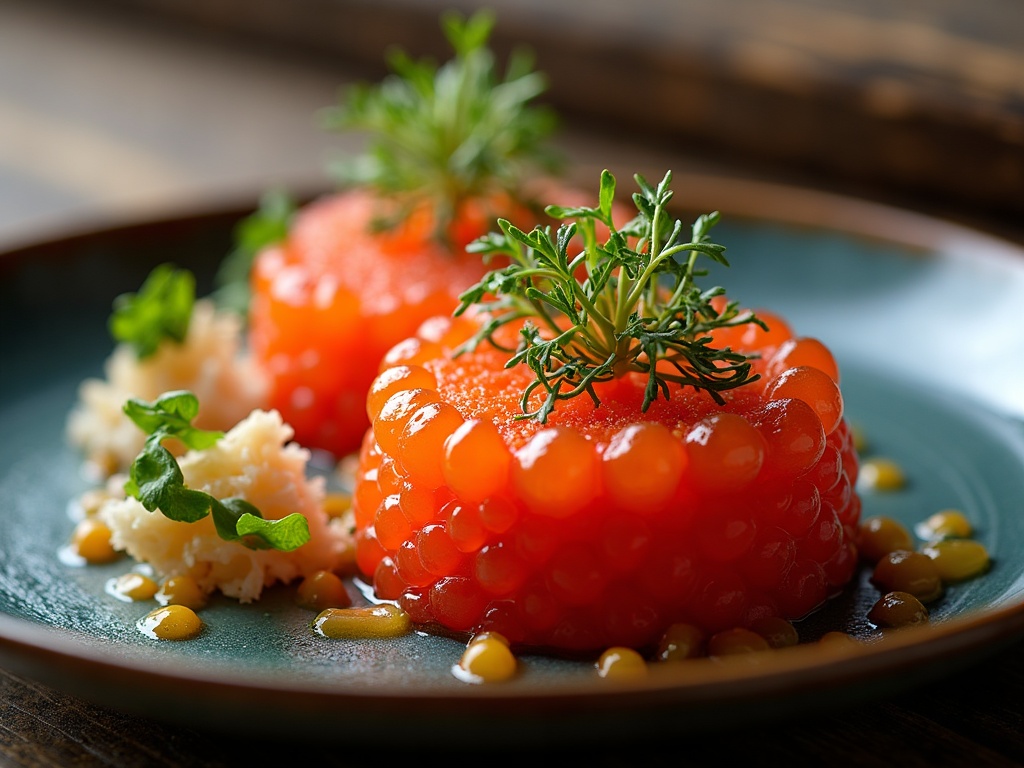
Each egg should be intact, with a resilient membrane that holds its shape under gentle pressure before popping cleanly. Graders literally roll eggs between their fingers.
Ideal caviar has a distinct "pop" followed by a smooth, creamy release. If the eggs burst too easily (overripe or mishandled), that's a downgrade. If they're too tough and rubbery (underripe or over-salted), same problem.
Temperature management during processing is critical here. The eggs are separated from the ovarian membrane, rinsed, salted, and tinned within a matter of hours. Any delay or temperature fluctuation compromises firmness. The best processing facilities maintain the entire chain at 0-4 degrees Celsius.
Open a premium tin and the eggs should be distinct, individually visible, glistening. Not clumped. Not crushed. Not swimming in excess liquid.
"Grain" is the industry term for this quality. Good grain means each egg is separate and free-flowing. Pour a spoonful and the eggs cascade rather than clump. Poor grain, where eggs stick together or break during handling, indicates rough processing or excessive moisture.
This is one area where the packaging matters too. Traditional malossol caviar is packed under slight vacuum pressure in metal tins. The tin shape, the fill level, and the storage orientation all affect grain quality over time. At Beleaev, we store tins upside-down and rotate stock carefully to maintain separation.
The final and most subjective criterion. Graders taste every batch, assessing:
Flavour is where the fish's diet, water quality, and age all converge. Sturgeon raised in clean, cold water with a controlled diet consistently produce better-tasting caviar. A 2021 study in Aquaculture found that water temperature during the final months before harvest significantly affects the amino acid profile of sturgeon eggs, directly influencing umami and sweetness.
Different countries and producers use slightly different terminology, which is part of what makes this confusing. The main systems map like this:
| Grade | Also Called | Description |
|---|---|---|
| Grade 1 | 000, Supreme, Imperial, Royal | Top tier. Large, uniform, firm, perfectly separated eggs. Clean, complex flavour. No defects. |
| Grade 2 | 00, Classic, Select | Good quality. Slightly smaller or less uniform eggs. Minor variation in colour or firmness. Still excellent eating. |
| Pressed | Payusnaya | Made from damaged or overly soft eggs compressed into a paste. Intense, concentrated flavour. Traditional Caspian preparation. |
The lack of a universal standard is worth noting. There's no single international body that certifies caviar grades the way, say, the GIA certifies diamonds. The CITES framework covers species and traceability, not quality grading. This means "Grade 1" from one producer might not match "Grade 1" from another.
Reputation and trust fill that gap. Established producers with long track records tend to grade consistently because their business depends on it. We've tested enough suppliers to know which ones grade honestly and which ones are generous with their top-tier labels.
The practical question: does a higher grade actually taste better?
Usually, yes, but with caveats.
Grade 1 caviar delivers a more complete experience. The eggs are more visually striking, the pop is more satisfying, the flavour tends to be cleaner and more complex. If you're serving caviar as the centrepiece of an occasion, Grade 1 is worth the premium.
Grade 2, though, is often the smarter choice for everyday enjoyment and cooking applications. The flavour is still good. You'll notice slightly less uniformity and perhaps a touch less complexity, but the fundamental character of the species comes through clearly. At Beleaev tastings, we've done blind comparisons between Grade 1 and Grade 2 from the same farm. Some tasters can't reliably distinguish them.
Pressed caviar is a different animal entirely. The concentrated, spreadable format is intense and deeply savoury. It's excellent on toast or stirred into warm dishes. Not for purists, perhaps, but a legitimate preparation with centuries of tradition behind it.
You'll see "malossol" on many caviar labels. It sounds like a quality indicator, and in a sense it is, but it's not a grade.
Malossol means "little salt" in the original. It refers to caviar cured with less than 5% salt (typically 3-4%). This is the standard processing method for all premium caviar. More salt would mask the natural flavour and give the eggs a longer shelf life, but at a cost to taste.
Virtually all Grade 1 and Grade 2 sturgeon caviar sold today is malossol. If a tin doesn't say malossol, it may be a more heavily salted product intended for longer storage, which is a processing distinction, not a quality grade.
You don't need to be a professional grader. A few simple checks will tell you plenty.
Open the tin. Look for individual, glistening eggs. No pooling liquid. No crushed or broken eggs on top. A slight sheen of oil is normal and actually desirable.
Smell it. Fresh, clean, oceanic. Like standing near a cold sea. If you recoil, something's wrong.
Taste a small amount on its own. Press the eggs against the roof of your mouth. Do they pop cleanly? Is there brininess followed by something richer? Does the flavour linger pleasantly?
Compare tins. If you can taste two varieties or grades side by side, the differences become obvious quickly. This is the single best way to develop your palate.
Shop the Beleaev caviar collection, responsibly farmed, CITES-certified, with next-day UK delivery.
Beluga · Oscietra · Baeri · Tasting Sets · Shop all
Not necessarily. These terms aren't regulated, so producers can apply them however they choose. Generally, "Imperial" or "Royal" indicates the top selection from a batch (largest eggs, lightest colour, best uniformity), but standards vary between producers. Focus on the specific grading criteria rather than marketing terms.
Absolutely. Grade 2 represents really good caviar with minor imperfections that most people won't notice in a blind tasting. It's typically 30-50% less expensive than Grade 1 from the same producer, making it excellent value. We recommend it for entertaining, cooking applications, and anyone building their palate.
Lighter eggs (golden, amber) typically come from older sturgeon, which produce smaller quantities of eggs. The lighter colour also correlates with a more developed, complex flavour profile in Oscietra specifically. Scarcity and perceived quality both drive the premium. Whether it tastes "better" is subjective. Some tasters prefer the bolder character of darker eggs.
Unopened, properly stored (0-4 degrees Celsius), quality caviar maintains its grade characteristics for 6 to 8 weeks from production. Once opened, consume within 2 to 3 days. The eggs oxidise quickly, affecting flavour, texture, and separation. Always keep the tin sealed and on ice between servings.
Grading explains why two tins of the same species can sit at very different price points, and why the experience of eating them can differ so noticeably. It's not magic, and it's not snobbery. It's attention to size, colour, firmness, separation, and flavour applied systematically.
Understanding the system won't make you a professional grader overnight. But it will make you a far more confident buyer.
Explore Beleaev's graded caviar selection at beleaev.com
Explore the full caviar collection at Beleaev for next-day UK delivery.
Beleaev Caviar & Gourmet is an international caviar and gourmet company sourcing responsibly farmed Baeri, Oscietra, Imperial and Beluga caviar, delivered within 24-48 hours. Next-day delivery across the United Kingdom.

 447706084493


