


Pan-Seared Scallops with Caviar
By Beleaev Family | Beleaev Caviar & Gourmet | beleaev.com
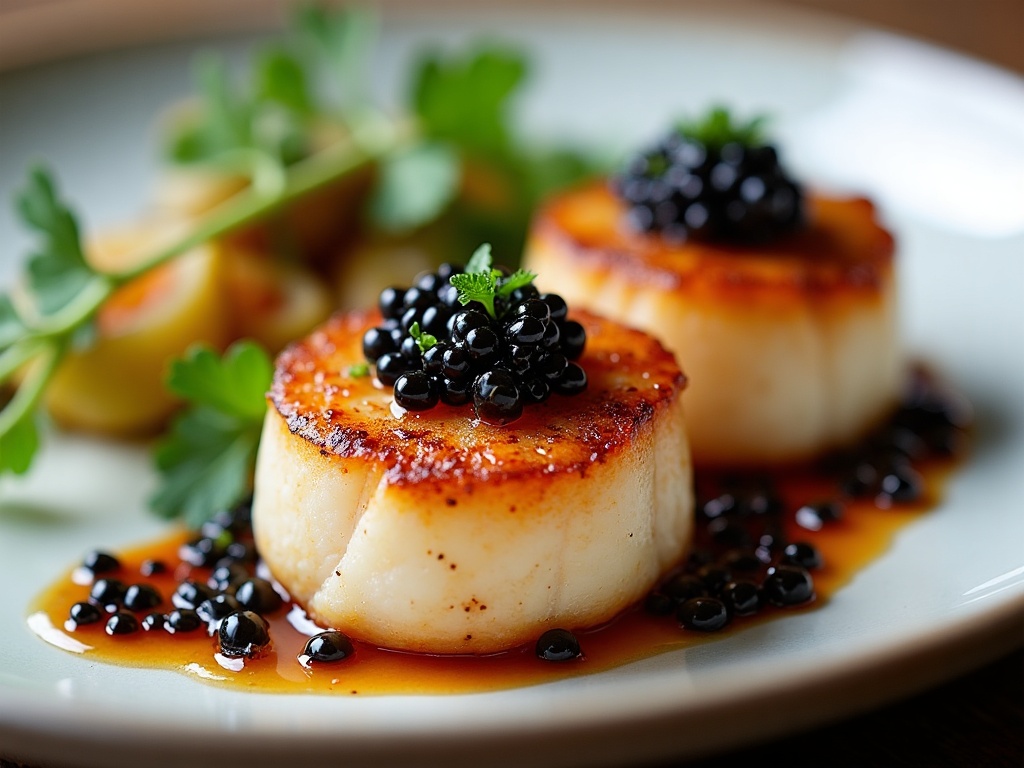
Pan-seared scallops with caviar is one of those dishes that's been on every smart restaurant menu in London for the last 15 years for very good reasons. The combination is unbeatable: the sweet caramelised exterior of properly seared scallops, the soft sweet interior, and the briny pop of caviar on top.
The technique looks simple but unforgives mistakes. Wet scallops won't sear. A cool pan won't caramelise. Overcooked scallops go rubbery in 30 seconds. Get all three right and the dish takes 8 minutes.
This is the recipe to learn first if you want to cook luxury food at home. Master the scallop sear and you've got a technique that transfers to many other dishes. Adding caviar takes the result from "really good home cooking" to "restaurant quality".
Key Takeaways
- Buy hand-dived diver scallops, never machine-caught or wet-pack
- Pat absolutely dry with kitchen paper, multiple times
- Pan must be smoking hot before scallops touch it
- Cook 90 seconds per side, no more, no less
- Caviar on top after cooking, never in the pan
The Ingredients
Serves 2 as a starter
- 6 large hand-dived diver scallops (around 30-40g each)
- 1 tbsp neutral oil (sunflower or grapeseed)
- 30g unsalted butter
- 1 tsp white wine vinegar
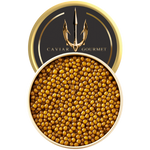
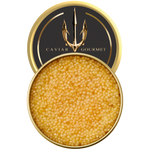
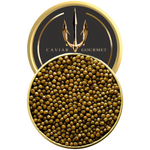
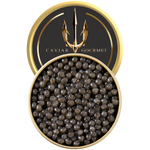
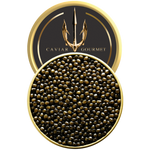
- 20-30g caviar (Oscietra recommended)
- 1 tbsp finely sliced chives
- A few flakes of Maldon sea salt
- Freshly cracked black pepper
The scallops must be hand-dived. Machine-caught scallops are usually frozen, then defrosted in water (called "wet-pack"), which adds 20-30% moisture weight. Wet scallops cannot sear. Hand-dived scallops are caught by divers, dry-packed, and arrive firm and translucent. They cost roughly £3 each but the result is worth it.
The oil must be neutral with a high smoke point. Olive oil burns at the temperatures needed for proper scallop searing. Use sunflower, grapeseed, or rice bran oil.
The Method, Step by Step
Step 1: Dry the Scallops Thoroughly
Place the scallops on multiple layers of kitchen paper. Press another layer of kitchen paper firmly on top to absorb surface moisture. Replace the paper and repeat after 2 minutes.
The scallops should be visibly dry on every surface before they touch the pan. Any residual moisture will turn to steam and prevent the maillard browning that creates the caramelised crust.
Season the tops with sea salt 30 seconds before cooking. Don't pre-salt, the salt draws moisture out and ruins the dry surface.
Step 2: Heat the Pan Properly
Place a heavy-bottomed pan (cast iron or stainless steel) over high heat. Don't use a non-stick pan, the surface won't get hot enough.
Wait at least 90 seconds. The pan should be properly hot, almost smoking. Add the oil and swirl. The oil should shimmer and ripple within 5 seconds.
Step 3: Sear the Scallops
Place the scallops in the pan, salted-side down, with at least 2cm of space between each. Don't overcrowd, you want each scallop to sear, not steam.
Don't move them. Resist the urge to peek. Cook for exactly 90 seconds. The scallops will release from the pan when ready, sticking only briefly during the first 30 seconds.
Flip with a fish slice. Add the butter to the pan around the scallops. Cook for another 60-90 seconds, basting briefly with the foaming butter. Take off the heat. The scallops should have a deep golden-brown crust and a slightly translucent centre.
Step 4: Make the Brown Butter Sauce
Lift the scallops onto warm plates. Return the pan to medium heat. The butter in the pan should be golden brown.
Add 1 teaspoon of white wine vinegar. Swirl. The acid lifts any caramelised bits from the pan and balances the rich butter. Take off the heat after 5 seconds.
Spoon the warm brown butter around (not over) the scallops on the plates.
Step 5: Top with Caviar
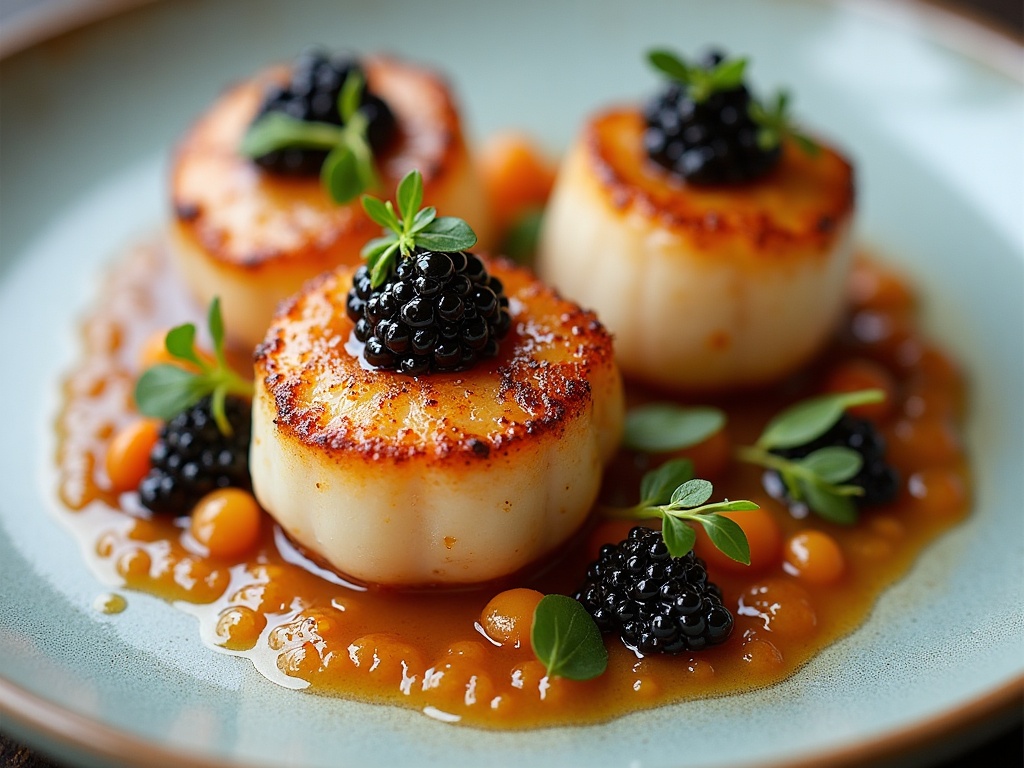
Spoon the caviar onto the centre of each scallop, around 3-5g per scallop. Aim for 6 small mounds across the 6 scallops.
The caviar must land on a slightly cooled scallop, not a piping-hot one. Wait 30 seconds after plating before adding the caviar to ensure the surface is below 60C.
Scatter chives and a tiny pinch of flaky sea salt. Crack a small amount of black pepper at the edge of the plate. Serve immediately.
Tips for Getting It Right
Dry scallops sear, wet scallops steam. The single most important factor in pan-seared scallops is moisture. Multiple kitchen paper presses, no salt before cooking, and a screaming-hot pan are the three keys.
Don't use a non-stick pan. Non-stick coatings degrade above 230C. The temperature you need for proper scallop searing (around 250C) damages the coating and produces toxic fumes. Cast iron or stainless steel are the right choices.
Don't move the scallops while searing. The temptation to lift and check is strong. Resist it. The crust forms in the first 60 seconds. Lifting prematurely tears the developing crust off the scallop.
Brown butter, not just melted butter. Adding the butter halfway through (not at the start) means it has time to brown without burning. The nutty flavour from properly browned butter is what makes this dish memorable.
Caviar landing temperature matters. Hot scallops above 60C will partially cook the caviar pearls and turn them chalky. The 30-second wait between plating and topping is the difference between firm pop and ruined caviar.
Variations and Pairings
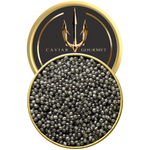
With Beluga: Use 25g of Beluga across the 6 scallops. The most delicate caviar deserves the cleanest version of the dish. Skip the chives.
With cauliflower purée: Plate each scallop on a small swoosh of silky cauliflower purée before the caviar. Adds visual elegance and creamy contrast.
With pea purée: Plate on a small spoonful of bright green pea purée. Spring-appropriate and visually striking.
With black pudding: Add a small disc of fried black pudding under each scallop. The savoury depth pairs beautifully with the sweet scallop and briny caviar. This is the British twist found at restaurants like St John in Smithfield.
Wine pairing: A premier cru Chablis or a Sancerre. The flinty acidity cuts through the rich butter. Champagne also works, particularly Blanc de Blancs.
For more luxury starters, see our roasted lobster with caviar beurre blanc recipe and our classic caviar platter post.
Frequently Asked Questions
Why are my scallops not browning properly?
Three usual causes. First, the scallops are wet (most common). Second, the pan isn't hot enough. Third, the pan is overcrowded so the scallops are steaming each other rather than searing. Dry scallops, screaming-hot pan, plenty of space between each scallop. Those three fixes solve 95% of scallop sear problems.
What's the difference between hand-dived and machine-caught scallops?
Hand-dived (or "diver") scallops are harvested individually by divers from the sea floor, then dry-packed for transport. Machine-caught scallops are dredged with metal cages, then often soaked in a phosphate solution and water to extend shelf life and add weight (called "wet-pack"). Hand-dived produce a vastly superior result for searing.
How many scallops per person?
For a starter, 3 scallops per person is generous. For a main course, 5-6 scallops per person plus a side of vegetables or risotto. Plan around 100g of scallop meat per person as a starter, 180g as a main.
Can I serve scallops without the caviar?
Yes, the dish is excellent without caviar. The caviar adds salinity, texture, and visual luxury, but the underlying scallop and brown butter combination stands on its own. Without caviar, you might add a small spoon of finger limes, a few capers, or a scattering of pickled samphire instead.
Further Reading
- How to identify hand-dived scallops (Marine Conservation Society)
- The science of scallop searing (Serious Eats)
A properly seared scallop topped with caviar is one of those dishes that defines what good cooking is about. Five ingredients, eight minutes, no shortcuts. And a result that tastes like the kind of starter you'd remember weeks later.
Discover Beleaev's caviar collection, the perfect topping for pan-seared scallops, at Royal Oscietra. Browse the full collection at beleaev.com.
Beleaev is an international caviar and gourmet food company with fulfilment hubs across the UK, Europe, the UAE, and the United States. We are committed to sourcing responsibly farmed, sustainable products and delivering them to customers within 24 to 48 hours, ensuring exceptional freshness and quality.


 447706084493

