
Blinis
£5.00
4.82/5 · 38 reviews
£5.00

£8.00

£6.00

£23.90

By Beleaev Family | Beleaev Caviar & Gourmet | beleaev.com
Roasted lobster with caviar beurre blanc is the dish that puts you firmly in the territory of three-star French cuisine without leaving your kitchen. It's also one of those dishes that sounds harder than it actually is. A 600g lobster takes 12 minutes to roast. Beurre blanc takes 8 minutes to make. Add caviar at the end and you're done.
The trick is in the technique, not in any obscure ingredient. The lobster needs to be split and brushed with butter at the right moment. The beurre blanc needs to emulsify properly without splitting. The caviar needs to land on the warm sauce, not the hot lobster. Get those three things right and the dish is yours.
This is the recipe we cook on our own birthdays at Beleaev. It feels celebratory in the right way: a single beautifully presented lobster per person, a small spoon of caviar, a glass of cold champagne. The kind of meal that makes a special occasion stay with you for years.
Key Takeaways
- Buy live lobster from a fishmonger and have them dispatch and split humanely
- Roast at 220C for 12 minutes for a 500-600g lobster
- Beurre blanc must be emulsified, not just melted butter, the technique matters
- Caviar goes on the sauce at serving, never on the hot lobster directly
- 1 lobster per person for a main, half a lobster for a starter
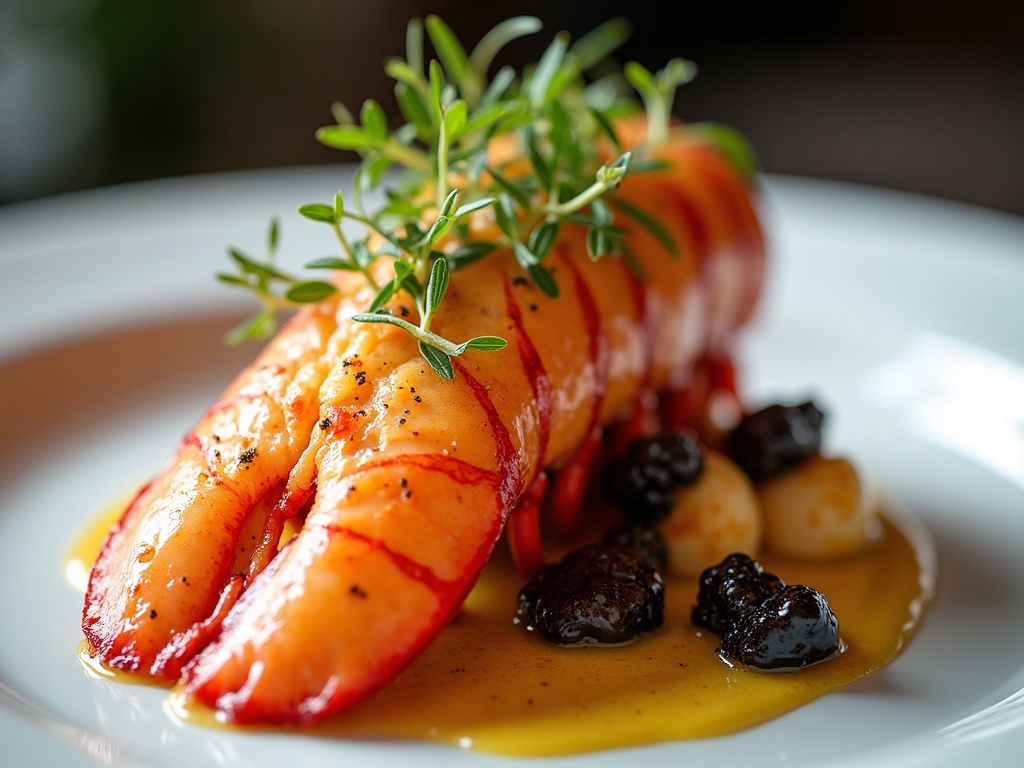
Serves 2
For the lobster:
For the beurre blanc:
For finishing:
The lobster quality is everything. Native British lobster (Cornish or Scottish) is the gold standard, with sweeter, firmer meat than Canadian or American varieties. Buy live the morning of cooking and ask your fishmonger to humanely dispatch and split lengthways for you. Most good fishmongers do this for free.
Preheat the oven to 220C (200C fan). Place a heavy roasting tin in the oven to heat up.
If your fishmonger has split the lobster, lay the halves cut-side up on a board. Remove the dark intestinal tract running down the tail. Crack the claws gently with the back of a heavy knife so heat penetrates during cooking.
Brush the cut surface and exposed meat with melted butter. Season with sea salt and a small crack of black pepper.
In a small heavy saucepan, combine the white wine, vinegar, and diced shallot. Bring to a low simmer and reduce until only 2 tablespoons of liquid remain. This takes around 5 minutes.
Add the optional double cream if using (it stabilises the emulsion and makes the sauce more forgiving for home cooks). Reduce by half, around 90 seconds.
Now turn the heat to very low. The next stage is delicate.
Take the hot roasting tin out of the oven. Place the lobster halves cut-side up. They should hiss slightly on contact with the hot tin.
Roast for 10-12 minutes, until the flesh is opaque white and slightly springy to the touch. Don't overcook. Lobster goes rubbery fast.
While the lobster roasts, finish the sauce. Add the cold cubed butter to the saucepan one cube at a time, whisking constantly. Each cube should melt and emulsify into the sauce before adding the next.
The sauce should be glossy, silky, and the colour of pale yellow cream. If it looks oily and separated, your heat was too high or you added butter too fast. Take off the heat and whisk in 1 tablespoon of cold water vigorously to bring it back.
Strain the sauce through a fine sieve to remove the shallot pieces. Season with salt and a pinch of white pepper. Keep warm but not hot, around 50-55C.
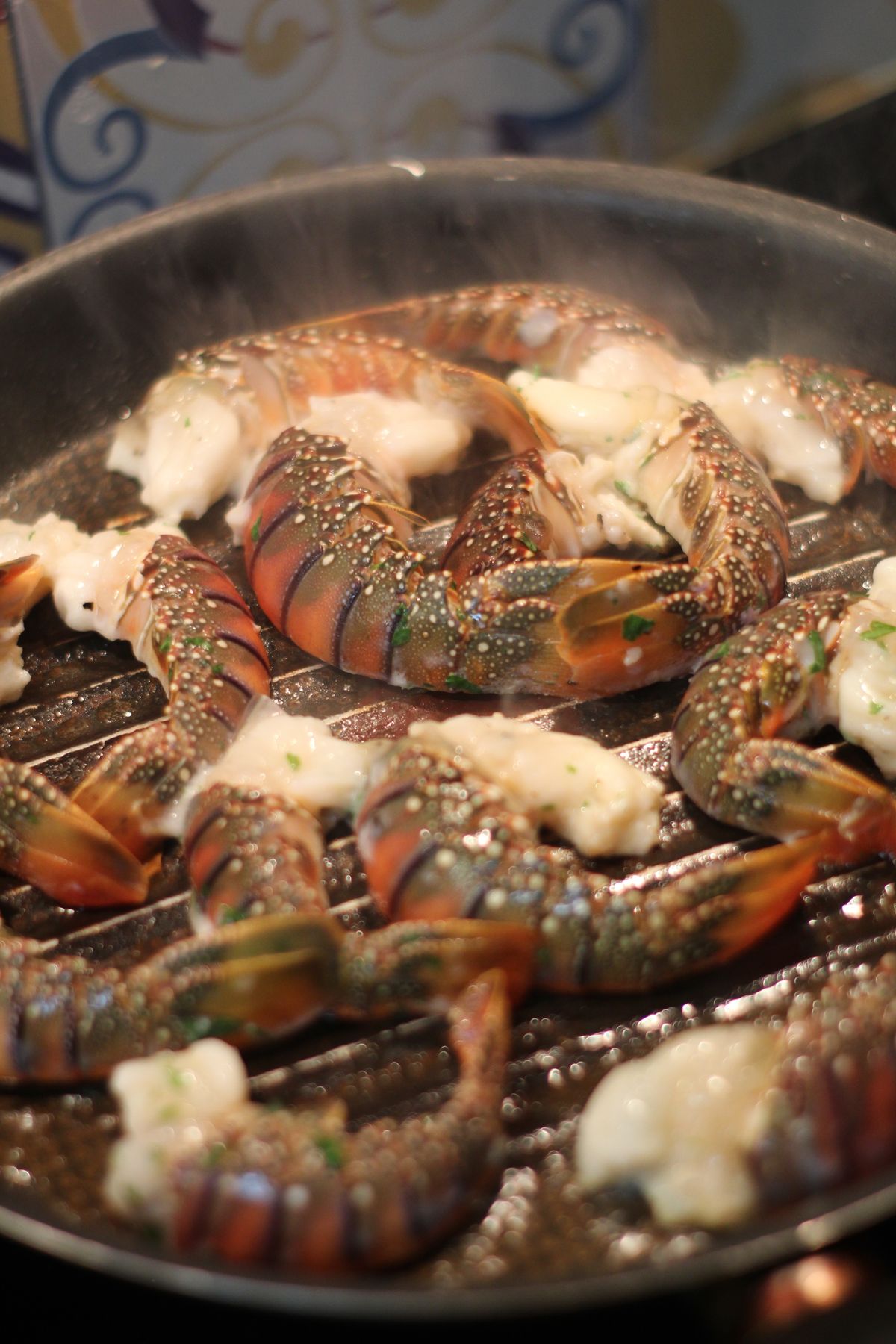
Place the roasted lobster halves on warm plates, cut-side up. Squeeze a small amount of fresh lemon juice over the meat, not too much.
Spoon the warm beurre blanc generously over the lobster meat. The sauce should pool slightly in the cavity where the meat sits.
Top each lobster half with caviar, around 15-20g per portion. The caviar sits in the warm sauce, never directly on the hot lobster meat. Scatter chives and micro-herbs around the edge of the plate. Serve immediately with lobster crackers and small forks.
Live lobster matters. Frozen pre-cooked lobster has a fibrous, slightly fishy texture that doesn't compare to fresh. The £8-12 premium for live native lobster is worth it.
Don't roast at lower than 220C. The high heat caramelises the surface of the lobster meat while the interior stays juicy. Lower temperatures produce poached-like texture without the caramelisation.
Beurre blanc temperature is critical. Too hot and the butter splits into oil. Too cold and the sauce solidifies. Aim for 50-60C, warm but not steamingly hot. If you have a thermometer, use it.
Caviar on the sauce, not the meat. The lobster meat coming out of the oven is too hot for direct caviar contact. The beurre blanc creates a thermal barrier. Spoon caviar onto the sauce pool, not onto the meat directly.
Serve fast. Lobster firms up as it cools. Eat within 5 minutes of plating for the best texture and flavour.
With Beluga: Use 30g of Beluga across the two lobsters. The most delicate caviar deserves the cleanest version of the dish. Skip the chives entirely.
With truffle butter: Replace half the cold butter in the beurre blanc with truffle butter. The earthy truffle flavour deepens the sauce and complements both lobster and caviar.
With Cornish brown crab on the side: Serve a small portion of potted crab on toast as a starter, then the lobster as the main. A proper British seafood-led dinner.
Wine pairing: A vintage champagne (Krug, Bollinger Grande Année, or Pol Roger Cuvée Sir Winston Churchill) is the textbook luxury pairing. A premier cru Chablis works beautifully if you prefer still wine. Avoid red wine entirely.
For more luxury main courses, see our pan-seared scallops with caviar recipe.
The flesh should turn from translucent grey-blue to opaque white, with a slight spring when pressed. The shell will be bright red. The meat should pull cleanly from the shell. Overcooked lobster is rubbery and dry, undercooked lobster is gelatinous and slightly raw at the centre. 12 minutes at 220C for a 500-600g lobster is the sweet spot.
You can but the texture suffers. If using frozen, defrost slowly in the fridge over 24 hours. Pat completely dry before brushing with butter. The dish will be 80% as good as with live, which is fine for a Tuesday but underwhelming for a special occasion.
For a main course, one whole 500-600g lobster per person. For a starter, half a lobster per person. The yield from a 600g lobster is around 200g of meat, which is a substantial main course portion.
Don't panic. Take the pan off the heat immediately. Add 1 tablespoon of cold water and whisk vigorously. In most cases the sauce comes back together. If it's truly broken, start fresh with a tablespoon of warm cream in a clean pan and whisk in the broken sauce slowly. The cream stabilises the new emulsion.
A roasted lobster with caviar beurre blanc is one of those dishes that turns dinner at home into something memorable. The bright shell on the plate, the buttery sauce pooling around the meat, the cold caviar pearls catching the light. It's the kind of meal you remember years later.
Discover Beleaev's caviar collection, the perfect topping for a celebratory lobster dinner, at Beleaev Blue Lobster. Browse the full collection at beleaev.com.
Beleaev is an international caviar and gourmet food company with fulfilment hubs across the UK, Europe, the UAE, and the United States. We are committed to sourcing responsibly farmed, sustainable products and delivering them to customers within 24 to 48 hours, ensuring exceptional freshness and quality.

 447706084493


