
Blinis
£5.00
4.82/5 · 38 reviews
£5.00

£8.00

£6.00

£23.90

By Beleaev Family | Beleaev Caviar & Gourmet | beleaev.com
Foie gras and figs is a pairing that has been on bistro menus across France for forty years and shows no sign of leaving. There's a reason. The richness of seared foie gras (silky, almost melting) needs something sharp and sweet to push against. Fresh fig delivers exactly that. Port reduction ties it together with depth.
This is the dish to learn first if you've never cooked foie gras at home. It's faster than scrambled eggs once you know the rhythm. And it forgives small mistakes more readily than terrine or au torchon, which need precision.
Three things matter: a hot dry pan, a steady eye for colour, and the discipline to stop cooking when the foie is still soft to the touch. Get those right and you're 90% of the way there.
Key Takeaways
- Score the foie gras lightly before cooking, this releases fat evenly
- Cook in a hot dry pan, never add oil, foie gras is roughly 80% fat already
- 60 to 90 seconds per side is enough, longer turns it grainy
- Serve immediately, foie gras held warm goes oily and unappetising
- Use ripe black figs, never under-ripe ones, the sweetness has to be there
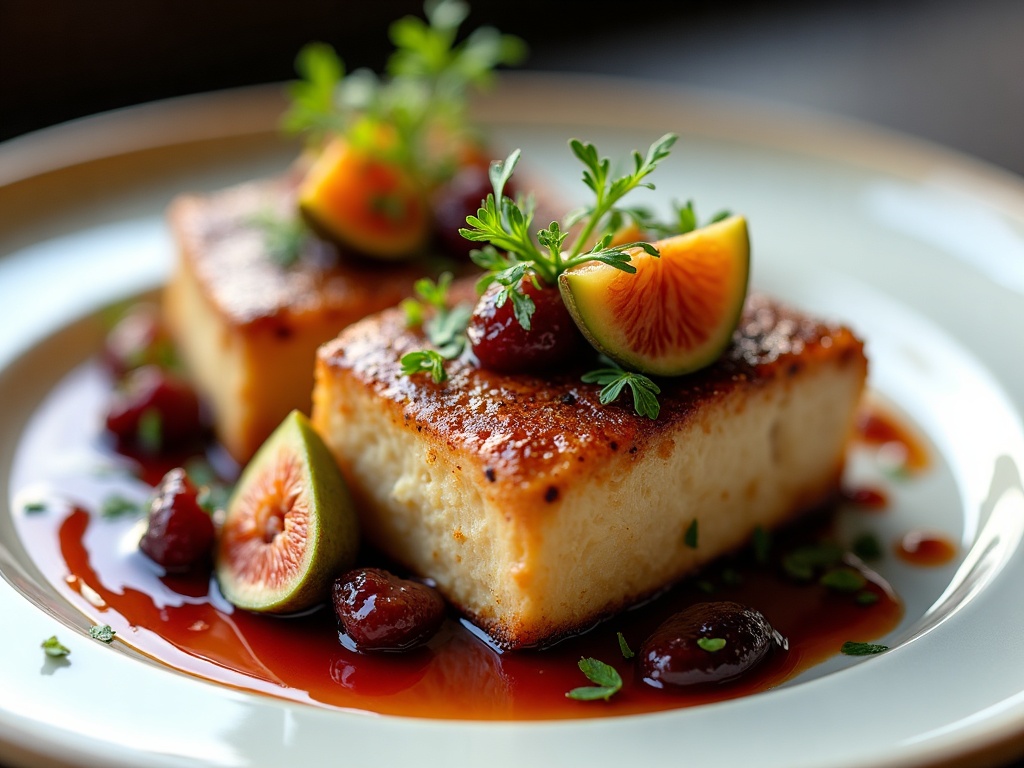
Serves 2 as a starter
The foie gras quality matters more than anything else. Buy from a reputable supplier (a French charcuterie or a UK importer that handles foie correctly). It should arrive vacuum-sealed, properly chilled, and uniform in colour. If the texture is grainy or the colour is uneven before cooking, the duck or goose was stressed during processing and the dish will struggle.
Figs need to be ripe to the point of yielding to gentle pressure. UK supermarket figs are often picked early and never fully sweeten. Get yours from a Turkish or Mediterranean grocer in season (August to October), or from a good greengrocer who turns over stock daily.
Take the foie gras out of the fridge 10 minutes before cooking. It needs to come up slightly to avoid the centre staying cold while the outside burns.
Score each slice in a shallow cross-hatch pattern, around 2mm deep. Use a sharp knife and don't press hard. The scoring helps fat render evenly and stops the slices curling.
Salt generously with flaky sea salt and crack a small amount of black pepper on both sides. Set aside.
Pour the port into a small saucepan with the thyme. Bring to a low simmer and reduce by two-thirds. This takes around 6 minutes. You want a glossy, syrupy liquid that coats a spoon, not a thin sauce.
Add the sherry vinegar and honey. Stir, taste, and adjust. The sauce should be sweet-sour with a clear port backbone. Take it off the heat. Discard the thyme. Keep the sauce warm but not hot.
Heat a dry frying pan over medium-high heat. Place the figs cut-side down and cook for 90 seconds, undisturbed. You want the cut surface to caramelise, not burn.
Lift the figs onto a warm plate. Keep them cut-side up so the juices stay in.
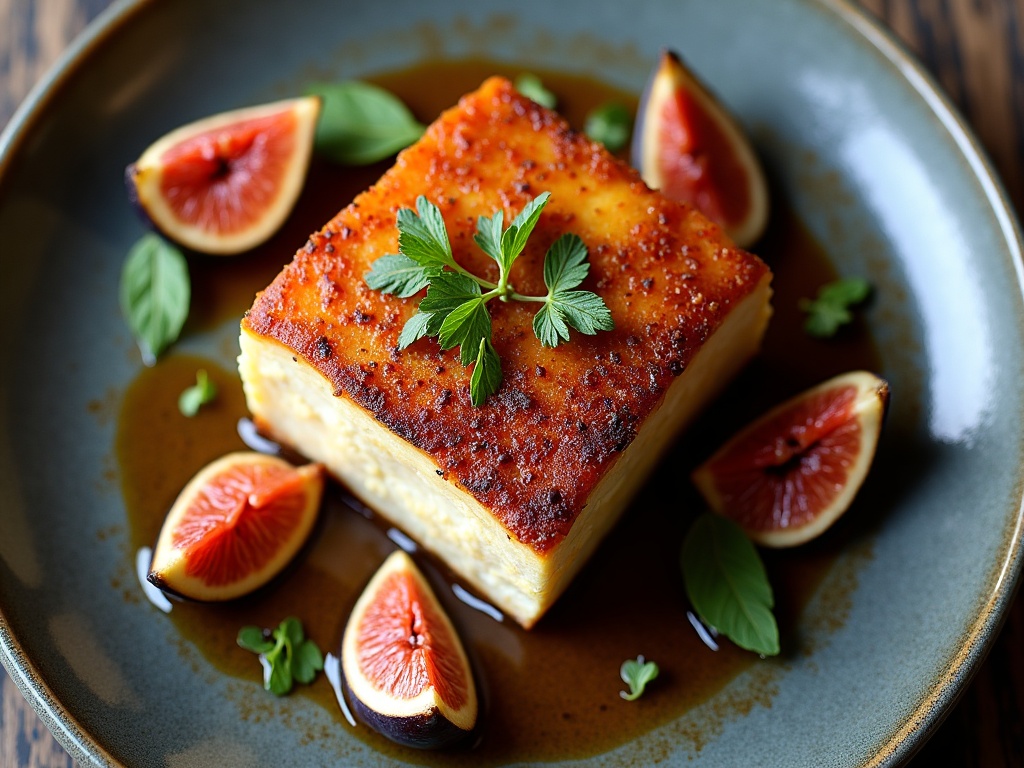
Wipe the same pan clean. Heat over medium-high until very hot, around 30 seconds. Add no oil and no butter. Foie gras renders enough fat on its own.
Place the slices in the pan with confidence. They should hiss immediately. If they don't, your pan isn't hot enough and the foie will leak and shrink.
Cook for 60 to 90 seconds on the first side. The bottom should be deep golden brown with a slight crust. Flip carefully with a fish slice. Cook for another 60 seconds on the second side.
Test gently with a finger. The foie should feel like a soft pillow, not firm. If you press and it bounces back fully, it's overcooked. If it gives slightly and feels almost melty, it's perfect. Lift onto warm plates immediately.
Place a slice of toasted brioche slightly off-centre on each warm plate. Top with the foie gras, letting it rest on the brioche so the bread soaks up rendered fat.
Arrange two fig halves alongside, cut-side up. Drizzle the port reduction in a slow stream around the foie, not over it. A small final flake of sea salt directly on the foie. Serve immediately.
The pan must be hot enough. The single biggest mistake home cooks make with foie gras is starting in a cool pan. The slices then leak fat slowly, the texture turns greasy, and you end up with a sad puddle. Test with a tiny scrap of foie before committing the whole slices, it should sizzle aggressively.
Don't move the foie while it sears. Resist the urge to peek. The crust forms in the first 60 seconds. If you lift the slice early, you tear the crust off and lose the textural contrast that makes the dish work.
Serve fast. Foie gras held even briefly in a warm oven goes oily. Plate within 60 seconds of taking it out of the pan. If you're cooking for more than four people, do it in batches and bring out plates as they're ready.
Don't pour sauce over the foie. Drizzle around or beside. Pouring port reduction directly onto the seared crust softens it and ruins the textural contrast.
Save the rendered fat. After cooking, you'll have 1 to 2 tablespoons of golden fat in the pan. Strain it through a fine sieve into a small jar. It keeps in the fridge for two weeks and is the best fat in existence for roasting potatoes or frying eggs.
With caramelised apples: Swap figs for two firm apples (Cox or Braeburn), peeled, cored, and quartered. Cook in butter and a teaspoon of sugar for 6 minutes until golden. Replace port with calvados in the reduction. This is the classic French autumn version.
With pear and gingerbread: Use halved poached pears in place of figs and toasted slices of pain d'épices (French gingerbread) instead of brioche. Christmas approved.
With fresh caviar: Top each slice of seared foie with a small spoon (5g) of Beleaev Oscietra just before serving. The salinity and fat together is a flavour bomb that very few restaurants attempt.
Wine: A glass of Sauternes or Tokaji is the textbook pairing. If you prefer dry, try a chilled Alsace Pinot Gris with some bottle age. Avoid full-bodied reds, they fight the dish.
For our broader notes on holiday menus that include foie gras, see our Christmas caviar gift guide.
Yes. Foie gras is legal to import, sell, and serve in the UK. Production within the UK is effectively impossible due to animal welfare regulations, but imported foie gras from France, Hungary, and Spain is widely available through specialist butchers and online suppliers. Check the labelling for grade A or grade B (grade A is preferred for searing).
Foie gras is the whole liver of a duck or goose, served seared, terrined, or au torchon. Pâté is a finely processed mixture of liver, fat, and seasoning, often including chicken or pork liver, with a smoother spreadable texture. Foie gras is the premium product. Pâté is the more accessible everyday cousin.
You can, but the texture suffers. Freezing breaks down some of the cell walls and the seared slices weep more fat than fresh. If you must use frozen, defrost slowly in the fridge over 24 hours, never at room temperature. Pat dry thoroughly before searing.
A small green salad dressed with sherry vinaigrette, a glass of Sauternes, and good bread. That's all. Foie gras is rich and a single 60g slice plus garnish is enough for a starter. Don't pair with another rich course immediately afterwards. A light fish main works well.
There's a moment when seared foie gras hits a warm fig and the port reduction starts to mingle with the rendered fat on the brioche. The whole plate goes briefly silent. That's the moment this dish exists for.
Discover Beleaev's caviar collection, the natural partner for any foie gras starter, at Rougié Foie Gras. Browse the full collection at beleaev.com.
Beleaev is an international caviar and gourmet food company with fulfilment hubs across the UK, Europe, the UAE, and the United States. We are committed to sourcing responsibly farmed, sustainable products and delivering them to customers within 24 to 48 hours, ensuring exceptional freshness and quality.


 447706084493


