


Sturgeon Caviar: The Complete Species Guide
By Alex Beleaev | Beleaev Caviar & Gourmet | beleaev.com
All true caviar is sturgeon caviar. But "sturgeon" covers a family of fish with very different personalities, and the species on the label changes everything: pearl size, colour, flavour, and the number on the price tag.
This guide walks the family tree so you can choose with confidence.
Key Takeaways
- Five species matter at the counter: Beluga, Kaluga, Oscietra, Sevruga, Baeri
- Pearl size runs from 2mm (Sevruga) to 3.5mm (Beluga)
- Maturity takes 7-25 years; longer-maturing species cost more
- All legal sturgeon caviar today is farmed and CITES certified
- A tasting set is the fastest way to find your species
The Family at a Glance
| Species | Latin name | Egg size | Maturity | Flavour |
|---|---|---|---|---|
| Beluga | Huso huso | 3.0-3.5mm | 15-20+ yrs | Buttery, creamy, regal |
| Kaluga | Huso dauricus | 2.8-3.2mm | 12-15 yrs | Rich, close to Beluga |
| Oscietra | A. gueldenstaedtii | 2.5-3.0mm | 8-12 yrs | Nutty, layered |
| Sevruga | A. stellatus | 2.0-2.5mm | 7-10 yrs | Briny, intense |
| Baeri | A. baerii | 2.2-2.6mm | 7-9 yrs | Mild, buttery |
Beluga: The Benchmark
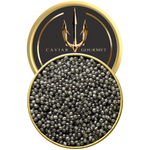
The king of the family produces the largest, creamiest pearls, and waiting two decades for a female to mature is exactly why a 30g tin runs £180-£400+. For the occasions that justify it, nothing else lands the same way. Try the Beluga Reserve.
Oscietra: The Connoisseur's Middle Ground
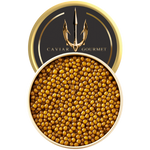
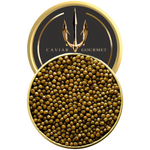
Golden-brown pearls, walnut and brioche notes, and enough variation between harvests to keep tasting interesting. At £90-£180 per 30g it is the species most regulars settle on. Try the Oscietra Royal.
Imperial: The Golden Grade
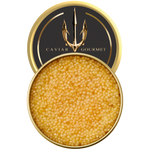
Imperial is not a separate species. It is the pale-gold top fraction of an Oscietra harvest, creamier and longer on the finish, historically set aside for royalty. See the Imperial Special Reserve.
Baeri: The Smart Start
The Siberian sturgeon matures fastest, which keeps prices from about £40 per 30g. The flavour is gentle and buttery, ideal for first tins and for cooking. Try the Royal Baeri.
Sevruga and Kaluga: Worth Knowing
Sevruga delivers the boldest, most mineral hit of the classic trio; if you see it from a reputable retailer, £60-£130 per 30g is the market norm. Kaluga gives a Beluga-like richness at friendlier prices thanks to established farming. Neither is currently in our core range, but both are honest choices when properly certified.
Choosing Without Guesswork
Match the species to the moment: Baeri for weeknights and first-timers, Oscietra for food pairing and gifts, Imperial for anniversaries, Beluga for the nights you will retell for years. Or skip the theory: the Signature Tasting Set puts four grades side by side, and our guide on types of caviar goes deeper on each.
Frequently Asked Questions
Which sturgeon caviar is best?
Beluga is the benchmark for richness, but "best" depends on the occasion and palate. Most experienced buyers alternate between Oscietra for complexity and Baeri for everyday value.
Is all sturgeon caviar farmed now?
Effectively yes. Wild sturgeon are CITES-protected, so the legal market is certified aquaculture. Farming is also why quality is more consistent than it was a generation ago.
What does the CITES code on a tin mean?
It is the international certificate that the caviar was legally produced and traded. Every legitimate tin carries one; ours are printed on the base label.
What is the difference between Oscietra and Imperial?
Same species, different grade. Imperial is the rare pale-gold fraction of an Oscietra harvest, selected for colour and finish.


 447706084493

