

French Réveillon: Caviar at the Christmas Feast
By Alex Beleaev | Beleaev Caviar & Gourmet | beleaev.com
In France, Christmas doesn't begin on the 25th. It begins on the evening of the 24th, when families sit down to a meal that might last four hours. Maybe five. Nobody's counting. This is Le Réveillon, and it is, without exaggeration, one of the great dining traditions on earth.
What Is Le Réveillon?
The word comes from "réveiller," meaning to wake or to revive. It refers to the late-night feast that follows midnight mass, though plenty of modern French families skip the church and go straight to the table. The meal traditionally begins at 20:00 or 21:00 and stretches well past midnight, weaving through courses with the unhurried pace that only the French seem to master.
Le Réveillon is not about speed. It's not about efficiency. It is about sitting with the people you love while extraordinary food passes before you, course after course, glass after glass. Children fall asleep on sofas. Grandmothers tell stories everyone has heard a thousand times. The cheese course alone can take forty-five minutes.
And at the centre of this ritual? The finest ingredients France can offer.
Caviar's Place in the French Christmas Tradition
France has a deep, centuries-old relationship with caviar. The Aquitaine region in the southwest was once a major producer, with sturgeon from the Gironde estuary supplying Parisian tables from the 1920s onward. Though wild French sturgeon is long gone, the country remains one of Europe's largest caviar producers through aquaculture. The French don't just eat caviar. They understand it.
At Le Réveillon, caviar typically appears as the opening salvo. Before the foie gras. Before the lobster or the capon. Before everything. It sets the tone: this meal will be exceptional.
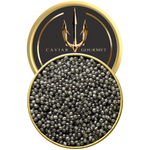
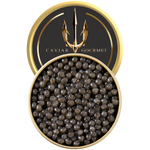
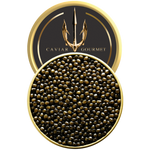
A simple presentation is preferred. A glass dish of crushed ice, the tin nestled in the centre, perhaps a few blini arranged like petals around it. Some families add a small dish of crème fraîche. Others insist on nothing at all, just the caviar, a spoon and a glass of something cold and sparkling.
The Regional Variations
In Paris and the north, Réveillon tends toward formality. Crystal stemware, pressed linen, a seating chart that's been argued over for weeks. Caviar here is Oscietra or Beluga, served with Champagne from a house the family has bought from for generations.
Provence approaches things differently. The table might be simpler, the atmosphere warmer, the colours bolder. The "Thirteen Desserts" tradition (representing Christ and the twelve apostles) fills the end of the meal with dried fruits, nougat and calissons. But even here, caviar earns its opening spot.
In Bordeaux and the southwest, the competition between foie gras and caviar is fierce. Many families serve both, side by side, daring guests to choose a favourite.
Foie Gras vs Caviar: The Great French Debate
Ask a French host which belongs at the head of the Réveillon table and you'll get a passionate answer. Foie gras loyalists argue it's the soul of French Christmas, that its rich, silky texture defines the holiday. They're not wrong.
But caviar offers something foie gras cannot. Brightness. A saline clarity that wakes the palate rather than coating it. After a long day of cooking and preparation, that first taste of caviar is like opening a window in December. Cool air, sharp focus, the promise of what's to come.
The smartest hosts don't choose. They serve caviar first, as a standalone course with champagne. Then foie gras arrives thirty minutes later, perhaps with a Sauternes or a late-harvest Gewürztraminer. The contrast between courses is part of the pleasure.
Building the Perfect Réveillon Caviar Course
The French approach to a caviar course is rooted in respect for the ingredient. Keep it cold. Keep it simple. Let it speak.
What You'll Need
For a table of eight, 50g to 125g of premium caviar serves as an elegant opening course. This isn't meant to fill anyone up. It's meant to set a mood. A whisper before the symphony.
Accompaniments, if you choose them, should be restrained:
- Warm blini or lightly toasted brioche points
- Crème fraîche (full-fat, none of that low-fat nonsense)
- Finely chopped hard-boiled egg, whites and yolks separated
- A scattering of fresh chives
No onion. The French are quite firm about this. Raw onion overwhelms the caviar and, as more than one Parisian host has put it, "ruins everything."
Temperature and Timing
Remove caviar from the refrigerator ten minutes before serving. No longer. The tin should feel cool to the touch when you open it. Serve immediately once opened.
If your Réveillon runs long (it will), don't leave the caviar sitting out. Better to serve a smaller quantity at peak freshness than to let a large amount warm and lose its character.
Champagne and Caviar: The French Way
France wrote the book on this pairing. Quite literally, in some cases.
For Réveillon, a Brut or Extra Brut Champagne is ideal. The dryness complements the salinity of caviar without competing. Blanc de Blancs (100% Chardonnay) brings citrus and mineral notes that mirror the caviar's oceanic quality. It's a pairing that feels less like a match and more like a conversation.
Vintage Champagne can be spectacular here, especially with richer varieties like Oscietra. The toasty, developed character of an aged cuvée stands up to the nutty depth of mature sturgeon roe.
Some families pour a small measure of chilled vodka instead. This is the Caspian influence that crept into French dining in the early twentieth century, and it works beautifully. A clean, frozen vodka strips the palate bare, letting each bite of caviar land with full force.
A Sample Réveillon Menu Featuring Caviar
For those planning their own Réveillon, consider this menu structure. It follows the traditional French progression while giving caviar its proper spotlight.
Course one: Caviar service with Champagne. Blini, crème fraîche. Nothing else.
Course two: Foie gras mi-cuit with fig compote and toasted pain de campagne. Switch to Sauternes.
Course three: Lobster thermidor or coquilles Saint-Jacques gratinées. Return to Champagne, or move to a white Burgundy.
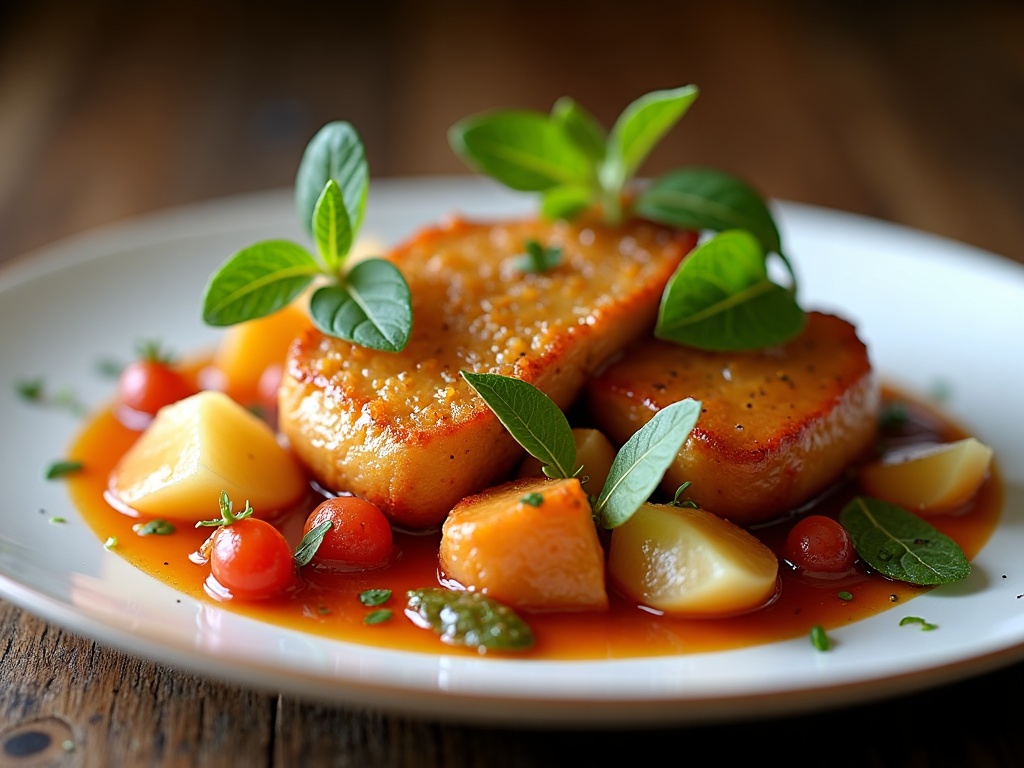
Course four: Roast capon with chestnuts, or a daube de boeuf if the family prefers something hearty. Red Burgundy or a structured Bordeaux.
Course five: The cheese course. A minimum of five varieties. A Comté, a Roquefort, a Brie de Meaux, a chèvre and something local.
Course six: Bûche de Noël. Coffee. Perhaps an Armagnac.
That's Christmas. That's Le Réveillon. A meal that takes the entire evening because it is the entire evening.
Midnight Mass and the Return to Table
In traditional households, the family attends midnight mass between courses, returning home to continue the feast. This pause, this spiritual intermission, gives the meal a rhythm that no restaurant could replicate.
Imagine stepping back through your front door at 00:30, cheeks cold from the night air, into a home that smells of roasting capon and warm bread. The table is still set. The candles are still lit. Someone opens another bottle. You pick up exactly where you left off.
It's this quality of timelessness that makes Le Réveillon so deeply French. The meal isn't an event that starts and ends. It's a state of being.
Ordering Caviar for Your Réveillon
Plan ahead. The Christmas period is the busiest time of year for caviar, and the best varieties sell quickly. Explore the full range at beleaev.com and order at least a week before Christmas Eve. Delivery across Europe ensures your caviar arrives fresh, cold and ready for the most important meal of the year.
For a family of eight, 125g of Oscietra makes a generous first course. Hosting a larger gathering? Consider 250g, or offer two varieties side by side: Oscietra for richness, Siberian Baerii for something lighter and more delicate. Let your guests discover the difference for themselves.
Further Reading
Frequently Asked Questions
What time does Le Réveillon start?
Most families sit down between 20:00 and 21:00 on Christmas Eve. The meal stretches past midnight, sometimes until 02:00 or later. Caviar is typically served as the first course, so plan to open your tin within the first half hour of dinner.
Is caviar a traditional part of French Christmas?
Caviar has been part of upscale French Christmas dining for over a century. France's own aquaculture industry in the Aquitaine region helped establish it as a festive staple. Today, it's one of the most popular luxury foods served at Réveillon across Paris, Lyon, Bordeaux and beyond.
Should I serve foie gras or caviar at Réveillon?
Both. The French tradition accommodates both beautifully. Serve caviar as the opening course with Champagne, then follow with foie gras thirty minutes later with a sweet wine like Sauternes. The contrast between the two is part of the experience.
How do I keep caviar fresh during a long Réveillon meal?
Serve in small quantities on crushed ice and return the sealed tin to the refrigerator between courses. Never leave caviar at room temperature for more than twenty minutes. If your meal runs late (and it will), it's better to do a second service than to let the first sit out.
What Champagne pairs best with caviar for Christmas?
Brut or Extra Brut Champagne is the French standard. Blanc de Blancs offers the cleanest pairing, with citrus and mineral notes that complement the caviar's salinity. For a splurge, a vintage Champagne with some age brings toasty depth that works beautifully with Oscietra.
Explore our collection at beleaev.com and discover something worth celebrating.
Beleaev Caviar & Gourmet is an international caviar and gourmet company sourcing responsibly farmed Baeri, Oscietra, Imperial and Beluga caviar, delivered within 24-48 hours. Next-day delivery across the United Kingdom.


 447706084493

