







Potted Crab: The Old British Recipe Worth Reviving
By Beleaev Family | Beleaev Caviar & Gourmet | beleaev.com
Potted crab used to be a fixture on every gentleman's-club menu in St James's. It fell out of fashion sometime in the 1970s, replaced by prawn cocktail and avocado fans. That was a mistake.
A good potted crab is one of the simplest, most satisfying starters in the British canon. Brown meat for depth, white meat for texture, butter for richness, mace and cayenne for warmth, and a butter seal that lets the whole thing keep for a week in the fridge. Spread it on hot toast and you'll wonder why anyone ever stopped serving it.
This recipe is properly old-school. Ours uses around 60% white meat to 40% brown for balance, which is the ratio Eliza Acton specified in 1845 and still works today.
Key Takeaways
- Buy fresh dressed crab from a fishmonger, never tinned or pasteurised
- Brown meat does most of the flavour work, don't skip it
- Mace is the traditional spice, not nutmeg, the flavour is sharper and cleaner
- The butter seal is what makes it potted, fridge-stable for up to 7 days
- Eat with hot toast, never cold, the contrast is the whole point
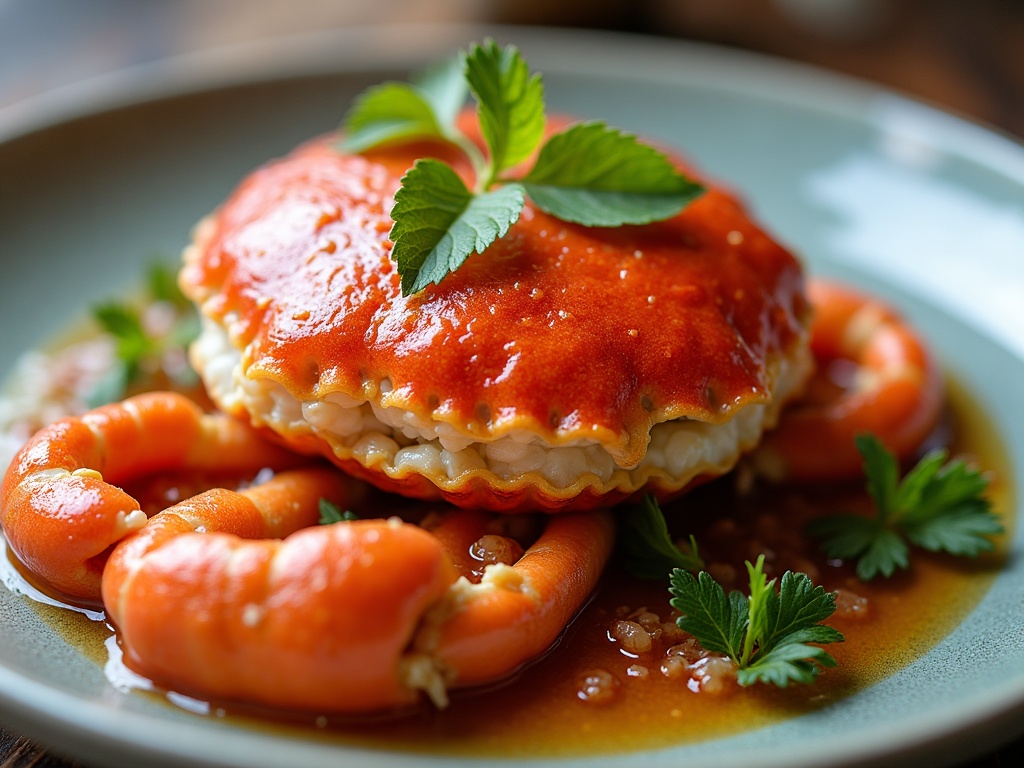
The Ingredients
Makes 4 small ramekins (around 100g each), serves 4 as a starter
For the crab mix:
- 250g fresh white crab meat
- 150g fresh brown crab meat
- 100g unsalted butter, softened
- Juice of half a lemon
- Zest of one lemon
- 1/4 tsp ground mace
- A pinch of cayenne pepper
- A pinch of sea salt
- A few grinds of black pepper
For the butter seal:
- 100g unsalted butter, clarified (see method)
- 4 small bay leaves, optional
For serving:
- Sourdough or good white bread, toasted
- Lemon wedges
- Watercress or rocket
The crab is everything. UK supermarket "white crab meat" tubs are often pasteurised and have lost the sweetness that makes the dish work. Get your crab from a fishmonger who picks the meat themselves, ideally dressed that morning. Brown crab (Cancer pagurus) is the British native species and the right choice.
White meat comes from the claws and body. Brown meat comes from the body cavity, darker, richer, more pungent. You need both for proper potted crab. Skipping the brown meat in favour of "all white" is a modern mistake. The brown is where the flavour lives.
The Method, Step by Step
Step 1: Clarify the Butter
Slowly melt the 100g of butter for the seal in a small saucepan over the lowest heat. Don't stir. After 5 minutes, three layers will form: a foamy top (milk solids), clear yellow middle (clarified butter), and a milky residue at the bottom.
Skim the foam off the top with a spoon. Carefully ladle the clear yellow butter into a clean jug, leaving the milky residue behind. This is your clarified butter, also called drawn butter or beurre clarifié. It keeps longer than fresh butter and forms a perfect seal because there are no milk solids to spoil.
Step 2: Make the Crab Mixture
Put the softened butter in a bowl and beat with a wooden spoon until pale and creamy. Add the lemon zest, juice, mace, cayenne, salt, and pepper. Mix well.
Add the brown crab meat first. Mix until fully combined and the colour is uniform. The mixture should look like a dark, pungent crab paste.
Now fold in the white crab meat gently. You don't want to break up the chunks of white meat, you want to keep some texture. The final mixture should be flecked with visible white meat in a brown, fragrant base.
Taste. Adjust salt, lemon, and cayenne. Mace can vary in strength so add another pinch if it tastes flat. The flavour should be properly seasoned but not loud, the crab does the heavy lifting.
Step 3: Pot the Crab
Press the mixture firmly into 4 small ramekins or one larger dish. Smooth the tops with the back of a spoon. Press hard, you don't want air pockets that the butter seal can't reach.
Refrigerate for 30 minutes to firm up before sealing.

Step 4: Seal with Clarified Butter
Take the ramekins out of the fridge. Pour a 3 to 4mm layer of clarified butter over each, ensuring the entire surface is covered, right up to the edges. Lay a small bay leaf on top if using. The bay is decorative and adds a faint herbal note as the crab matures.
Return to the fridge for at least 4 hours, ideally overnight. The flavours marry and deepen during this rest. Day-old potted crab is better than fresh.
Tips for Getting It Right
Don't rush the resting time. Potted crab tastes flat if you eat it within an hour of making it. The mace and cayenne need time to spread through the butter, and the brown meat needs time to mellow. Make it the day before serving.
Use proper mace, not nutmeg. Mace and nutmeg come from the same fruit but they're different spices. Mace is the outer aril, lighter, sharper, more floral. Nutmeg is the seed inside, warmer and rounder. The traditional British recipe uses mace and the difference is noticeable.
Toast quality matters. Spread potted crab on cold toast and you waste it. The butter needs to soften and melt slightly into the bread, mingling with the crab. Use a thick-cut sourdough or a proper white bloomer, toast it until golden, and serve the potted crab cool from the fridge directly onto the hot toast.
Don't reheat. Some recipes online suggest warming the potted crab. Don't. The contrast between cool firm potted crab on hot toast is the whole architectural idea. Warm crab loses texture and becomes a sad spread.
Salt restraint. Crab is naturally salty, so are most butters (even unsalted ones contain trace minerals). Taste before adding more salt. You can always add later, you cannot remove.
Variations and Pairings
With caviar topping: A teaspoon of Beleaev Oscietra on top of the butter seal just before serving turns this into a proper occasion starter. The salinity of the caviar and the richness of the crab is a marriage made in St James's.
Spicier version: Increase cayenne to 1/2 tsp and add a tiny pinch of smoked paprika. This is closer to the Devon-style potted crab you'll find in Salcombe and Brixham.
With dill: A teaspoon of finely chopped fresh dill folded through the mixture is an unorthodox addition that works surprisingly well, particularly in summer.
Wine: A flinty Chablis or a dry English Bacchus. Avoid oaked Chardonnay, the butter and oak compete. Champagne also works, particularly Blanc de Blancs.
For more on what pairs with British seafood starters, see our crab and caviar toast recipe and notes on classic British luxury food.
Frequently Asked Questions
How long does potted crab keep in the fridge?
Up to 7 days if the butter seal is intact. Once you break the seal by digging in, eat within 48 hours. Always keep refrigerated and never leave out at room temperature for more than an hour. The clarified butter seal is what makes it shelf-stable, removing the milk solids that would otherwise spoil quickly.
Can I freeze potted crab?
You can but the texture suffers. The butter seal cracks slightly on freezing and the white crab meat becomes more fibrous after defrosting. If you must freeze, do so within 24 hours of making, freeze for up to one month, and defrost slowly in the fridge over 24 hours.
What's the difference between potted crab and crab pâté?
Potted crab keeps the texture of the crab meat visible and uses a butter seal for preservation. Crab pâté is processed smooth, often includes cream cheese, and is served as a spread without the seal. Potted crab is the older British tradition, pâté is the French-influenced modern cousin.
Can I use tinned crab meat?
You can, but the dish will be a shadow of itself. Tinned crab is pasteurised, which kills both the sweetness and the brown-meat depth. If you absolutely must use it, look for premium chilled tubs from a fishmonger rather than long-shelf-life tinned. Fresh dressed crab from a fishmonger is the right ingredient.
Further Reading
- Brown crab fishery in the UK (Marine Conservation Society)
- The history of potting in British cookery (BBC Food)
A jar of potted crab in the fridge is one of those things that quietly improves the week. A late lunch, a glass of Chablis, a slice of toast, and you remember why the British classics became classics in the first place.
Discover Beleaev's caviar collection, the perfect addition to any potted crab starter, at Royal Oscietra. Browse the full collection at beleaev.com.
Beleaev is an international caviar and gourmet food company with fulfilment hubs across the UK, Europe, the UAE, and the United States. We are committed to sourcing responsibly farmed, sustainable products and delivering them to customers within 24 to 48 hours, ensuring exceptional freshness and quality.

 447706084493

