




What Fish Does Caviar Come From? Sturgeon Explained
By Alex Beleaev | Beleaev Caviar & Gourmet | beleaev.com
Caviar comes from sturgeon. More precisely, CITES defines caviar as processed, unfertilised roe from fish in the order Acipenseriformes. In specialist food shops, the word normally means salt-cured sturgeon roe from the Acipenseridae family.
Salmon, lumpfish and trout eggs are sold as named roe or caviar substitutes. The species on a sturgeon caviar tin tells you much about its pearl size, texture, flavour and price.
Here are five caviar fish names you are likely to meet, plus the labels that show where each tin came from.
Key Takeaways
- Caviar comes from Acipenseriformes fish, most commonly sturgeon
- The sturgeon lineage stretches back more than 200 million years
- Beluga, Kaluga, Oscietra, Sevruga and Baeri are five familiar caviar species
- Female sturgeon can take from about 7 years to two decades or more to mature
- Salmon and trout produce named roe, not sturgeon caviar
A fish lineage more than 200 million years old
The sturgeon is one of the oldest fish lineages still swimming. Its fossil record stretches back more than 200 million years. It has bony plates instead of scales, a shark-like tail and barbels that help it find food along the riverbed.
The IUCN lists 27 sturgeon species and describes the group as exceptionally threatened. CITES regulates international trade in sturgeon, paddlefish and their caviar. That is why the species and source codes on a legal tin matter.
A female sturgeon does not produce eggs on a salmon-like annual schedule. Depending on the species and farming conditions, maturity can take from about 7 years to two decades or more. Farms carry those years of feed, water and care before the first harvest, which helps explain the price.
Five caviar fish species you will often see
Beluga (Huso huso)
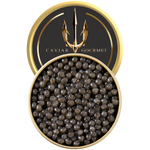
The largest sturgeon produces extra-large pearls with a creamy, marine character. Beleaev Beluga Reserve has 3.0-3.5 mm pearls and comes from farmed Huso huso matured for 15-20 years. Shop Beluga Reserve Caviar from £110.
Kaluga (Huso dauricus)
Beluga's river cousin comes from the Amur basin. Kaluga and Kaluga hybrids are known for large pearls and a rich, clean finish.
Oscietra (Acipenser gueldenstaedtii)
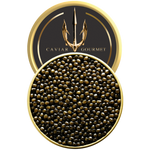
Oscietra is prized for medium-to-large pearls and a layered, nutty flavour. Beleaev Oscietra Royal comes from farmed Acipenser gueldenstaedtii matured for 10-12 years. Shop Oscietra Royal Caviar from £48.
Sevruga (Acipenser stellatus)
The smallest-grained of the historic big three has a direct, briny intensity. Sevruga matures earlier than Beluga and gives a firmer, more concentrated taste.
Baeri (Acipenser baerii)
The Siberian sturgeon produces medium pearls with sweet cream, almond and light salinity. Beleaev Royal Baeri comes from farmed Acipenser baerii matured for 7-9 years. Shop Royal Baeri Caviar from £37.
These five names are a useful starting point, not a complete map. White sturgeon, sterlet, Amur sturgeon and farmed hybrids also produce caviar.
Why salmon roe and trout roe never earn the name
Salmon ikura is excellent on rice, while trout roe brightens a blini. Both are roe, but neither is sturgeon caviar. They should be sold under the fish name so the buyer knows exactly what is in the jar.
For a bright, large-pearl alternative, Wild Salmon XXL Roe comes from Canadian King Salmon and starts at £60. Our guide to caviar vs fish roe explains the labelling and taste differences.
Why CITES labels and traceable farms matter
Wild sturgeon declines led to tighter international controls. The CITES caviar definition and labelling system records the species, source, country of origin, year, processor and lot. It applies to both wild-origin and aquaculture caviar, so wild is not a synonym for illegal.
Every Beleaev caviar tin is farmed, CITES-certified and traceable to its farm. The label answers the origin question. Your palate can settle the rest: Oscietra finishes warm and nutty, while Baeri is softer and creamier.
Choose caviar by species
The Beleaev Signature Tasting Set, 4x30g compares Baeri, Oscietra, Imperial Gold and Beluga side by side. It includes four mother-of-pearl tasting spoons and mini blinis. Rated 4.9/5 from 40 verified product reviews, it costs £247 for a one-time purchase.
Royal Baeri Caviar, the gentle first tin, from £37. Oscietra Royal Caviar, nutty and layered, from £48. Beluga Reserve Caviar, extra-large and velvety, from £110.
Order by 2 pm for next-day UK delivery. Same-day personal delivery is available in London Zones 1-3. Browse the full caviar collection.


Frequently Asked Questions
What fish does caviar come from?
Caviar comes from Acipenseriformes fish, most commonly sturgeon. Familiar species include Beluga, Oscietra, Sevruga, Baeri and Kaluga.
What fish is black caviar from?
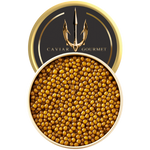
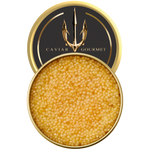
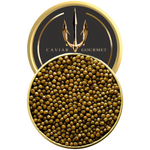
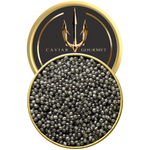
Black caviar usually means sturgeon roe. Its natural colour can range from charcoal and brown to gold or platinum, so black is a market shorthand, not a separate fish species.
Is salmon roe caviar?
No. Salmon roe, or ikura, comes from salmon and should be sold under that name. It has larger orange pearls and a brighter, juicier taste than sturgeon caviar.
Why does sturgeon caviar cost so much?
Female sturgeon can take from about 7 years to two decades or more to mature. Farms carry the cost of feed, water, care, grading and chilled distribution throughout that time.
Can caviar come from wild sturgeon?
Yes, CITES labelling recognises both wild and aquaculture sources. The Beleaev caviar collection is farmed, CITES-certified and traceable to its farm of origin.
 447706084493

