
Blinis
£5.00
4.82/5 · 38 reviews
£5.00

£8.00

£6.00

£23.90

By Beleaev Family | Beleaev Caviar & Gourmet | beleaev.com
Caviar on toast is the dish you make when you want to remind yourself why caviar exists. No cream, no chives, no garnish theatre. Just bread, butter, salt, and a generous spoon of pearls.
It's also the dish that exposes bad caviar instantly. There's nowhere to hide. If your caviar is fishy, oily, or flat, plain toast will tell you immediately. If it's properly fresh, properly briny, with a clean snap and a long finish, plain toast becomes the best vehicle for it.
This is what we eat at home on a quiet Tuesday when we want something proper. Five minutes of work, three ingredients you already have, and a result that tastes like the sort of thing you'd pay £30 for in a Chelsea wine bar.
Key Takeaways
- Use proper sourdough or a good white bloomer, no supermarket sliced
- Toast until deep golden, never pale, the contrast matters
- Cold unsalted butter, applied generously, is the only condiment needed
- Caviar at fridge temperature, never room temperature
- 15-20g per slice is the right portion, more is wasteful
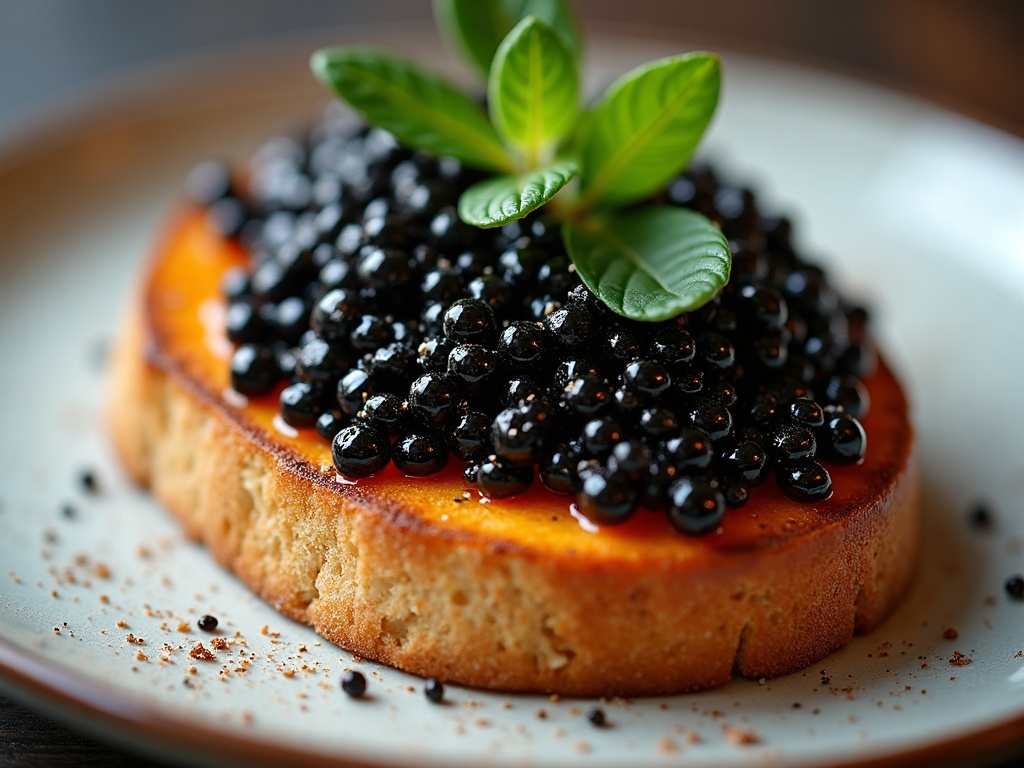
Serves 2
The bread is half the dish. Get a proper sourdough from a good bakery, ideally with a crisp crust and a tangy interior. White bloomer also works. Avoid pre-sliced supermarket sourdough, the texture is wrong and the flavour is washed-out.
The butter is the other half. Use unsalted, cold from the fridge. The cold fat creates a barrier between the warm toast and the cold caviar, protecting the pearls from heat. Salted butter competes with the caviar's natural salinity.
Toast the sourdough in a hot toaster or under a grill until deep golden brown on both sides. Not pale gold. Not light tan. Deep gold with crisp edges and a few darker spots.
Pale toast tastes of nothing and goes soggy under the butter. Properly browned toast has a nutty crunch that contrasts with the soft caviar.
The butter goes on hot toast. This is important. You want some of the butter to melt into the toast, but most of it to stay solid as a thick layer.
Cut thin slabs of cold butter and place them on the toast. Don't try to spread it. The heat of the toast will soften the bottom of the slabs while the tops stay cold and firm.
The thicker the butter layer, the better. Aim for around 8-10g per slice, which is a generous covering, not a smear.
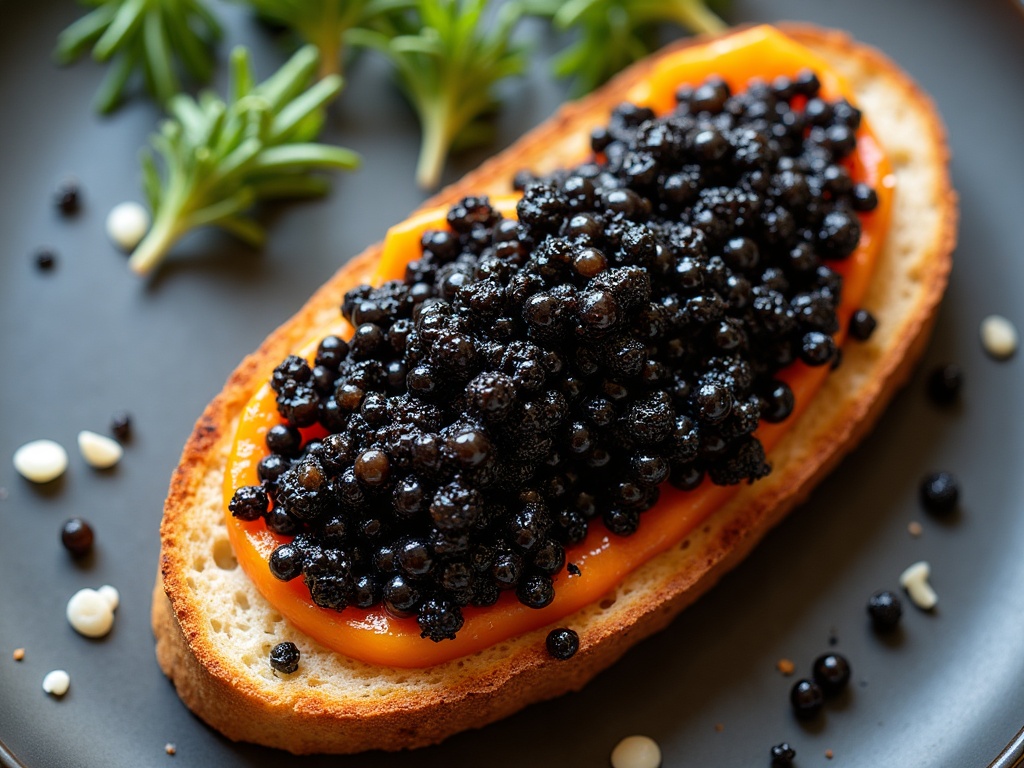
Don't immediately add caviar. Let the toast cool for 30 seconds. The butter should still be cold but the toast itself should drop below 60C.
If you put caviar on a piping-hot slice of toast, the heat will partially cook the eggs and turn the texture chalky. The half-minute wait is the difference between proper texture and ruined caviar.
Spoon the caviar generously across each slice of toast. Don't spread it like jam, leave it in a mound. The pearls should sit proudly, not be smeared into a flat layer.
Add a tiny pinch of flaky sea salt directly onto the caviar, just one or two flakes. A small squeeze of lemon juice on the toast (not on the caviar) if using. Crack a tiny amount of black pepper at the edge of the plate, never on the caviar itself. Eat immediately.
The bread can't be too thick. Thin slices feel cheap under generous caviar. Aim for 2cm or thicker, with a crisp crust intact. The toast should be substantial enough to support the topping without bending.
Cold butter, every time. Room-temperature butter goes too soft and merges with the toast, creating a single layer instead of three distinct elements. Cold butter stays distinct, giving you bread / fat / caviar in clean layers.
Salt restraint. Caviar is naturally salty. The flaky sea salt is for the texture and visual finish, not for additional seasoning. One or two flakes per slice is plenty. Do not pre-salt the butter.
Don't use a metal spoon to serve the caviar. Metal interacts with caviar and can give it a faintly metallic taste. Use a mother-of-pearl, bone, plastic, or wooden spoon. If you don't have one, the back of a clean teaspoon works in a pinch.
Eat in 2 bites, not 6. This isn't a leisurely tasting. The whole architecture (warm toast, cold butter, cold caviar) only holds for the first minute. Eat each slice in 2 generous bites.
With Beluga: Use 30g of Beluga across the two slices. The most delicate caviar, ideal for showing off. The plain toast lets the Beluga sing without competition.
With Sevruga: Use 35g of Sevruga across the two slices. The smaller, firmer pearls give a more pronounced pop on the toast. Sevruga is the connoisseur's pick for plain caviar service.
With crème fraîche: Add a small dollop of full-fat crème fraîche between the butter and the caviar. This is the slightly more accessible Caspian-style version. Discover Beleaev's full caviar range.
With chives or dill: A scattering of finely sliced chives or dill at the very end. Don't overdo it, the herbs are decoration, not seasoning.
Wine: An icy glass of dry champagne, served in a flute or a coupe. Avoid red wine entirely, even light reds, the tannins clash with the caviar. Vodka in shot glasses is the Caspian alternative.
For more on caviar pairings, see our champagne and caviar guide and our caviar etiquette piece.
A proper sourdough is the gold standard, with a crisp crust and a tangy interior. White bloomer is the second choice. Avoid rye, pumpernickel, or strongly flavoured breads, they fight the caviar. Avoid pre-sliced supermarket sourdough, the structure is wrong. A good rule: if you wouldn't serve the bread to a guest on its own, it's not good enough for caviar.
Around 15-20g per slice is the right portion. Less than that feels stingy, more than that becomes wasteful because the caviar can't be properly tasted in such a thick layer. For two people sharing as a snack, 30-40g of caviar across 2-3 slices of toast is generous and satisfying.
You can but the dish will be saltier than intended. Caviar is already salty, and salted butter adds another layer that can tip the balance. Unsalted butter lets the caviar's natural salinity come through. If you only have salted butter, skip the additional sea salt flakes at the end.
Heat above 60C denatures the proteins in caviar, turning the pearls chalky. The fix is to wait 30 seconds after toasting and buttering before adding the caviar, and to use cold butter as a thermal barrier between the hot bread and the cold caviar. Properly handled, the caviar stays firm and pop-textured.
There's an honesty to caviar on toast that you don't get from the more elaborate canapés. Three ingredients. Five minutes. And a result that tells you exactly what you're eating, with nothing dressed up.
Discover Beleaev's caviar collection, the perfect partner for a proper slice of toast, at Royal Oscietra. Browse the full collection at beleaev.com.
Beleaev is an international caviar and gourmet food company with fulfilment hubs across the UK, Europe, the UAE, and the United States. We are committed to sourcing responsibly farmed, sustainable products and delivering them to customers within 24 to 48 hours, ensuring exceptional freshness and quality.


 447706084493


