




Truffles Explained: White Alba vs Black Perigord vs Summer
By Alex Beleaev | Caviar & Gourmet, London | beleaev.com

A truffle is a wild fungus that grows underground, around the roots of certain trees, and is hunted out by trained dogs. The black truffle and the white truffle are different species with different seasons, different prices and very different jobs in the kitchen. That is the whole story in one breath. Everything else is detail worth knowing before you spend on one.
Most guides lump every truffle together and call it "luxury". Frankly, that helps nobody. So here is what white Alba, black Perigord and summer truffle actually are, when each is in season, and which one you want on the plate.
Key Takeaways
- White Alba (Tuber Magnatum Pico) is the rarest, served raw, never cooked
- Black Perigord (Tuber Melanosporum) is the deep winter truffle chefs build sauces around
- Autumn black (Tuber Uncinatum) gives real depth for less, and takes gentle cooking
- Season decides everything: each species has a short, fixed window
- Curious? Explore the Beleaev truffle collection
What Is a Truffle, Exactly?
A truffle is the fruiting body of a fungus that lives in partnership with tree roots, oak, hazel and beech mostly, deep enough that you cannot see it from the surface. That is why dogs do the finding. The aroma is the point of the whole thing, and it is the aroma that fades fastest once the truffle leaves the ground.
Two genuine truffles dominate the table, and they are not interchangeable. The white truffle and the black truffle are separate species, grown in different soils, lifted in different months. One is shaved raw at the last second. The other rewards a little patience and a little heat.
One myth worth killing early. "Truffle" on a jar of oil or a bag of crisps is almost never the wild fungus. That flavour usually comes from a synthetic aroma compound. Real fresh truffle is a seasonal, perishable thing with a price to match, and it tastes nothing like the bottled version.
White Alba Truffle: The Rarest of Them All
The Alba white truffle, Tuber Magnatum Pico, is the one people mean when they talk about the most prized truffle on earth. It is foraged wild in the Langhe and Monferrato hills of Piedmont, in northern Italy, between October and December. The shortest season of any truffle, and the one that sets auction records every autumn.
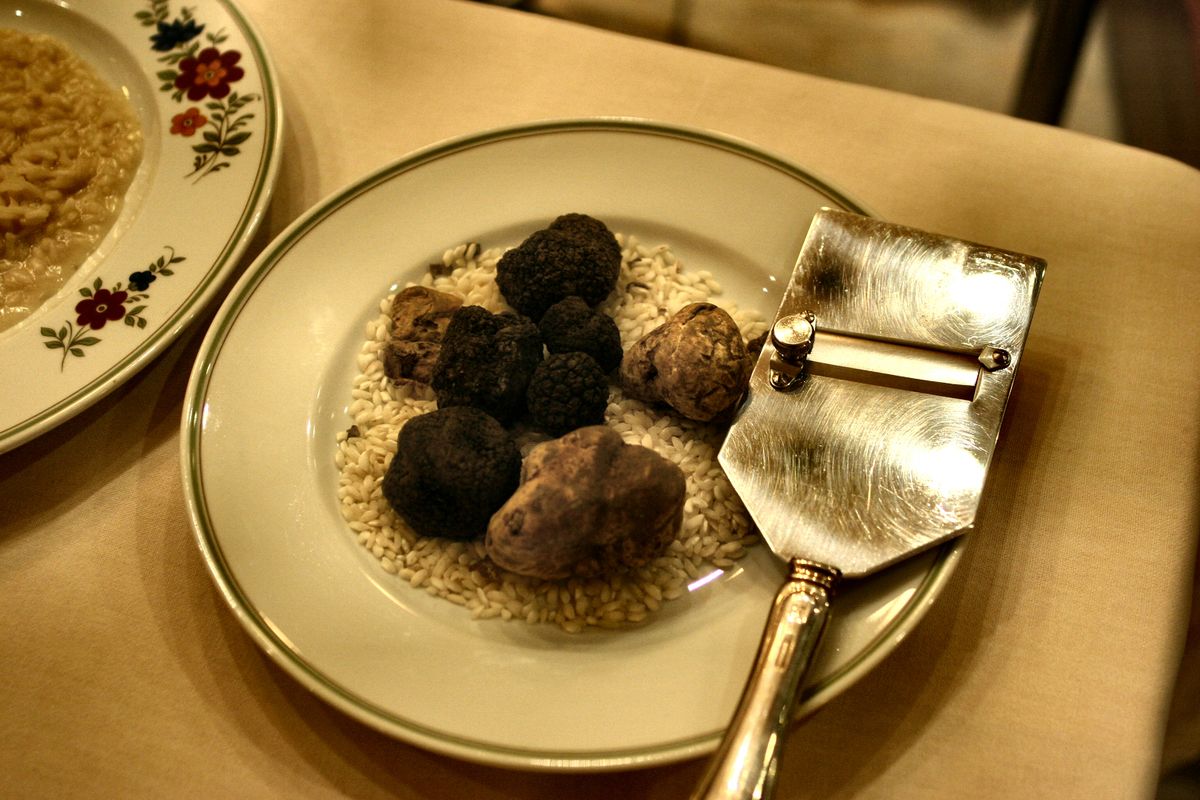
White Alba is never cooked. The aroma is volatile, garlic and shallot wrapped around honey, hazelnut and warm cheese, and it lifts off the truffle the moment it meets heat. So you shave it raw, at the table, over something plain and hot that is already waiting.
The classics are deliberately simple: tajarin pasta with butter, fonduta, soft polenta, a fried egg with Parmigiano, white risotto, beef carpaccio. The dish does very little; the truffle does the rest. Our Alba white truffle, from £65 for a 10g portion, dresses two generous plates or four smaller ones. A little goes a remarkably long way.
Black Perigord: The Winter Truffle Worth the Wait
The Perigord black truffle, Tuber Melanosporum, is the great black truffle of French cooking. Deep, nutty, almost chocolatey, with none of the garlic lift of the white. It comes from France between November and March, and, because the seasons sit opposite each other, from Australia in July and August.
Here is the part the romance leaves out. Fresh shaved Perigord is glorious but desperately short-lived, so much of the best is frozen at source within hours of harvest to hold the aroma. Our Perigord truffles come whole and frozen for exactly that reason. The trade-off is texture: frozen Perigord softens slightly on the thaw, so this is the cooking truffle, not the shaving truffle.
Used the right way, it gives you the flavour foundation chefs build whole sauces around. Dice it straight from frozen at the start of cooking. Stir into risotto in the last few minutes. Fold through butter for a compound truffle butter, infuse cream for a pasta sauce, or mince into the stuffing for a roast chicken.
Autumn Black Truffle: The Chef's Everyday Choice
Between the two headliners sits the truffle most chefs actually reach for. The autumn black truffle, Tuber Uncinatum, is lifted in the woodlands of Italy and Croatia between September and January. Dark, crackled skin; marbled chocolate-brown flesh. Real depth without the price tag of winter Perigord.
The flavour is warm, nutty and slightly sweet, with the cocoa note that gives autumn truffles their reputation. And unlike the fragile Alba, it stands up to gentle cooking, infusing oils, butters and cream sauces with very little fading.
Shave it thinly over fresh tagliolini and butter. Fold it through scrambled eggs at the last minute. Tuck slices under the skin of a roasting chicken. Our autumn black truffle, from £79 for 100g, is the one to start with if you want to understand fresh truffle before committing to a winter Perigord.
The Three Fresh Truffles at a Glance
Each species has a fixed season and a job it does best. Here is the short version.
| Truffle | Species | Season | Aroma | Best for |
|---|---|---|---|---|
| White Alba | Tuber Magnatum Pico | Oct-Dec | Garlic, honey, hazelnut | Shaved raw, never cooked |
| Black Perigord | Tuber Melanosporum | Nov-Mar (Jul-Aug AU) | Deep, nutty, cocoa | Sauces, gentle cooking |
| Autumn Black | Tuber Uncinatum | Sep-Jan | Warm, nutty, sweet | Shaving or light cooking |
Read it as a calendar as much as a menu. The truffle on your plate is decided first by the month, then by the dish.
How to Buy and Keep Fresh Truffle
A few habits separate a brilliant truffle from a wasted one.
Buy on season, not on whim. A truffle out of its window is either old or not what the label claims. Match the species to the month, as above, and you are most of the way there.
Treat it as fresh produce. A fresh truffle is alive and losing aroma by the day. Wrap it loosely in kitchen paper, keep it in a sealed jar in the fridge, change the paper daily, and use it within a few days. The classic trick of storing it with eggs works because the shell is porous and the aroma migrates straight through.
Know when frozen is the honest choice. For black Perigord especially, freezing at source holds the aroma far better than days of cold-chain transit ever could. Frozen is not a compromise here; it is how the cooking truffle reaches you in good condition.
Shave thin, and late. Whatever the species, the aroma is strongest the second it is cut. Shave at the table, over warm food, and resist the urge to cook a white truffle at all.
FAQ
What is the difference between white and black truffles?
They are different species. White Alba (Tuber Magnatum Pico) is rarer, in season October to December, and served raw because heat destroys its garlic-and-honey aroma. Black truffles, Perigord or autumn, are earthier and more cocoa-like, and stand up to gentle cooking, which makes them the truffles chefs build sauces around.
When are truffles in season?
It depends on the species. White Alba runs October to December. Autumn black truffle runs September to January. Black Perigord runs November to March in Europe, with an Australian winter harvest in July and August. Buying in season is the single best way to get a truffle worth the money.
Why are truffles so expensive?
They grow wild and underground, cannot be farmed reliably, and must be hunted with trained dogs. Each species has a short season, the aroma fades within days of lifting, and the finest, white Alba, is the rarest of all. Scarcity, perishability and the labour of the hunt set the price.
Can you cook with truffles?
Black truffles, yes. Autumn black and Perigord both take gentle cooking, infusing butters, oils and cream sauces beautifully. White Alba is the exception: its aroma is so volatile that you shave it raw at the table over hot food, never applying direct heat.
What does truffle taste like?
Deeply savoury and earthy, with notes that shift by species. White Alba leans garlic, shallot and honey. Black Perigord is nutty and almost chocolatey. Autumn black sits between, warm and slightly sweet with a cocoa edge. None of it resembles the synthetic flavour of truffle oil.
Discover Fresh Truffle
The grades and seasons only take you so far. The point of a truffle is the moment it is shaved over a warm plate and the whole room turns to look.
Explore the Beleaev truffle collection, from the everyday autumn black truffle to the deep black Perigord and the rare Alba white. When you are ready to bring one home, our guide to buying fresh truffles in the UK covers delivery, prices and how to use each one.


 447706084493

