
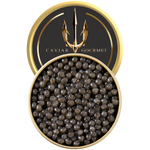
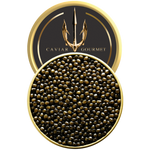


Caviar vs Fish Roe: What's the Actual Difference?
By Alex Beleaev | Beleaev Caviar & Gourmet | beleaev.com
You've seen little orange pearls on sushi. You've spotted black tins at a luxury food hall. Someone at a party called both of them "caviar." Were they right?
Technically, no. And the distinction isn't just snobbery. It's a matter of species, process, flavour, texture, and (let's be honest) price. The confusion runs deep, though. Even some restaurants get it wrong on their menus.
Let's sort this out properly.
Key Takeaways
- True caviar comes exclusively from sturgeon. Everything else is fish roe.
- The term "caviar" is legally protected in many countries, including across the EU.
- Sturgeon caviar and common fish roe differ dramatically in taste, texture, and price.
- Quality roe (like salmon ikura) is excellent in its own right, just a different product entirely.
What Counts as Caviar?
The short answer: caviar is the salt-cured eggs of sturgeon fish. Full stop.
The Codex Alimentarius, maintained by the FAO and WHO, reserves the unqualified term "caviar" for sturgeon species only (family Acipenseridae). According to CITES (the Convention on International Trade in Endangered Species), all 27 sturgeon species are now protected, and any caviar sold legally must carry a CITES-approved label with species code, country of origin, and year of harvest.
So when you see "salmon caviar" or "lumpfish caviar" on a label, that's a marketing shortcut. In the EU, such products must be labelled "salmon roe" or "lumpfish roe" to comply with regulations. The UK follows similar conventions post-Brexit, though enforcement varies.
At Beleaev, we only use the word caviar for what it actually means: sturgeon eggs, properly cured.
What Is Fish Roe, Then?
Roe is the universal term for fish eggs. All caviar is roe, but not all roe is caviar. Think of it like champagne and sparkling wine. One is a specific, protected category. The other is the broader family.
Common types of fish roe you'll encounter:
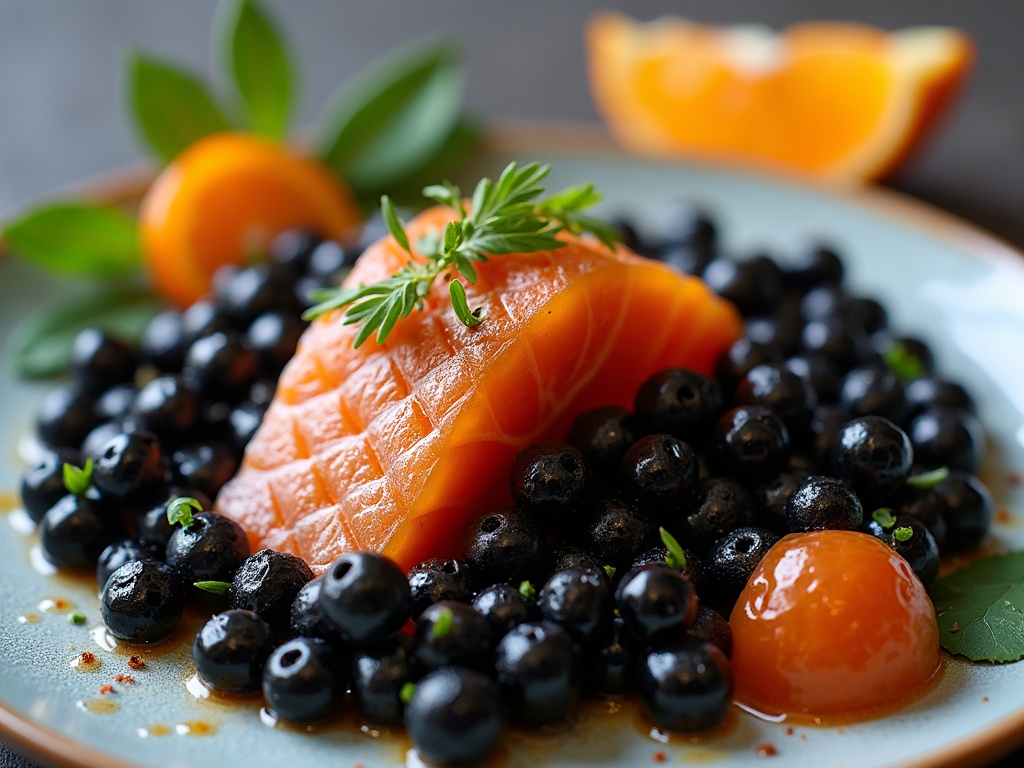
- Salmon roe (ikura): Large, bright orange pearls. Popular in Japanese cuisine. Bold, briny, with a satisfying pop.
- Trout roe: Smaller than salmon, golden-orange. Milder flavour.
- Lumpfish roe: Tiny, often dyed black or red. Found in supermarkets. Quite salty, one-dimensional.
- Tobiko: Flying fish roe. Tiny, crunchy. The colourful stuff on sushi rolls.
- Masago: Capelin roe. Similar to tobiko but smaller and less crisp.
Each has its place. We serve salmon ikura at some of our tastings because it's delicious. But it isn't caviar.
The Comparison: Caviar vs Common Fish Roe
| Feature | Sturgeon Caviar | Salmon Roe (Ikura) | Lumpfish Roe |
|---|---|---|---|
| Source | Sturgeon species | Salmon | Lumpfish |
| Egg size | 2.5-3.5mm (varies by species) | 5-8mm | 1-2mm |
| Colour | Black, brown, golden, grey | Bright orange-red | Naturally grey, often dyed |
| Texture | Buttery, melts on tongue | Firm pop, juicy burst | Slightly gritty |
| Flavour | Complex: nutty, briny, creamy | Bold, oceanic, straightforward | Salty, fishy |
| Price (per 100g) | £50-£300+ | £8-£20 | £2-£5 |
| Curing method | Malossol (minimal salt) | Salt-cured or soy-marinated | Heavy salt, often pasteurised |
| CITES regulated | Yes | No | No |
Why Does Sturgeon Caviar Cost So Much More?
It comes down to biology and time.
A Beluga sturgeon (Huso huso) takes 18 to 25 years to reach maturity and produce eggs. An Oscietra sturgeon needs 8 to 12 years. Compare that to salmon, which spawn at 3 to 5 years. The FAO estimates that global sturgeon aquaculture production reached approximately 3,500 tonnes in 2020, a fraction of the 2.5 million tonnes of salmon produced annually.
Then there's the processing. True malossol caviar uses just 3-5% salt. That's enough to cure without overwhelming the delicate flavour, but it also means the product is perishable and demands careful cold-chain handling. Lumpfish roe? Heavily salted, pasteurised, shelf-stable. Different universe.
The rearing costs are significant too. Sturgeon farms must maintain fish for a decade or more before seeing any return. That's years of feeding, water management, and veterinary care with zero revenue from that particular fish.
How to Spot the Difference at a Glance
You don't need a marine biology degree. A few visual and textual cues will tell you what you're dealing with.
Check the label first. Genuine sturgeon caviar will list the species (Baerii, Gueldenstaedtii, Huso huso) and carry a CITES code. If the tin just says "caviar" with no species information, be sceptical.
Look at the eggs. Sturgeon caviar eggs are relatively small (2-3mm typically), with a glossy, intact membrane. They shouldn't look mushy or uniform in colour. Natural variation is a sign of quality. Salmon roe is obviously larger. Lumpfish roe is tiny and often suspiciously uniform, a giveaway that it's been dyed.
Smell it. Good caviar should smell like a clean ocean breeze, not "fishy." If it hits you with an aggressive fish odour, something's off. This applies to roe as well: fresh salmon ikura should smell clean and briny, not sharp.
Taste it. This is where the gap becomes undeniable. Sturgeon caviar has layers. You'll get an initial brininess, then butter, then something nutty or creamy that lingers. Good Oscietra can have almost hazelnut-like notes. Roe, even excellent roe, tends to be more straightforward: salty, oceanic, done.
Can Roe Ever Substitute for Caviar?
Depends on context.
For a garnish on canapes where you want visual impact and a pop of salt? Salmon roe works brilliantly. We've used it at Beleaev events on blinis alongside proper caviar, and guests enjoy both for different reasons.
For a dedicated tasting, where you're savouring the product on its own or with minimal accompaniment? No substitute exists. The complexity of well-produced sturgeon caviar is in a category apart. It's the difference between a pleasant table wine and a premier cru.
And for cooking, honestly, don't use expensive caviar. Heat destroys the nuance. Use trout roe or tobiko for pasta garnishes and sushi. Save the good stuff for eating fresh.
Further Reading
Shop the Beleaev caviar collection, responsibly farmed, CITES-certified, with next-day UK delivery.
Beluga · Oscietra · Baeri · Tasting Sets · Shop all
FAQ
Is salmon caviar actually caviar?
Strictly speaking, no. "Salmon caviar" is a colloquial term for salmon roe. Under EU food labelling regulations and Codex Alimentarius standards, only sturgeon eggs can be labelled simply as "caviar." Salmon eggs should be called salmon roe or ikura.
Why is some cheap caviar dyed black?
That's almost certainly lumpfish roe. Naturally, lumpfish eggs are greyish. Manufacturers dye them black (or red) to mimic the appearance of sturgeon caviar. The taste gives it away immediately: one-dimensional saltiness versus the layered complexity of real caviar.
Is fish roe healthy?
Yes. Both sturgeon caviar and fish roe are nutrient-dense. According to research published in the Journal of Food Science and Technology, fish eggs are rich in omega-3 fatty acids (EPA and DHA), vitamin B12, and selenium. Sturgeon caviar contains approximately 1,086mg of omega-3 per tablespoon, making it one of the most concentrated dietary sources available.
What's the best fish roe that isn't caviar?
Salmon ikura is the gold standard of non-sturgeon roe. When fresh and properly cured with salt or a soy-mirin marinade, the flavour is clean, bright, and deeply satisfying. Trout roe is a close second, with a slightly more delicate character.
The caviar-versus-roe question isn't about one being "better" in some absolute sense. It's about knowing what you're getting. Sturgeon caviar is a specific, protected, centuries-old delicacy with a flavour profile that nothing else quite matches. Good fish roe is a different pleasure entirely.
Both deserve a place at your table. Just call them by their proper names.
Explore Beleaev's sturgeon caviar collection at beleaev.com
Explore the full caviar collection at Beleaev for next-day UK delivery.
Beleaev Caviar & Gourmet is an international caviar and gourmet company sourcing responsibly farmed Baeri, Oscietra, Imperial and Beluga caviar, delivered within 24-48 hours. Next-day delivery across the United Kingdom.

 447706084493

