

Mother-of-Pearl Caviar Spoons: Why Metal Ruins Caviar
The wrong spoon can make a £200 tin of caviar taste metallic before the second mouthful.
Caviar is traditionally served with a mother-of-pearl spoon because its smooth nacre surface contributes no competing flavour. Sensory research shows that spoon material can influence taste perception: copper and zinc can add metallic or bitter notes, while gold and stainless steel were neutral in controlled tasting. Mother-of-pearl remains the classic choice because it is flavour-neutral, elegant and purpose-made for the caviar ritual.
The Short Answer
- Mother-of-pearl is the classic choice because it is flavour-neutral and does not compete with the delicate roe.
- Copper, zinc and reactive or worn plated metals can add unwanted metallic or bitter notes.
- Stainless steel is less reactive, but mother-of-pearl removes any sensory distraction and gives caviar the presentation it deserves.
- Horn, glass, porcelain and food-safe plastic are neutral alternatives; plastic is functional, but not a premium presentation.
- A well-made mother-of-pearl spoon can be used for years with simple care.

Why Caviar Is Served with a Mother-of-Pearl Spoon
Caviar is a delicacy of subtle flavours: delicate sea notes, creamy texture and a refined finish. That is why even the smallest details of serving matter.
The tradition of using mother-of-pearl predates modern sensory science. The practical principle is simple: use a spoon that adds no taste of its own, feels smooth against the pearls and keeps the focus on the caviar.
Mother-of-pearl, horn, glass, porcelain and high-karat gold are flavour-neutral choices. Mother-of-pearl has become the standard because it combines neutrality with a refined, unmistakably caviar-specific presentation.
Why a Mother-of-Pearl Spoon Became the Classic Choice
Mother-of-pearl, or nacre, is the smooth inner layer of certain shells. Naturally elegant, durable and flavour-neutral, it does not compete with the delicate taste of caviar.
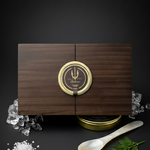
Our Signature Mother Of Pearl Spoon is hand-crafted from natural nacre, measures 9 x 2.5cm and carries a golden Beleaev inscription. At £8, it is a small upgrade that makes every tin feel properly served.
Beyond its practical purpose, the soft iridescent surface and light feel make the spoon part of the experience. It signals that the caviar has been chosen and served with care.
Which Spoons Should You Avoid?
Some materials are better kept away from delicate caviar:
Copper, zinc, silver and worn plated cutlery: these are more likely to introduce unwanted metallic notes or expose a reactive base metal.
Everyday stainless steel: generally less reactive, but it lacks the traditional presentation and tactile refinement of mother-of-pearl.
Food-safe plastic: neutral and useful in a pinch, but it undercuts a premium table setting.
For the purest and most elegant tasting experience, choose mother-of-pearl. Horn, glass, porcelain and high-karat gold are suitable alternatives.
With exceptional caviar, every detail matters, from the quality of the pearls to the way they are served.
Complete the caviar ritual
The Signature Mother Of Pearl Spoon is rated 4.8/5 from 10 reviews and costs £8. Order by 2pm for next-day UK delivery.
Shop the Signature Mother Of Pearl Spoon · discover the 4 x 30g Signature Tasting Set with complimentary spoons and blinis, rated 4.9/5 from 40 reviews (£247) · shop all caviar


A spoon that costs a fraction of the caviar it serves deserves proper care. The next question is how to keep natural nacre in the condition it arrived in.
Why the dishwasher is the fastest way to ruin a lifetime spoon
A mother-of-pearl spoon is durable but not indestructible. Simple habits can keep it in excellent condition for years.
Wash by Hand
Wash in warm water with mild dishwashing soap. A soft sponge or microfibre cloth is ideal. Do not use abrasive scrubs, scouring pads, or powder cleansers. The surface can dull if you scrub.
Never in the Dishwasher
Dishwashers subject cutlery to high temperatures, aggressive detergents and minerals in hard water. All three can damage mother-of-pearl over time. The surface can cloud, the shell can weaken and, in extreme cases, the nacre layers can delaminate. Always wash by hand.
Dry Immediately
Water spots form on mother-of-pearl when drops evaporate on the surface. Dry your spoon immediately with a soft cloth after washing. Never leave it to air-dry in a rack.
Storage
Store in a soft cloth pouch or a lined cutlery drawer. Keep the spoon away from steel cutlery; the steel can scratch the nacre if they rub. A small box or a dedicated drawer insert is ideal.
Restoring Lustre
If a mother-of-pearl spoon has dulled, wipe it gently with a barely damp soft cloth and buff it dry. Never use metal polish, scouring powder or any abrasive cleaner.
Shop the Beleaev caviar collection, responsibly farmed, CITES-certified, with next-day UK delivery.
Beluga · Oscietra · Baeri · Tasting Sets · Shop all
Frequently Asked Questions
Can I use a plastic spoon in a pinch?
Yes, in an informal setting. Food-safe plastic will not add a metallic taste, but it undercuts the presentation of premium caviar. A dedicated mother-of-pearl spoon costs £8 and turns every tin into a more considered service.
Can I use a stainless steel spoon for caviar?
A clean, high-quality stainless steel spoon is less reactive than copper or zinc and was neutral in controlled sensory testing. Mother-of-pearl is still preferred because it removes metal from the tasting experience and delivers the traditional premium presentation.
How many mother-of-pearl spoons do I need?
One per person being served. For a couple, two spoons cover most occasions. For regular entertaining, a set of four to six.
Are all mother-of-pearl spoons the same?
No. Quality varies in the nacre, bowl shape, balance and finish. Our Signature Mother Of Pearl Spoon is hand-crafted from natural nacre, measures 9 x 2.5cm and is finished with a golden Beleaev inscription.
Can mother-of-pearl spoons be used for anything other than caviar?
Yes. They are excellent for oyster tartare, sea urchin, salmon roe and small savoury canapés where the flavour is delicate. The spoon contributes no competing taste.
Why does my mother-of-pearl spoon look slightly different colour on each side?
This is normal. Mother-of-pearl is a natural material, so no two spoons are identical. Subtle differences in colour and iridescence are part of its character; colour alone should not be used as a test of authenticity.
Is there a difference between mother-of-pearl and pearl?
Pearl is a formed sphere from a mollusc, used in jewellery. Mother-of-pearl is the inner shell lining, harvested as flat material and cut to shape. The chemical composition is similar; the form is different.
Serve Caviar Properly
Great caviar deserves the right tools. A tin opened with a caviar key, set into a chilled bowl of ice, and served with a mother-of-pearl spoon is the classical caviar presentation for a reason. Every piece of the ritual protects the eggs and enhances the experience.
The investment in proper serving tools is small compared with the caviar itself. At £8, the Signature Mother Of Pearl Spoon can be used for years with basic care and makes every service feel more considered.
Complete your service with the Signature Mother Of Pearl Spoon (£8), Caviar Key (£6), or the Premium Caviar Serving Set (£90), which pairs a glass chiller bowl with mother-of-pearl spoons. For a statement piece, discover the Sterling Silver Caviar Bowl (£1,300). Order by 2pm for next-day UK delivery.
Explore the full caviar collection at Beleaev and order by 2pm for next-day UK delivery.
 447706084493

