








Grain-Fed Beef Explained: Cuts, Marbling and Dry-Ageing
By Alex Beleaev | Caviar & Gourmet, London | beleaev.com

Grain-fed beef is cattle finished on a managed grain diet, usually barley, rather than grass alone. That finishing period is what builds the marbling: the fine threads of fat running through the muscle that keep a steak juicy and carry flavour. It is the same principle behind Japanese Wagyu, applied to large, restaurant-scale cuts you can cook at home.
This guide covers what grain-fed actually means, how the main cuts differ, why marbling matters, and how to dry-age a whole piece in your own fridge. The cuts we carry are catering-size, the sort of thing you build a dinner around when you are feeding a crowd.
Key Takeaways
- Grain-fed means cattle finished on grain (often barley), which builds intramuscular fat
- Marbling is the fat inside the muscle; more of it means a juicier, richer steak
- Ribeye, striploin and fillet are the prime steak cuts; brisket, blade and short rib reward slow cooking
- A whole primal can be dry-aged at home for deeper, more savoury flavour
- Curious? Explore the Beleaev gourmet collection
What Does Grain-Fed Beef Actually Mean?
Every animal starts on grass. The difference is how it is finished.
Grass-finished cattle stay on pasture to slaughter, which gives a leaner carcass and a firmer, more mineral flavour. Grain-finished cattle spend their final months on a managed diet built around grain, commonly barley, which lays down more intramuscular fat. That fat is the marbling, and it is the single biggest reason grain-fed steak eats the way it does: softer, juicier, with a rounder flavour.
Our grain-fed cuts come from Omugi, the Australian brand that has supplied the demanding Japanese market for more than three decades. The cattle follow a bespoke barley feeding regime, and the carcasses are graded against Japanese standards before they ever reach an export box. It is a serious product at a fraction of A5 Wagyu pricing.
There is no single "better" here. Grass-finished beef has its champions, and rightly. But if you want marbling, tenderness and a forgiving cook across a big joint, grain-finished is the one to reach for.
Marbling: The Fat That Makes the Steak
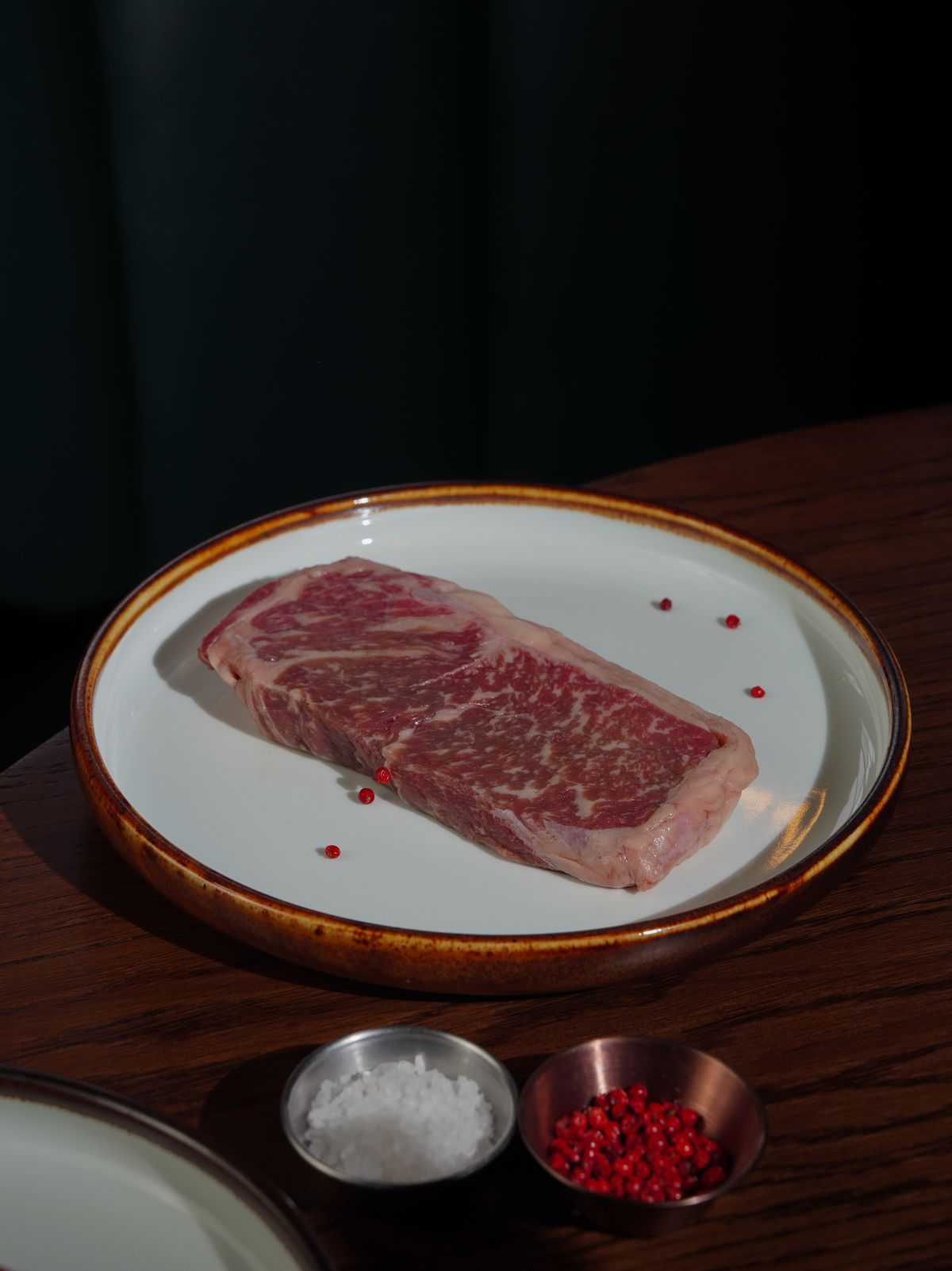
Marbling is intramuscular fat, the white flecks and threads woven through the red muscle. It is not the same as the fat cap around the edge, which you trim. Marbling is inside the meat, and it cannot be added later.
As the steak cooks, that fat softens and bastes the muscle from within. It keeps the meat moist, carries flavour around the palate, and gives the texture people describe as tender or buttery. A lean cut with little marbling can still be excellent, but it is far less forgiving: a minute too long on the heat and it dries out. A well-marbled cut gives you a wider margin.
Grain finishing is how you build it. The longer, grain-based diet encourages the animal to deposit fat within the muscle rather than only around it, which is exactly what graders in Japan score so closely. Our Omugi cuts carry that marbling generously, which is why they stay juicy at the centre and take seasoning so well.
The Cuts, and What Each One Is For
Beef is not one ingredient. A working muscle and a lazy one cook completely differently, and choosing the right cut for the method is most of the battle.
| Cut | Character | Best method | Typical size | Serves |
|---|---|---|---|---|
| Ribeye | Richly marbled, full flavour | Roast whole or cut into steaks | 3-4kg | a crowd |
| Striploin | Firm, classic steak texture | Roast or portion into steaks | ≈6kg | a crowd |
| Fillet | The leanest, most tender cut | Roast whole, or thick medallions | ≈2.5kg | a crowd |
| Rump | Big beefy flavour, good value | Roast or grill in steaks | ≈6kg | a crowd |
| Brisket | Tough, collagen-rich | Low and slow, smoke or braise | ≈5kg | a crowd |
| Blade | Working shoulder muscle | Slow braise or grind for burgers | ≈6kg | a crowd |
| Short rib | Marbled, intensely savoury | Braise long, or barbecue | ≈2kg | a few |
The prime steak cuts
The ribeye is the indulgent one: well marbled, deeply flavoured, and happy either roasted whole as a cote de boeuf or cut down into thick steaks. The striploin, known as sirloin in much of Britain, is the classic steakhouse cut, firmer than ribeye with a clean, confident beef flavour. The fillet is the tenderloin: the leanest, most tender muscle on the animal, best roasted whole or cut into thick medallions and treated gently. The rump gives you the biggest beef flavour of the four and excellent value across a large joint.
These are large cuts. Buying a whole primal and cutting your own steaks gives you control over thickness, costs less per kilo than pre-cut steaks, and is the only way to dry-age at home. More on that below.
The slow-cook cuts
Then there are the working muscles. The brisket is the barbecue classic: tough and collagen-rich, it needs hours of low, gentle heat to turn meltingly tender, whether you smoke it Texas-style or braise it. The blade is a working shoulder cut threaded with collagen and fat; slow-cook it whole as a Sunday roast, joint it down for a red-wine braise, or grind it for a burger that rewards a steak knife. And the short rib is one of the most savoury cuts on the animal, superb braised until the meat slides off the bone or cooked long over coals.
If you want the absolute pinnacle of marbling, that is a different conversation. Our Wagyu collection covers Japanese A5 and the cuts that sit just below it, a natural step up when the occasion calls for it.
How to Dry-Age Beef at Home
Dry-ageing is the reason serious cooks buy whole primals. It concentrates flavour and tenderises the meat, and you can do a respectable version of it in a domestic fridge.
The principle is simple. You expose a large, fat-covered cut to cold, moving, dry air for a stretch of time. Moisture evaporates from the surface, which concentrates the beef flavour, while natural enzymes break down muscle fibres and make the meat more tender. The flavour deepens towards something nutty and almost savoury-sweet.
What you need. A whole primal with the fat cap on, ideally a ribeye or striploin, since the fat and any bone protect the meat as it ages. Trimmed steaks will not work; they simply spoil.
The method. Sit the cut, unwrapped, on a rack over a tray on the coldest shelf of your fridge, around 1 to 3°C. Leave space for air to circulate on all sides. A small fan in the fridge helps, but is not essential. Leave it for 21 to 28 days for a first attempt, longer if you are confident.
The finish. A hard, dark crust forms on the outside. That is normal, and you trim it away before cooking, along with any heavily dried fat. What remains is a smaller, denser, more flavourful piece of beef. Cook it as you would any prime steak: hot, with a good rest afterwards.
A word of honesty. Home dry-ageing carries a little risk, and it is not for the squeamish or the inexperienced. Keep everything scrupulously clean, trust your nose, and if anything smells genuinely off rather than nutty, discard it. Done with care, the results are worth the patience.
How These Cuts Are Delivered
Large beef cuts are catchweight items. That means the price shown is a guide based on a typical weight, and the final figure varies a little with the actual size of your cut. It is the standard way the trade sells whole primals, and it is the honest way to price something that nature does not portion to the gram.
Our grain-fed beef is sourced with provenance, the Omugi cuts from Australia and our standard and prime ribeye from Ireland, and it travels on a temperature-controlled courier so the cut you unwrap is in the condition it left us. We also carry the easy-going extras for a crowd: Frankfurter sausages, spicy Texas Hot Link sausages, and boneless chicken thigh for the grill.
FAQ
What is the difference between grain-fed and grass-fed beef?
Grain-fed cattle are finished on a managed grain diet, often barley, which builds marbling: the fat inside the muscle that keeps a steak juicy and rich. Grass-fed cattle stay on pasture, giving a leaner carcass and a firmer, more mineral flavour. Grain-fed is the more marbled, more forgiving cook.
Is ribeye or striploin better?
Neither is better; they suit different tastes. Ribeye is more marbled, richer and more tender, ideal if you love a buttery steak. Striploin, also called sirloin, is firmer with a cleaner beef flavour and a classic steakhouse texture. Buy both as whole cuts and decide for yourself.
Can you dry-age beef in a normal fridge?
Yes, with care. Sit a whole, fat-covered primal on a rack over a tray on the coldest shelf, around 1 to 3°C, with air circulating around it, for 21 to 28 days. Trim the hard crust before cooking. Trimmed steaks will not age; they need the fat and size for protection.
How much beef do I need per person?
For a main course, allow roughly 200 to 250g of boneless beef per person, a little more if appetites are large or there are few sides. A 5 to 6kg whole cut comfortably feeds a crowd, with trimmings left over for a second meal.
What grain-fed beef is best for slow cooking?
Brisket, blade and short rib. These are working muscles, rich in collagen, which turn meltingly tender over long, low heat. Brisket suits smoking or braising, blade makes a superb pot roast, and short rib is at its finest braised until it falls off the bone.
Bring the Butcher's Counter Home
Great beef at home starts with the right cut, generously marbled, cooked to suit its character. Whether you are roasting a whole ribeye for a crowd or braising a brisket low and slow, a large grain-fed primal gives you restaurant-quality results and the freedom to cut your own steaks.
Explore the Beleaev gourmet collection, from the indulgent grain-fed ribeye to the classic striploin. When you are ready to buy, our companion guide walks through how to choose and order premium beef online. And if the occasion calls for the pinnacle of marbling, the Wagyu collection is the natural step up. Every cut is sourced with provenance and delivered on a cold chain.


 447706084493

