






Baeri vs Beluga: Key Differences & Buyer Guide
Baeri and Beluga are not interchangeable purchases. Choose Baeri when first tastings, canapés and larger shared tables matter more than paying for the higher grade or presentation. Choose Beluga when classic Huso huso scale, delicacy and prestige is central to the occasion. At the checked entry formats, the difference is £73; it is worth paying only when that difference will be noticed at the table.
Key takeaways
- Baeri: A welcoming, restrained true-caviar profile.
- Beluga: Classic huso huso scale, delicacy and prestige.
- Compare the same serving size and confirm the live price before checkout; caviar prices and availability can change.
Baeri vs Beluga at a glance
| Factor | Baeri | Beluga |
|---|---|---|
| Species | Acipenser baerii, the Siberian sturgeon | Huso huso |
| Pearl character | medium charcoal-grey pearls | extra-large light-grey to platinum pearls |
| Colour | deep onyx to charcoal grey | light grey to platinum |
| Published flavour profile | gentle sweetness, light almond, sweet cream and clean salinity | delicate sweet cream, clean marine depth, subtle iodine and buttery creaminess |
| Entry format checked | £37 / 30g (£1.23/g) | £110 / 30g (£3.67/g) |
| Formats | 30g, 50g, 125g, 250g and 1kg | 30g, 50g, 125g, 250g and 1kg |
| Best for | first tastings, canapés and larger shared tables | milestone celebrations and connoisseur service |
What is the main difference between Baeri and Beluga?
Both products are sturgeon roe, but their species and grading create a different visual and sensory result. Baeri is defined in the current product information by medium-sized pearls, deep onyx to charcoal grey and silky with a soft, precise pop. Beluga is defined by 3.0–3.5mm pearls, light grey to platinum and velvety and melting with a silken finish. Those facts matter more than a generic label such as “premium” because they predict what guests will see on the spoon and feel on the palate.
The published origin information also differs: Baeri comes from certified aquaculture; Beluga comes from certified aquaculture in Belgium and China. A product’s origin does not make an automatic winner, but it is part of an honest comparison and should remain visible to the buyer.
Which has the better flavour and texture?
There is no single better flavour. Baeri is described as gentle sweetness, light almond, sweet cream and clean salinity. Its texture is silky with a soft, precise pop. Beluga is described as delicate sweet cream, clean marine depth, subtle iodine and buttery creaminess, with a texture that is velvety and melting with a silken finish.
That makes Baeri the better fit when its particular profile sounds appealing in a simple spoon service. Beluga is the stronger alternative when its profile is the reason for the purchase, not simply the fact that it is caviar or roe. Taste both first without garnish if you are serving a comparison flight; then add blinis or crème fraîche once the difference is clear.
Is the price difference worth it?
At the entry formats checked on 29 August 2026, Baeri was listed at £37 / 30g, or about £1.23/g. Beluga was listed at £110 / 30g, or about £3.67/g. A price-per-gram comparison is more useful than comparing packages of different sizes, especially when one product starts at 200g and another at 30g.
At the checked entry formats, the difference is £73; it is worth paying only when that difference will be noticed at the table. If the product is appearing as a small garnish on a busy canapé, the less expensive or higher-volume option may be the better purchase. If the product is the centre of a quiet tasting, gift or milestone dinner, the defining pearl size, texture and presentation can justify the premium.
Which looks better on the table?
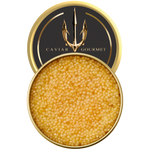
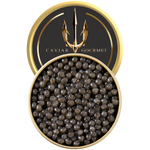
Baeri presents as deep onyx to charcoal grey with medium charcoal-grey pearls. Beluga presents as light grey to platinum with extra-large light-grey to platinum pearls. The better visual choice depends on the plate: darker or grey pearls can look restrained and classic, while golden or orange pearls can become the visual focus.
Do not choose only from a close-up image. The final publishing pass should add original, side-by-side photographs of the exact tins at the same temperature and in the same light. That lets a buyer see the practical difference in colour and scale rather than infer it from marketing photography.
Choose Baeri if...
- You are specifically looking for first tastings, canapés and larger shared tables.
- Gentle sweetness, light almond, sweet cream and clean salinity sounds closer to what you want to serve.
- Deep onyx to charcoal grey works with the presentation you have in mind.
- £37 / 30g is the more sensible entry point for the number of people you are serving.
Choose Beluga if...
- You are specifically looking for milestone celebrations and connoisseur service.
- Delicate sweet cream, clean marine depth, subtle iodine and buttery creaminess sounds closer to what you want to serve.
- Light grey to platinum is part of the experience you are paying for.
- The higher price is justified by a feature your guests will notice, rather than by the label alone.
How should you serve them?
Serve both well chilled and keep the accompaniments restrained. A mother-of-pearl, horn or wooden spoon avoids introducing a metallic note. For an actual comparison, begin with a small spoonful of Baeri, then Beluga; use equal portions and the same service temperature. Follow with warm blinis, lightly buttered new potatoes or crème fraîche only after tasting each on its own.
The entry format is not a universal serving rule. Baeri is offered in 30g, 50g, 125g, 250g and 1kg; Beluga is offered in 30g, 50g, 125g, 250g and 1kg. Let the occasion decide whether caviar is a tasting course, a canapé garnish or the centre of the meal.


Final verdict
Choose Baeri when first tastings, canapés and larger shared tables matter more than paying for the higher grade or presentation. Choose Beluga when classic Huso huso scale, delicacy and prestige is central to the occasion. At the checked entry formats, the difference is £73; it is worth paying only when that difference will be noticed at the table.
The right choice is the product whose defining traits match the moment. Spend more for a specific difference in pearl, profile or presentation; do not spend more merely because a label sounds rarer.
Frequently asked questions
Are Baeri and Beluga the same type of product?
No. Baeri comes from Acipenser baerii, the Siberian sturgeon; Beluga comes from Huso huso. Their origin, pearl size, colour and flavour descriptions differ, so they should be chosen for a specific use rather than treated as interchangeable tins.
How much should I order?
Use the product format as a starting point, then decide whether the roe is a garnish or the main tasting. Baeri starts at £37 / 30g, while Beluga starts at £110 / 30g. Check the current product pages for the live serving guide before ordering.
Can I serve both in the same tasting?
Yes. Serve equal chilled portions, use the same neutral spoon and taste the quieter or lighter-profile product first. That preserves the contrast between Baeri and Beluga instead of letting a strong garnish or warmer temperature decide it.
Related comparisons
- Royal Baeri Caviar vs Golden Oscietra Special Reserve
- Royal Baeri Caviar vs Imperial Gold Special Reserve
- Royal Baeri Caviar vs Beluga XXL Special Reserve
- Royal Baeri Caviar vs Almaz Diamond Caviar
Sources and editorial note
Product facts and entry-format prices were checked on 29 August 2026 against Baeri and Beluga. Update the price table whenever the live product pages materially change.
About Alex Beleaev
Alex Beleaev is the founder of Beleaev Caviar & Gourmet. He oversees product selection, compliance and customer experience across the catalogue.
 447706084493

