


How to Tell If Caviar Is High Quality and Fresh
Fresh, high-quality caviar should arrive in a sound sealed tin, remain properly chilled, smell clean and faintly marine, and show distinct glossy pearls rather than liquid or paste. On the palate, the eggs should separate and release flavour cleanly. Sour, strongly fishy or ammonia-like aromas are warning signs: do not taste questionable caviar.
Key takeaways
- Check the tin, label and temperature before opening.
- Fresh caviar smells clean and delicate, not aggressively fishy.
- Quality pearls are distinct; size and colour vary naturally by variety.
- Excess liquid, collapsed eggs or sour aromas are warning signs.
- Taste quality only after the safety checks pass.
What should you check before opening the tin?
Start with the package. The lid and base should be intact, without swelling, leakage or a broken seal. Read the use-by information and any storage instruction. If the product is sturgeon caviar, the label should identify the product and provide the traceability information required for legal trade.
Then check temperature. Caviar is a chilled food. If it arrives outside the conditions stated by the retailer or the cold packaging has clearly failed, contact the seller before opening it.
What should fresh caviar smell like?
Fresh caviar has a clean, restrained marine aroma. Depending on the variety, it may suggest sea air, butter, nuts or mineral notes, but it should not smell sour, rotten or sharply chemical. A strong fishy aroma alone does not prove spoilage, yet an unpleasant smell combined with a damaged tin, warmth or broken texture is enough reason not to taste it.
When in doubt, stop. A tasting guide is not a food-safety override.


What do high-quality caviar pearls look like?
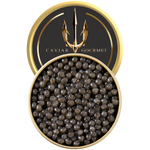
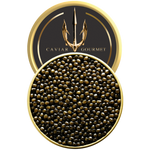
Look for distinct, glossy pearls with reasonable uniformity for the grade. The eggs should not form a wet paste. A little natural variation in size or colour is normal and can reflect species, maturity and grading.
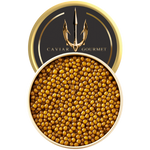
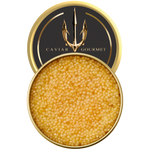
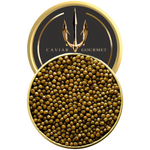
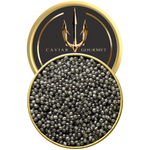
Do not use colour alone as a quality test. Oscietra can range from darker tones to amber or golden shades; Baeri is commonly darker; other varieties differ again. Bigger is not automatically better. Texture, balance, handling and whether the grade matches its description matter more than one visual feature.
| Signal | Reassuring | Warning |
|---|---|---|
| Tin | Sound, sealed, correctly labelled | Swollen, leaking or damaged |
| Aroma | Clean, mild, marine | Sour, rotten or ammonia-like |
| Pearls | Distinct and glossy | Collapsed, mushy or very watery |
| Flavour | Clean salinity, variety-specific finish | Harsh sourness or obvious off-flavour |
| Temperature | Properly chilled | Warm or uncertain cold chain |
How should good caviar feel and taste?
The eggs should separate on the spoon and release cleanly on the palate. Some varieties are firmer; others are more delicate. Good caviar tastes balanced rather than simply salty. Nutty, creamy, buttery, briny and mineral notes can all be correct depending on the variety.
Use a small non-reactive spoon and taste the caviar plain first. Accompaniments can hide both strengths and faults.
Does the most expensive caviar have the best quality?
No. Price also reflects rarity, maturation time, grade, pearl size, colour and supply. A well-handled Royal Baeri Caviar may be more enjoyable than a rare tin that has been stored poorly. Judge whether the product delivers the quality promised for its variety and grade.
For more detail on grade, read how caviar is graded. For storage, use the caviar refrigeration and shelf-life guide.
FAQ
How can I tell if caviar has gone bad?
Do not eat caviar from a swollen, leaking or damaged tin. Sour, rotten or ammonia-like aromas, warmth outside the stated storage conditions and badly collapsed texture are warning signs. If the product’s safety or cold chain is uncertain, contact the retailer and discard it rather than tasting it.
Is caviar supposed to smell fishy?
Caviar can have a marine aroma, but fresh premium caviar should smell clean and restrained. A forceful unpleasant odour is not a desirable sign. Judge aroma together with the sealed package, storage temperature, use-by information and texture rather than relying on one sensory cue.
Should caviar pearls all be the same size?
They should show reasonable consistency for the stated grade, but natural variation is normal. Species, fish maturity and grading affect pearl size and colour. Uniformity is one quality signal, not the whole judgement; freshness, clean flavour, pearl integrity and correct handling are equally important.
Is liquid in a caviar tin normal?
A small amount of moisture can be normal, but the pearls should not be swimming in excessive liquid or collapsing into paste. If excess liquid appears with a damaged package, off aroma or uncertain temperature, do not taste the product and contact the retailer.
Judge the whole chain, not one pearl
Quality begins with accurate labelling and cold handling, then continues through aroma, texture and flavour. Explore Beleaev caviar by variety, with live product details on every page.
 447706084493

