 Black Friday −25%
Blinis
$4.50
$6.00
Black Friday −25%
$4.50
$6.00
 Black Friday −25%
$7.50
$10.00
 Black Friday −25%
$6.00
$8.00
 Black Friday −25%
$24.00
$32.00

By Beleaev Family | Beleaev Caviar & Gourmet
For two plates, toss 5.6 oz (160 g) of spaghetti through a brown-butter emulsion, take the pan off the heat and add the caviar only after plating. In the US version we use Golden Kaluga Hybrid Caviar: 0.35 oz (10 g) per person from one 1.06 oz (30 g) tin, while 3 1/2 tbsp (50 g) of salted butter builds the sauce.
| Ingredient | Amount for two | Pack to purchase |
|---|---|---|
| Golden Kaluga Hybrid Caviar | 0.7 oz (20 g) | 1 x 1.06 oz (30 g) tin |
| Salted butter | 3 1/2 tbsp (50 g) | 1 pack |
| Dried spaghetti | 5.6 oz (160 g) | 1 package |
| Water | 2 quarts (2 liters) for boiling | Tap water |
| Fine salt | 3/4 tsp (4 g) for the pasta water | From the pantry |
| Fresh chives | 1 tablespoon, finely cut | 1 small bunch |
| Lemon zest, optional | ¼ teaspoon | 1 unwaxed (organic) lemon |
The butter is already salted and the caviar contributes its own seasoning, so the water uses a restrained 3/4 tsp (4 g) of salt. Taste the pasta before adding anything else; no finishing salt is built into the method.
If the butter solids are black, start again because the bitterness cannot be removed. If a pool of fat gathers in the pan, add one tablespoon of hot pasta water and toss until the sauce turns glossy. If the sauce becomes thin, keep tossing over low heat rather than adding more butter.
When the spaghetti is ready before the butter, drain it only after reserving water and keep it moving in the warm pan. Do not stir the caviar into the sauce during reheating; portion it over the finished plates.
This dish contains fish, milk and wheat, including gluten; dried pasta may also contain egg, depending on the brand. Check the exact pasta, butter and caviar labels. Store unopened caviar in the coldest part of the refrigerator at 36–39°F (2–4°C), and other unused portions according to their packs. Serve the dressed pasta at once. Keep the caviar separate until service rather than reheating a finished caviar-topped plate.
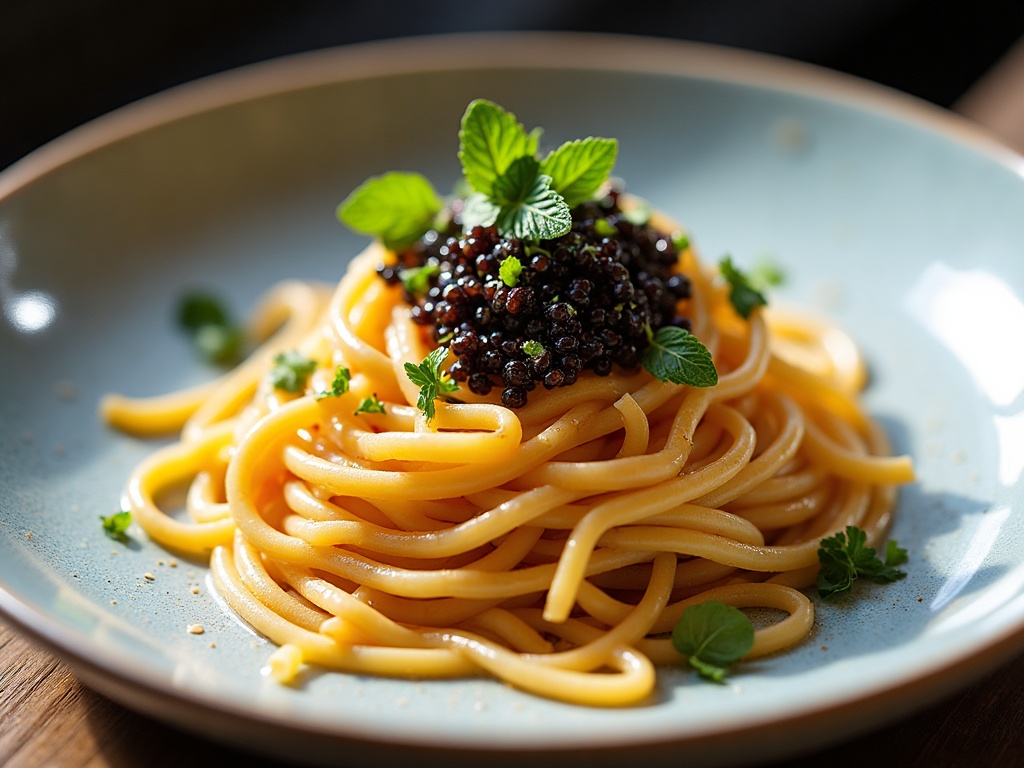

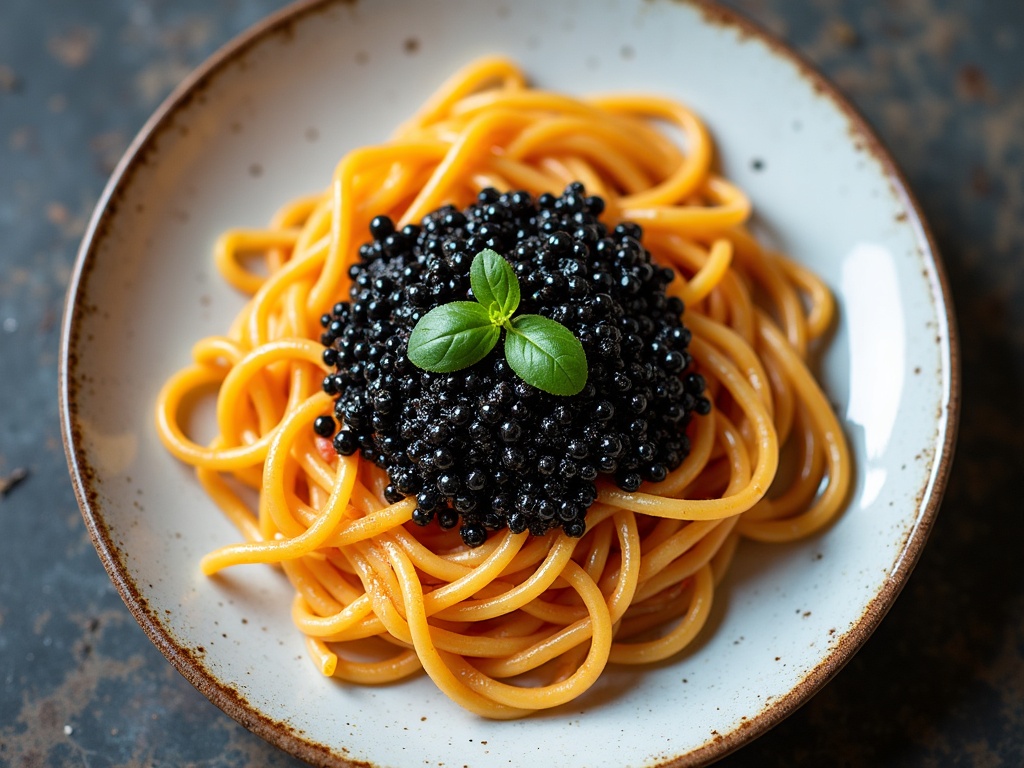
The 3 1/2 tbsp (50 g) is the weight of the butter before browning. Water evaporates during cooking, so the finished brown butter weighs less; use the complete browned batch for the two plates rather than trying to recover 0.9 oz (25 g) of cooked butter per person. The reserved pasta water turns it into a sauce and is not a fixed part of the final serving weight.
Cooking time depends on bringing the water to a boil, the pasta package and the pan. Use the package timing and the butter's color as guides rather than promising a twelve-minute total. Keep the pan off the heat once the milk solids are brown; if they turn black and bitter, replace the butter.
Yes. Replace the Golden Kaluga Hybrid with 0.7 oz (20 g) Royal Osetra Caviar for the same two 0.35 oz (10 g) toppings. The sauce quantities stay unchanged. Choose the caviar for the flavor and budget you want, rather than a claim that one variety is compulsory.
Add a tablespoon of reserved pasta water and toss vigorously over low heat. The water and starch help the sauce coat the strands. Add gradually; pouring in all the reserved water at once can leave a thin sauce.
This method does not depend on a fixed temperature or ninety-second wait. Finish the pasta first, take it off the heat, plate it and let the intense surface heat settle before adding the chilled topping. Do not cook the caviar in the sauce.
For another warm base finished after cooking, try celeriac purée with caviar and brown butter. For tonight's pasta, order Golden Kaluga Hybrid Caviar, shipped overnight on ice.


 +1 866‑291‑9983(Mon–Fri, 9 AM–5 PM PT)


