 Black Friday −25%
Blinis
$4.50
$6.00
Black Friday −25%
$4.50
$6.00
 Black Friday −25%
$7.50
$10.00
 Black Friday −25%
$6.00
$8.00
 Black Friday −25%
$24.00
$32.00

By Beleaev Family | Beleaev Caviar & Gourmet | beleaev.com
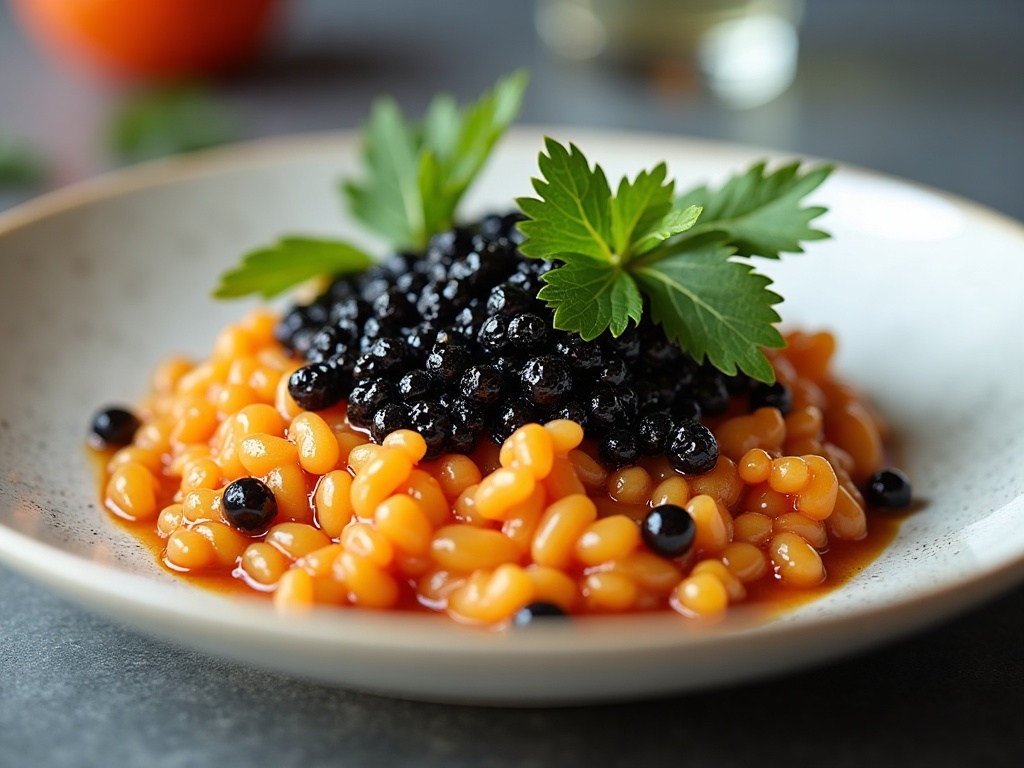
Champagne risotto with caviar is the dish you make when you want to convince a guest to marry you, accept a job, or forgive you for something. The combination of butter, parmesan, champagne acidity, and briny caviar pearls hits the brain in a particular way.
It's also a deceptively simple dish. The risotto base is the same one Italian grandmothers have been making for centuries. The champagne replaces white wine for slightly more elegance and acidity. The caviar goes on at the very end, off the heat, never stirred in.
The dish takes 25 minutes from start to plate, requires no special equipment beyond a wide pan and a wooden spoon, and produces something that really tastes like a fine-dining restaurant plate. It's the recipe everyone should have in their pocket for important occasions.
Key Takeaways
- Use Carnaroli rice, not Arborio: the texture is significantly better
- Champagne must be dry (Brut), not sweet
- Stir constantly but not aggressively: you want creamy, not gummy
- Take the risotto off the heat 1 minute before tasting "done"
- Caviar goes on top at serving, never stirred in: heat ruins the pearls
Serves 4
For the risotto:
For the topping:
The rice is non-negotiable. Carnaroli has a higher starch content and a firmer grain than Arborio, producing a creamier risotto that holds its texture longer. Acquerello (a particular Carnaroli brand from Piedmont) is the gold standard if you can find it.
The champagne should be a basic non-vintage Brut. Don't use vintage or grand cuvée champagne for cooking: the subtleties get lost. A mid-priced Brut is exactly right.
Heat the 2 tbsp (30 g) of butter in a wide, heavy-bottomed pan over medium-low heat. Add the diced onion and a small pinch of salt. Cook for 6–7 minutes until soft and translucent but not colored.
The onion should disappear into the rice rather than be a noticeable element. If it browns, your heat is too high.
Add the rice to the pan and stir to coat in the buttery onion. Toast for 90 seconds, stirring constantly, until the rice grains are slightly translucent at the edges with a small white center.
This step matters. Toasted rice releases its starch more readily and absorbs liquid more evenly than untoasted rice.
Pour in the champagne. It should hiss aggressively. Stir constantly until the liquid is mostly absorbed and you can see the bottom of the pan when you pull the spoon through.
This takes around 2 minutes. The alcohol cooks off but the acidity remains.
Have the hot stock in a separate small pan, kept just below a simmer. Add a ladle of stock (about 2/3 cup / 150 ml) to the rice, stirring constantly. When the liquid is mostly absorbed, add another ladle.
Continue this rhythm for around 16–18 minutes. The rice should be plump, glossy, and just past al dente, with a slight bite at the center. Stop adding stock when the texture is right; you may not need all 5 cups.
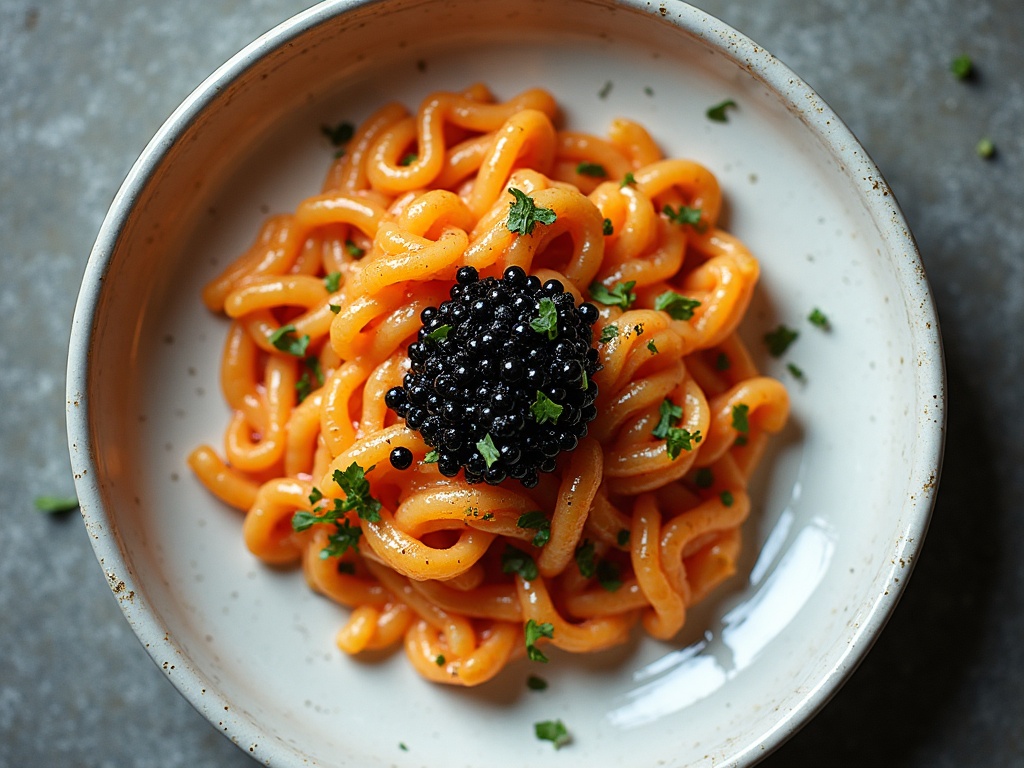
Take the pan off the heat. Add the cold cubed butter and the grated parmesan. Stir vigorously with a wooden spoon for 60 seconds. The risotto should look creamy, glossy, and slightly loose. This is called the mantecatura, the emulsification that defines a proper risotto.
Taste for salt. The parmesan has added saltiness, so adjust carefully. Crack a small amount of white pepper.
Spoon the risotto into warm shallow bowls. Don't pile it high: the proper Italian presentation is a wave of risotto across the bottom of the bowl.
Spoon the caviar generously onto the center of each portion, around 0.5–0.7 oz (15–20 g) per bowl, ideally with a mother-of-pearl spoon. Don't stir it through. Scatter chives and a tiny pinch of extra parmesan. Serve immediately.
Stock temperature matters. Cold stock added to hot rice drops the cooking temperature and forces the rice to release excess starch. Keep your stock just below a simmer in a separate pan, not on a back burner getting cold.
The mantecatura is everything. Adding cold butter and parmesan off the heat at the end is what creates the creamy, silky texture that makes a risotto a risotto. Skip this step and you've made a rice porridge.
Stop cooking 1 minute early. Risotto continues to cook from residual heat after you take it off the stove. If you cook it to fully done, it'll be overdone by the time it reaches the plate. Aim for a slight bite at the center when it leaves the pan.
Don't add caviar to the pan. Heat above 140°F (60°C) ruins caviar pearls. The risotto coming out of the pan is around 176–194°F (80–90°C). Plate the risotto, let it cool 30 seconds, then top with caviar.
Wide pan, not deep pot. A wide, shallow 11–12-inch (28–30 cm) pan gives you the right surface area for even evaporation and stirring. A deep pot creates uneven cooking.
With Golden Kaluga Hybrid: Use 2.1 oz (60 g) of Golden Kaluga Hybrid across 4 portions and skip the chives. Large, buttery pearls deserve the cleanest version of the risotto. The classic form of this variation uses Beluga; Beleaev does not offer Beluga in the US, and we recommend Golden Kaluga Hybrid.
With smaller pearls: Sevruga is the classic small, firm pearl here, giving a more pronounced pop on the silky risotto. Beleaev's US option for smaller pearls is Siberian Sturgeon (Baeri): use 2.8 oz (80 g) across 4 portions.
Lemon zest variation: Add the zest of 1/2 lemon to the rice during the final mantecatura stage. Brightens the dish and balances the richness.
With smoked salmon: Top each portion with 1 oz (30 g) of cold-smoked salmon ribbons before adding the caviar. Turns the dish into a more substantial main course.
Wine pairing: The same champagne you used to cook with, served properly cold. A Blanc de Blancs is ideal. Avoid heavy reds entirely.
For more on champagne and caviar pairings, see our champagne and caviar pairing guide. For other risottos, see our lemon risotto with caviar recipe.
You can, but the dish will be different. Prosecco is sweeter and gives a less elegant result. Cava is closer to champagne in style and works well as a substitute. For best results, use a proper non-vintage champagne (Pol Roger, Bollinger, Pommery, Veuve Clicquot all work) at a mid-range price point.
Add a small splash of warm stock or hot water and stir to loosen. Risotto firms up rapidly as it sits, so it's normal for the texture to tighten between pan and plate. Aim for a slightly looser consistency in the pan than you'd want on the plate. The Italians call this all'onda, "with a wave", meaning the risotto should ripple slightly when you tilt the bowl.
Not really. Risotto is a last-minute dish. You can par-cook it (stop at 12 minutes, spread on a tray to cool, refrigerate) and finish to order in 6–8 minutes by reheating with stock. This is what restaurants do for service. But it's never as good as fresh from start to finish.
Osetra is the textbook choice. Its nutty character pairs naturally with the parmesan and butter in the risotto. Beluga is the luxury option for special occasions (Beleaev does not offer Beluga in the US; we recommend Golden Kaluga Hybrid). Sevruga's small firm pearls give the best textural contrast. Avoid pasteurized or canned caviar: the texture is wrong on this dish.
There's a moment in the cooking of a risotto when the rice goes from being individual grains in liquid to being a creamy, unified, glossy whole. That's the moment that separates a risotto from a rice dish. Top it with cold caviar pearls and you have one of the great pairings of Northern Italian cooking and the Caspian caviar tradition.
For a champagne risotto, start with Royal Osetra Caviar, or browse the full Beleaev caviar collection.
Beleaev is an international caviar and gourmet food company. We source responsibly farmed sturgeon caviar from certified aquaculture. In the US, orders ship overnight on ice, Monday to Thursday, by UPS or FedEx, with free shipping on orders over $250.


 +1 866‑291‑9983(Mon–Fri, 9 AM–5 PM PT)


