 Black Friday −25%
Blinis
$4.50
$6.00
Black Friday −25%
$4.50
$6.00
 Black Friday −25%
$7.50
$10.00
 Black Friday −25%
$6.00
$8.00
 Black Friday −25%
$24.00
$32.00

By Alex Beleaev | Beleaev Caviar & Gourmet | beleaev.com
If someone tells you all caviar tastes the same, they haven't tried enough. The different types of caviar span seven distinct species, each with a personality as vivid as any wine grape or single-origin coffee bean. Beluga is silk and restraint. Sevruga hits you square in the face with the sea. Osetra (also spelled Oscietra) does something nutty and complex that keeps you reaching for more.
Global trade in legal sturgeon caviar totals roughly 380 metric tons per year, down from over 3,000 in the early 1990s ( CITES Trade Database, 2024). That scarcity shapes everything: price, quality and which types you'll actually find on the shelf.
This guide covers every type worth knowing: flavor, texture, relative price, and exactly which one belongs on your table.
Key Takeaways
- True caviar comes only from sturgeon; everything else is technically roe
- Prices climb steeply from Baeri at the accessible end to Beluga at the top, with quality varying enormously within each type
- Osetra offers the best balance of complexity and value for most buyers
- Beginners should start with Baeri or Kaluga, not Beluga
- All legal caviar is now farm-raised and CITES-certified
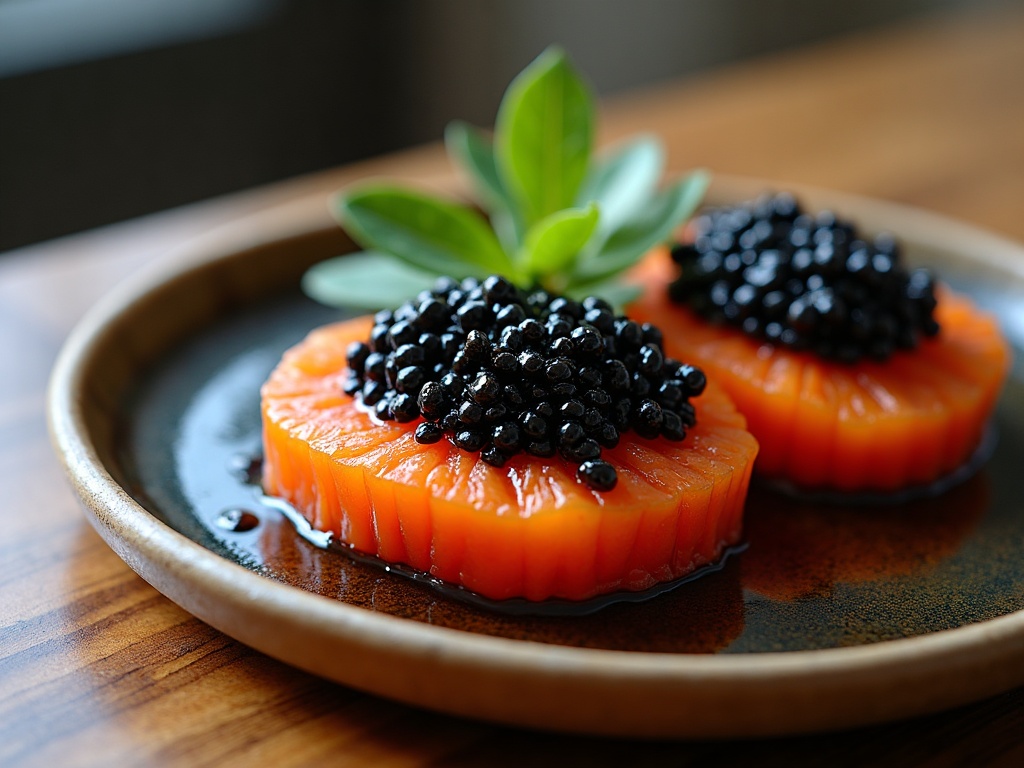
Caviar comes exclusively from sturgeon, a family of fish that's been swimming the planet for over 250 million years. Sturgeon are the most endangered group of species on Earth, with 85% at critical risk ( IUCN Red List, 2022). That single fact explains why real caviar costs what it does.
If it comes from a sturgeon, it's caviar. If it comes from salmon, trout, lumpfish, or anything else, it's roe. Good roe, sometimes. But not caviar.
Every sturgeon species produces eggs with distinct characteristics. Huso huso (Beluga) yields enormous, delicate pearls. Acipenser stellatus (Sevruga) produces tiny, intensely flavored beads. Diet, water temperature, age at harvest, and producer skill all affect the final product, but species sets the baseline.
We've tasted hundreds of batches across all major species. A mediocre Beluga and a superb Osetra? We'd take the Osetra every time.
All legally traded caviar must carry CITES documentation, tracing it from farm to tin. No paperwork, no trust.
Beluga doesn't need to prove anything. It walks into the room and the room notices.
Species: Huso huso
Origin: Historically Caspian Sea. Now primarily farmed in Italy, Germany, Bulgaria and China.
Egg size: Largest of any caviar, 3.0–3.5 mm
Color: Pale silver-gray to dark anthracite. Lighter eggs are rarest and most prized.
Texture: The eggs dissolve on the palate with almost no resistance, like warm butter disappearing on your tongue.
Buttery. That's the word everyone reaches for, and it's accurate. But good Beluga has a long, creamy finish with a whisper of the sea that never becomes aggressively briny.
Some people find that restraint underwhelming. They expect fireworks at the very top of the price scale and get silk instead. Beluga whispers where other caviars shout. The flavor doesn't announce itself. It unfolds slowly, deliberately, then lingers long after the last egg has gone.
Why so expensive? Huso huso takes 15 to 20 years to reach maturity ( FAO Fisheries, 2023). Two decades of feeding and monitoring a single fish before it produces a single ounce of caviar.
Price level: The highest of the classic types
Best for: Celebrations, collectors, anyone who already knows they love caviar
Our take: Extraordinary when it's good. But don't start here. It's like starting your wine education with Romanée-Conti. Beleaev does not offer Beluga in the US; for large, buttery, golden pearls we offer Golden Kaluga Hybrid, a different fish with its own character.
Ask any insider and this is what they choose. Complex, surprising, endlessly interesting.
Species: Acipenser gueldenstaedtii (Osetra sturgeon)
Origin: Originally Caspian and Black Seas. Now farmed in Italy, Israel, Uruguay, Bulgaria, France and China.
Egg size: Medium, 2.5–3.0 mm
Color: Widest range of any caviar: golden amber, olive green, dark brown, jet black. Color varies with age and diet, not quality.
Texture: Firm, with a satisfying pop. These eggs burst against your palate like tiny, briny jewels.
Nutty. That's Osetra's calling card. A rich, walnut-like warmth underpins the marine flavor, completely unique among caviars. You won't find it in Beluga or Sevruga.
Where Beluga offers one beautiful note sustained over a long finish, Osetra gives you a progression. Briny first, then nutty, then a clean minerality that lingers. It changes as it warms on your tongue, evolving and revealing new layers.
The golden variety (sometimes marketed as "Imperial") comes from older fish and carries a more pronounced butterscotch sweetness. Rarer and priced accordingly.
In our experience, Osetra wins more converts than Beluga in blind tastings. People expect Beluga to be most flavorful because it's most expensive, but flavor intensity and price don't correlate that way.
Price level: Upper middle, well below Beluga
Best for: Dinner parties, impressing someone who knows food, the everyday luxury of a serious caviar lover
Our take: If we could only eat one caviar for the rest of our lives, this is it.
Discover our Royal Osetra Caviar: buttery, with toasted hazelnut and brioche tones, and taste the difference for yourself.
This caviar has something to say, and it's not lowering its voice.
Sevruga is the most intensely flavored of the classic Caspian trio. Production accounts for less than 10% of global farmed output ( Seafood Source, 2024), making it increasingly sought after.
Species: Acipenser stellatus (stellate sturgeon)
Origin: Caspian, Black and Azov Sea basins. Limited farming in Iran, the Caspian and select European operations.
Egg size: Smallest of the major caviars at 2.0–2.5 mm
Color: Dark gray to near-black, with a characteristic sheen
Texture: Fine-grained, almost creamy when pressed against the palate. The small eggs release flavor in one concentrated wave.
If Beluga whispers and Osetra converses, Sevruga shouts. Intensely marine, with a pronounced brininess and a mineral backbone. It hits the tongue and blooms into something deep, savory, almost electric.
There's also a savory umami quality that makes Sevruga extraordinary with ice-cold vodka or bone-dry Champagne. The small egg size means flavor arrives all at once rather than building gradually. It's caviar for people who want to feel something.
Why isn't it more popular? The flavor is polarizing. People who love it really love it. People who don't reach for the Osetra.
Price level: Upper middle, close to Osetra
Best for: Experienced caviar lovers who want intensity, vodka pairings, blini and sour cream
Our take: The caviar equivalent of a peated Islay whisky. If you know, you know.
Much of the Beluga style at around half the price. The caviar the smart money buys.
Species: Huso dauricus (Kaluga sturgeon)
Origin: Amur River basin in northeast Asia, along the border with China. Almost all commercial Kaluga comes from Chinese farms.
Egg size: Large, 2.8–3.2 mm, approaching Beluga proportions
Color: Dark amber to brown, sometimes with olive undertones
Texture: Smooth and buttery, similar to Beluga but with slightly more structure.
Kaluga belongs to the same genus (Huso), and the flavor shows it. Creamy, buttery, gentle marine character. But Kaluga brings its own personality, a subtle earthiness, almost like roasted hazelnuts. Where Beluga floats, Kaluga has its feet on the earth.
Is it "as good as" Beluga? Wrong question. Think of two siblings: similar bone structure, different personalities. The value proposition is hard to ignore: large, beautiful eggs with a luxurious mouthfeel at 40–60% of Beluga's price.
Our Golden Kaluga Hybrid Caviar is a cross of Huso dauricus and Acipenser schrenckii: large 3.2–3.4 mm pearls with a golden amber color, buttery weight and a long, rounded finish. It is its own caviar, not Beluga, and it makes a fine centerpiece.
Price level: Middle, well below Beluga
Best for: Anyone who loves Beluga's style but wants better value, dinner party centerpieces, converting skeptics
Our take: If someone asked us to impress six guests on a sensible budget, we'd buy Kaluga without hesitating.
Always good, never pretentious, and the perfect starting point.
Baeri dominates global production, accounting for over 60% of all farmed caviar worldwide ( Eumofa, 2024). That ubiquity is both its strength and the reason snobs dismiss it. The snobs are wrong.
Species: Acipenser baerii (Siberian sturgeon)
Origin: Native to Siberian rivers. Farmed across France, Italy, Germany, China, Uruguay and beyond.
Egg size: Small to medium, 2.2–2.8 mm
Color: Dark brown to black
Texture: Soft and yielding, with a gentle pop.
It lacks the drama of Beluga's enormous pearls or Sevruga's intensity. What it offers is consistency, approachability, and real pleasure at a price that doesn't require a second mortgage.
Good Baeri tastes clean and mildly briny, with a smooth, slightly sweet finish. It won't challenge your palate or demand full attention. That's exactly why it's ideal for newcomers.
The quality range is enormous, though. Mass-produced Baeri from factory farms can taste muddy and flat. Well-raised Baeri from a respected producer is a completely different product. Provenance matters here more than with any other type. Our Siberian Sturgeon (Baeri) Caviar comes from fish that mature for seven to nine years, with sweet cream, light almond and clean salinity on the spoon.
Price level: The most accessible of the sturgeon caviars
Best for: First-timers, cooking with caviar, everyday luxury, gifts for the caviar-curious
Our take: This is where we tell most people to start. Not because it's cheap, but because it teaches your palate what caviar is before you spend more.
Rarest of the bunch you'll encounter commercially. Annual production: under 5 metric tons globally.
Species: Acipenser ruthenus
Egg size: Small, 1.8–2.2 mm | Color: Light to medium gray | Texture: Delicate and soft
Sterlet was reserved for the tsars and Persian royalty. Sterlet's flavor is delicate, with floral notes no other caviar possesses. Honestly, it's more historically significant than gastronomically essential. If you encounter it, try it for the story alone.
Price level: Upper middle, driven by rarity
Best for: Collectors, history enthusiasts, completing a tasting flight
Not caviar. Period. But it deserves its place here because it's what most people encounter first.
Species: Various salmon (chum, sockeye, pink, king)
Egg size: Very large, 5–8 mm | Color: Vivid orange to deep red
Texture: Firm skin that pops dramatically, releasing bright, oceanic liquid
The eggs are huge, jewel-bright orbs that catch the light. The pop is theatrical. The flavor is bright, clean and oceanic, with none of the subtlety that defines sturgeon caviar. It's also remarkably versatile: sushi, scrambled eggs, pasta, baked potatoes, or straight from the jar.
Price level: A small fraction of sturgeon caviar
Best for: Cooking, casual entertaining, sushi, big bold flavors on a budget
Our take: We always have a jar in the refrigerator.
| Type | Egg Size | Color | Flavor | Price Level | Best For |
|---|---|---|---|---|---|
| Beluga | Large (3.0–3.5 mm) | Silver-gray to dark | Buttery, delicate, long finish | Highest | Ultimate celebrations |
| Osetra | Medium (2.5–3.0 mm) | Gold to dark brown | Nutty, complex, mineral | Upper middle | Dinner parties, daily luxury |
| Sevruga | Small (2.0–2.5 mm) | Dark gray to black | Intense, briny, umami | Upper middle | Bold palates, vodka pairing |
| Kaluga | Large (2.8–3.2 mm) | Amber to brown | Buttery, earthy, smooth | Middle | Smart Beluga alternative |
| Baeri | Small-med (2.2–2.8 mm) | Dark brown to black | Clean, mild, slightly sweet | Accessible | Beginners, cooking |
| Sterlet | Small (1.8–2.2 mm) | Light gray | Delicate, floral, subtle | Upper middle | Collectors, tastings |
| Salmon roe | Very large (5–8 mm) | Orange to red | Bright, oceanic, bold | Budget | Cooking, sushi, casual |
Trying caviar for the first time?
Start with Baeri. It teaches your palate what sturgeon caviar actually tastes like, without the pressure of a top-tier tin.
Hosting a dinner party?
Osetra. It photographs beautifully, sparks conversation and satisfies both novices and connoisseurs.
Celebrating something truly special?
Beluga. The anniversary, the milestone, the once-in-a-decade evening where nothing else will do.
Want luxury without the Beluga price?
Kaluga. Same genus, similar butteriness, 40–60% less money.
Cooking with caviar?
Salmon roe or Baeri. Never cook with premium caviar. Heat destroys the nuance.
Mild and buttery: Beluga or Kaluga
Complex and nutty: Osetra
Bold and briny: Sevruga
Clean and approachable: Baeri
Bright and oceanic: Salmon roe
Entry level: Baeri. Look for well-sourced, well-raised fish, and you'll be impressed.
Mid range: The sweet spot. Kaluga gives you luxury-sized eggs. Mid-range Osetra delivers complexity that punches above its weight.
Top tier: Golden Osetra, premium Sevruga, or Beluga. Something truly special.
We've helped hundreds of customers choose their first caviar. The single most common mistake? Starting too expensive. Start with Baeri or Kaluga. Build your palate. Then work up.
Explore the full Beleaev caviar collection and find the variety that fits your palate and occasion.
Shop Beleaev caviar, farm-raised in certified aquaculture and shipped overnight on ice.
Golden Kaluga Hybrid · Royal Osetra · Baeri · Tasting Sets · Shop all
Almas caviar, from albino Beluga sturgeon, holds the record as the most expensive caviar in the world. Among commercially available caviar, standard Beluga tops the list. The price reflects the 15–20 year maturation period.
Beluga eggs are larger (3.0–3.5 mm vs 2.5–3.0 mm), paler, and deliver a buttery, delicate flavor. Osetra is nuttier, more complex, and significantly less expensive. Most professional tasters consider Osetra the better all-round eating experience. They're different expressions of luxury, not better and worse.
No. True caviar comes exclusively from sturgeon. Salmon roe, trout roe, lumpfish roe and tobiko are all fish eggs, but they're properly called "roe." The distinction is protected in most European markets. If a product doesn't specify a sturgeon species, it almost certainly isn't genuine caviar.
Baeri (Siberian sturgeon) is the ideal starting point: clean, approachable and the most accessible in price. Kaluga is another excellent first choice for larger eggs. Both teach your palate what sturgeon caviar tastes like without a premium price tag.
Where it is permitted, it must carry valid CITES documentation proving it was farm-raised. Wild Beluga fishing has been banned since 2005. Import and sale rules for farmed Huso huso caviar differ from country to country, so check the rules where you live. Beleaev does not sell Beluga in the US.
Seven types. Seven distinct personalities. Reading about them only gets you so far.
Start with Baeri to get your bearings or jump straight to Osetra: the important thing is to start somewhere. Caviar rewards curiosity. And if you're unsure, the Beleaev Signature Tasting Set puts Siberian Sturgeon (Baeri), Royal Osetra and Golden Kaluga Hybrid side by side, in 1.06 oz, 1.75 oz or 4.4 oz tins.
Discover the Beleaev collection and find the caviar that's right for you, shipped overnight on ice with free shipping on orders over $250.
Beleaev Caviar & Gourmet offers farm-raised Siberian Sturgeon (Baeri), Royal Osetra and Golden Kaluga Hybrid caviar from certified aquaculture, shipped overnight on ice, Monday to Thursday, by UPS or FedEx.


 +1 866‑291‑9983(Mon–Fri, 9 AM–5 PM PT)


