 Black Friday −25%
Blinis
$4.50
$6.00
Black Friday −25%
$4.50
$6.00
 Black Friday −25%
$7.50
$10.00
 Black Friday −25%
$6.00
$8.00
 Black Friday −25%
$24.00
$32.00

By Alex Beleaev | Beleaev Caviar & Gourmet | beleaev.com
Forget everything you've seen in movies. The Champagne flute in one hand, tiny spoon in the other, vaguely bored expression. That's theater, not eating.
Caviar doesn't require a rulebook or black tie. But knowing a handful of real, tested things makes the experience go from "this is nice, I guess" to something you'll remember for years.
We've tasted thousands of tins. We've watched people try caviar for the first time at countless tastings. And we've learned what actually matters versus what's just noise.
Key Takeaways
- Use mother-of-pearl or bone spoons, because metal causes a sulfur reaction that ruins flavor
- Serve slightly below refrigerator temperature, around 43 to 46°F (6 to 8°C) on the palate
- Taste it plain first, then build with blini and crème fraîche
- Plan on 1 to 1.75 oz (30 to 50 g) per person as an appetizer
- Press the eggs against your palate. Don't chew like it's cereal
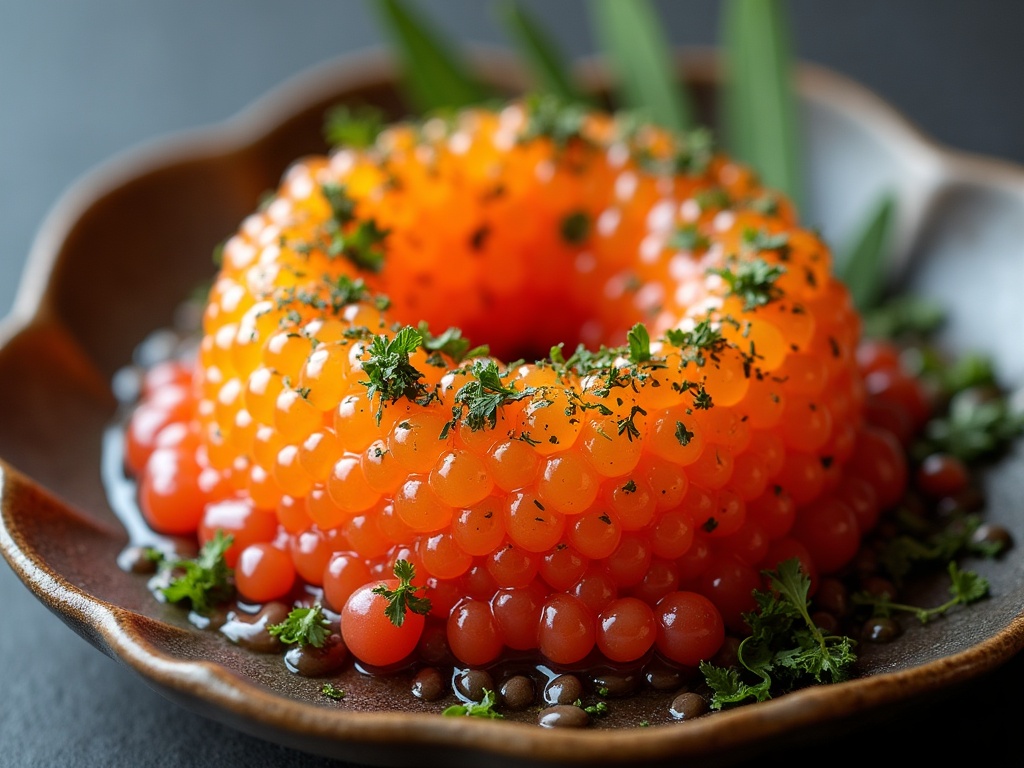
Take the tin out of your refrigerator about 10 minutes before serving. You're aiming for slightly below refrigerator temperature, around 43 to 46°F (6 to 8°C) on the palate. Not room temperature. Not frozen solid.
Too cold, and the eggs are muted. Flavorless little beads. Too warm, and the fats break down, turning delicate ocean notes into something fishy and flat. If you've ever tried caviar and thought "what's the fuss about?", there's a decent chance it was served at the wrong temperature.
Mother-of-pearl. Bone. Gold, if you're feeling extravagant. Never silver. Never stainless steel. Never that teaspoon from the drawer.
Silver and steel cause a sulfur reaction on contact with the roe, creating a metallic, bitter aftertaste that has nothing to do with the caviar itself. Mother-of-pearl is the standard for a reason: it's inert, smooth, and cool to the touch. Even a clean wooden spoon will do in a pinch. But metal? No. Our Signature Mother-of-Pearl Spoon is sized for every Beleaev tin.
Plan on 1 to 1.75 oz (30 to 50 g) per person if caviar is an appetizer course. That's roughly one to two tablespoons, enough to taste properly across a few blini or bites. For a pure tasting comparing varieties side by side, 0.35 to 0.5 oz (10 to 15 g) of each is plenty.
Place a small amount of caviar on the back of your hand, in the soft web between your thumb and index finger. Then eat it directly from your skin.
Sounds strange? This is exactly how caviar is graded at farms and by professional tasters worldwide. Your skin warms the eggs just slightly, releasing the full aroma. There's no interference from other flavors or textures. Just you and the caviar.
Try it once. Even if you never do it again, you'll understand what the caviar actually tastes like.
Resist the urge to pile it onto a blini right away. Take a small spoonful, place it on your tongue, and press the eggs gently against the roof of your mouth. Let them pop.
Good caviar gives you layers. Salt first, then butter, then something oceanic, then a finish that lingers. Osetra might taste nutty. Beluga, creamy and almost sweet. Sevruga, sharp and briny. You won't notice any of this if your first bite comes buried under crème fraîche.
Flavor perception varies enormously between individuals. Genetic variation in taste receptors means the same caviar can register differently depending on the taster. There's no wrong answer. Just your answer.
Once you've tasted it plain, build upward. A warm blini, a small dollop of crème fraîche, and a generous spoonful of caviar on top. The mild tang of crème fraîche, the earthy warmth of the blini, and the cool, salty pop of the eggs. This combination has lasted centuries for good reason.
Don't overdo the crème fraîche. A thin smear, not a mound. The caviar is the star. Everything else is a supporting actor.
Caviar on potato chips. Caviar on scrambled eggs. Caviar tossed through fresh pasta with a pat of butter. These aren't gimmicks; they're excellent ways to eat it.
The chip method works because salt meets salt meets crunch. Use a plain, high-quality potato chip (nothing sour-cream-and-onion flavored). Add a tiny dot of crème fraîche if you like, then top with caviar.
Scrambled eggs and caviar is a classic Parisian breakfast. Cook the eggs low and slow, still slightly wet, spoon caviar on top at the last second. The warmth opens up the flavor without cooking the roe.
Caviar straight from the tin to your tongue, eaten off the back of your hand or directly from a spoon. Social media calls it a "bump." Caspian hosts have been eating caviar this way for generations. No ceremony. No accompaniment. Just good caviar, enjoyed immediately. If anything, it's the most honest way to eat it.
Don't chew caviar the way you'd chew a grape. The magic is in the pop. Place the eggs on your tongue, press them against your palate with gentle pressure, and let them burst. That's where the flavor lives. Aggressive chewing mashes everything into a paste. You lose the texture, and with it, half the experience.
A mountain of chopped egg, a lake of crème fraîche, raw onion piled high, and somewhere underneath, a few sad eggs of caviar. We see this at parties all the time. Accompaniments should whisper. The caviar should shout.
Caviar oxidizes. Once you break that vacuum seal, you've started a countdown. Open the tin within 15 minutes of serving and finish it within an hour. Don't crack it open two hours before your guests arrive and leave it sitting on the counter. That's not preparation. That's sabotage. A caviar key makes the last-minute opening quick and clean.
Some pairings survive because they work.
Blini are small pancakes, served warm, with a slight earthiness. They're the traditional base for a reason.
Crème fraîche (not sour cream) is milder, smoother, less tangy. It cushions the caviar's salinity without competing.
Chopped hard-boiled egg, whites and yolk separated, finely chopped, makes a classic garnish. Use it sparingly.
Chives, snipped fine, add a gentle herbal note that lifts the whole combination.
Toast points are thinly sliced white bread, crusts off, cut into triangles and lightly toasted. Simple, traditional, and perfectly respectable.
Lemon is controversial. Many traditionalists insist on it. We say skip it, since acid flattens the subtle, buttery notes of good sturgeon caviar.
Champagne is the classic pairing. Brut, specifically Blanc de Blancs. The high acidity and fine bubbles cut through the fat of the caviar. Avoid demi-sec or sweet Champagnes, where the sugar clashes with the salt.
Vodka works superbly here, served ice-cold and unflavored. Sipped, not shot, between spoonfuls. Vodka's neutrality lets the caviar take center stage. Ask anyone from the Caspian region and they'll tell you it's the only serious option.
A dry white wine like a steely Chablis or unoaked Sancerre pairs well too. Something with minerality and restraint, especially with Osetra's nuttier profile.
What NOT to drink: tannic red wines amplify the fish oils in the worst way. Sweet wines, same problem, different direction. Anything with too much personality. Caviar doesn't need a competitor in the glass; it needs a companion.
Shop the Beleaev caviar collection, farm-raised in certified aquaculture and shipped overnight on ice across the US.
Golden Kaluga Hybrid · Royal Osetra · Baeri · Tasting Sets · Shop all
Place a small amount on a mother-of-pearl spoon and press the eggs gently against the roof of your mouth. Let them pop. Taste it plain first, then try it on blini with crème fraîche. Serve slightly below refrigerator temperature, around 43 to 46°F (6 to 8°C).
Traditional accompaniments include buckwheat blini, crème fraîche, finely chopped egg, chives, and toast points. Modern pairings include plain potato chips and scrambled eggs. Keep accompaniments minimal so the caviar stays the focus.
For an appetizer course, 1 to 1.75 oz (30 to 50 g) per person. For a tasting of multiple varieties, 0.35 to 0.5 oz (10 to 15 g) of each. For a celebration centerpiece, 1.75 to 3.5 oz (50 to 100 g) per person. A standard 1.06 oz (30 g) tin feeds one person comfortably or two as a taste.
Silver and stainless steel react with the sulfur naturally present in fish roe, creating a metallic, bitter aftertaste. Mother-of-pearl, bone, gold, and even plastic are all better choices.
Nutritionally, yes. Caviar is rich in omega-3 fatty acids, vitamin B12, and selenium. A 1.06 oz (30 g) serving contains roughly 70 calories. The limiting factor is cost, not health.
Everything in this guide comes down to one idea: don't overcomplicate it. Good caviar, served cold, eaten with the right spoon, tasted on its own before you add anything. That's the whole secret.
If you're trying it for the first time, start with a tasting set: two or three varieties side by side, so you can discover what your palate actually prefers. Royal Osetra is where many people begin. Golden Kaluga Hybrid, with its large golden pearls, is where many end up.
The Beleaev Signature Tasting Set puts Baeri, Royal Osetra and Golden Kaluga Hybrid in one box, so you can find the variety that speaks to you.
Explore the full caviar collection at Beleaev, shipped overnight on ice by UPS or FedEx.
Beleaev Caviar & Gourmet is an international caviar and gourmet company offering Siberian Sturgeon (Baeri), Royal Osetra and Golden Kaluga Hybrid caviar, farm-raised in certified aquaculture. US orders ship overnight on ice, Monday to Thursday.


 +1 866‑291‑9983(Mon–Fri, 9 AM–5 PM PT)


